Dynamic O-Ring Gland Design - Hardware Recommendations - Rotary O-Ring Seal Glands
Hardware Recommendations for Rotary O-Ring Seal Glands
What is an O-Ring Gland?
The O-Ring gland (also known as O-Ring groove) is a very important design feature for manufacturing both efficient and cost-effective O-Rings.
The most important consideration for gland design is that it allows for proper and complete compression between the groove and the mating surface. While the shape of the O-Ring relies and depends on the application, shape is generally unimportant. The groove can be a variety of shapes; anything from triangular, rectangular, or dovetail.
Can an O-Ring Seal in Rotary Applications?
An O-ring has proved to be a practical rotary shaft seal in many applications. With the correct design, seals such as the Parker O-Ring rotary seal compound N1090-85, will provide satisfactory service at surface speeds up to 1500 feet per minute.
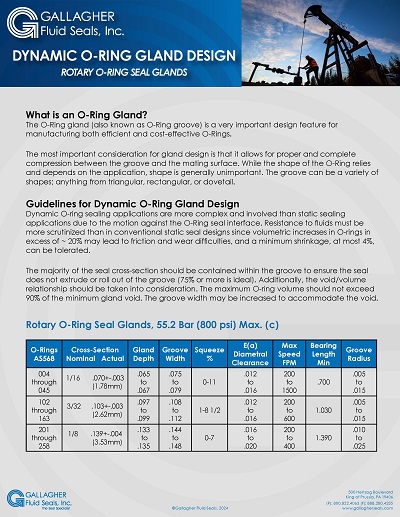
Guidelines for Dynamic O-Ring Gland Design
Dynamic O-ring sealing applications are more complex and involved than static sealing applications due to the motion against the O-Ring seal interface. Resistance to fluids must be more scrutinized than in conventional static seal designs since volumetric increases in O-rings in excess of ~ 20% may lead to friction and wear difficulties, and a minimum shrinkage, at most 4%, can be tolerated.
The majority of the seal cross-section should be contained within the groove to ensure the seal does not extrude or roll out of the groove (75% or more is ideal). Additionally, the void/volume relationship should be taken into consideration. The maximum O-ring volume should not exceed 90% of the minimum gland void. The groove width may be increased to accommodate the void.
This tech bulletin aims to provide a resaonable basis for calculating rotary O-ring seal glands. In addition, you can find a diagram for rotary O-ring seal glands O-ring glands on page 2.
If you have a gland design question, or custom seal need, contact Gallagher Fluid Seals today.