Seal failures are often blamed on materials, profiles, or spring selection. In reality, many polymer seal issues originate somewhere else entirely — the surface the seal is running against.
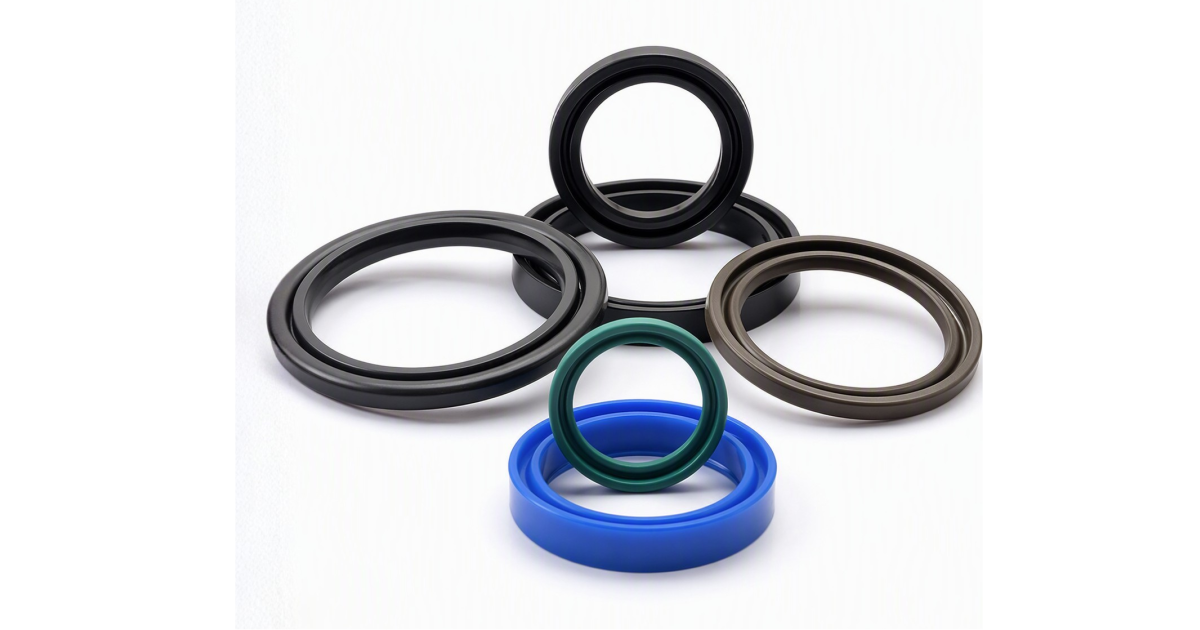
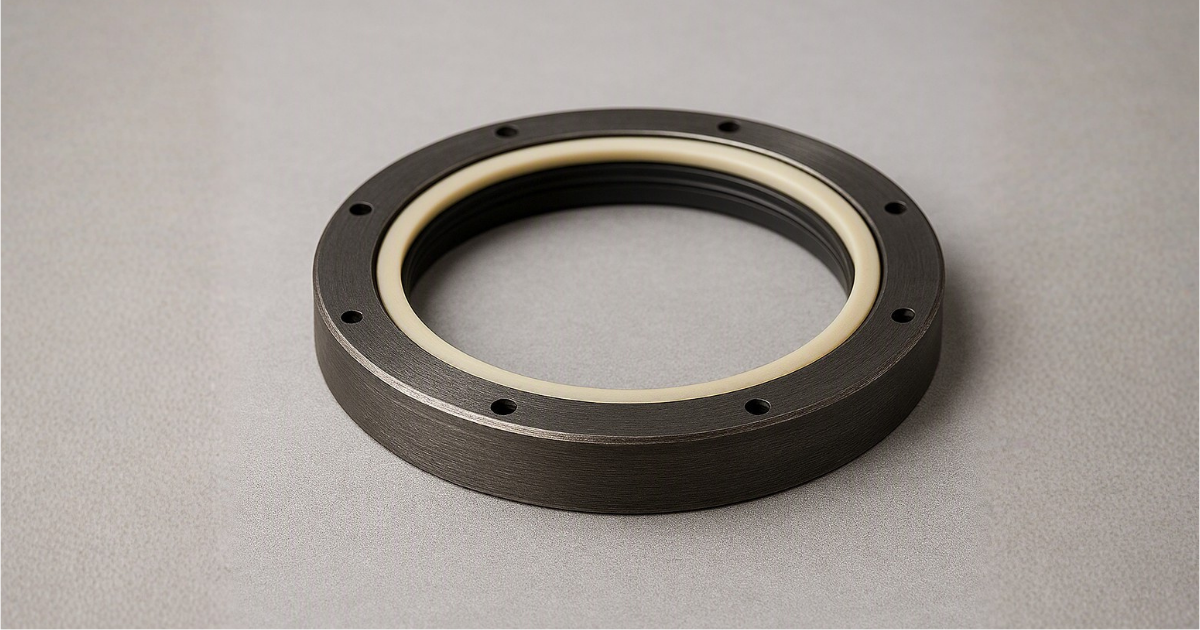
It’s not uncommon to see an application upgraded from an elastomer O-ring to a PTFE spring-energized seal to reduce friction, extend life, or handle higher temperatures. On paper, the upgrade looks flawless. In practice, leakage appears immediately.
When this happens, the seal itself is rarely the root cause. More often, the issue lies in a factor that didn’t matter much before: hardware surface finish.
For polymer seals, surface finish is not a secondary detail. It is a primary performance driver.
What Engineers Really Mean by “Surface Finish”
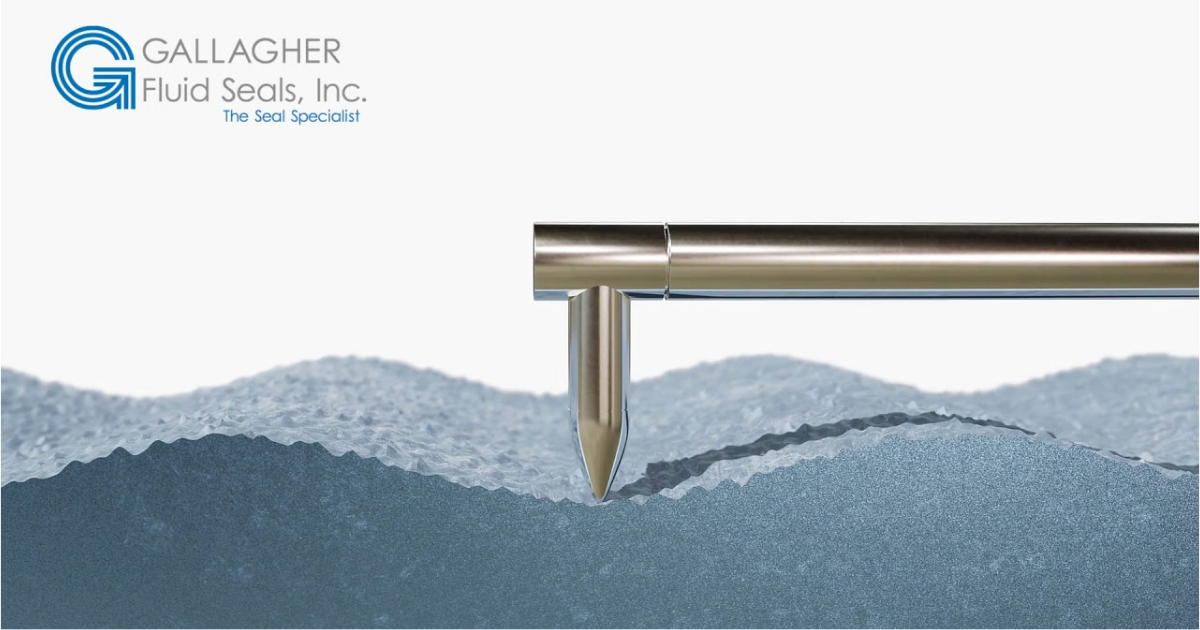
A machined surface may appear smooth to the eye, but under magnification it tells a different story. Peaks, valleys, tool marks, and directional grooves all exist at a microscopic level and those features directly interact with a polymer sealing lip.
Surface finish describes this microscopic texture. While many parameters exist, the most commonly referenced in sealing applications is Roughness Average (Ra), typically expressed in microinches (µin) or micrometers (µm).
Lower Ra values indicate smoother surfaces, but Ra alone does not tell the whole story. Two surfaces can share the same Ra value while having very different peak heights, valley depths, and surface patterns. For polymer seals, those peaks and valleys are critical, because they represent potential leak paths.
Unlike elastomers, polymers cannot simply deform into every imperfection.
Why Polymer Seals Are Less Forgiving Than Elastomers
Elastomeric O-rings are soft and highly compliant. They tolerate relatively rough hardware and can conform into surface irregularities to block leakage. That’s why “as-machined” finishes are often acceptable in O-ring designs.
PTFE and other engineered polymers behave differently.
Although PTFE is sometimes described as “soft,” it is still significantly harder than rubber. Instead of flowing into microscopic valleys, a polymer seal tends to bridge across them. If the surface roughness is too high, those valleys remain open and fluid finds its way through.
This is why hardware that performs perfectly with an O-ring may leak immediately when paired with a spring-energized PTFE seal.
Typical Surface Finish Expectations for Polymer Seals
There is no universal surface finish requirement. The correct finish depends on:
- Media type (gas vs. liquid, viscosity, permeability)
- Static vs. dynamic motion
- Pressure
- Temperature
- Leakage tolerance
- A static seal containing a viscous fluid will tolerate a rougher surface than a reciprocating seal controlling low-viscosity gas or cryogenic fluid.
That said, some general realities apply:
- Turning operations typically achieve ~16–32 µin Ra at best
- Milling often produces rougher, directional finishes
- Cast surfaces are rarely suitable for polymer sealing without post-processing
For most PTFE and polymer seals, as-machined or as-cast surfaces are insufficient, unless leakage requirements are very relaxed.
Post-machining surface improvement is usually required.
Surface Improvement Methods and Their Impact
When raw machining doesn’t deliver an acceptable finish, several processes are commonly used to prepare seal-critical surfaces:
- Grinding – Produces consistent finishes suitable for shafts and rods
- Honing – Improves bore surfaces while promoting lubricant retention
- Polishing – Reduces friction and leakage in demanding applications
- Lapping – Achieves ultra-smooth finishes used in vacuum, aerospace, and cryogenic systems
Each method adds cost and may introduce geometric challenges, especially when sealing surfaces are located deep inside housings or grooves. As a result, designing the dynamic seal surface on a rod or shaft is often preferable to sealing in a bore when flexibility exists.
Balancing Surface Finish Cost Against Risk
Surface finishing is not just a technical decision, it’s an economic one.
In applications where small amounts of leakage are acceptable, a moderate surface finish may deliver adequate performance at a lower cost. In contrast, industries such as aerospace, medical devices, semiconductor processing, or cryogenic systems often have near-zero leakage tolerance. In those cases, surface finish becomes a reliability requirement, not an optimization.
The real question is not “What is the best finish possible?”
It is “What finish reliably meets the system’s leakage and life expectations?”
At Gallagher Fluid Seals, we work with engineers to define acceptable leakage early, then recommend the least aggressive surface finish that still meets performance goals.
Can a Surface Ever Be “Too Smooth”?
For elastomer seals, excessively smooth surfaces can actually increase friction and reduce lubrication retention in dynamic motion.
For PTFE and polymer seals, the opposite is generally true.
From a sealing standpoint, smoother surfaces almost always improve leakage control and wear performance. The limiting factor is rarely performance, it’s feasibility and cost. Achieving mirror-like finishes on complex geometries may not be practical, even if they are desirable.
That’s where seal design and material selection become powerful tools.
When Hardware Can’t Be Reworked
In real-world applications, ideal surface finishes are not always achievable. Large components, installed equipment, or inaccessible grooves may make polishing or lapping unrealistic.
In these cases, sealing success often depends on:
- Selecting a polymer with improved conformity or wear characteristics
- Optimizing spring load to maintain contact over surface peaks
- Adjusting seal geometry to improve lip compliance
- Accepting controlled leakage as part of system tradeoffs
Gallagher Fluid Seals has supported applications where hardware finishes fell well outside typical recommendations — yet still met system requirements through intelligent seal design.
Emerging Surface Technologies in Sealing Applications
Manufacturing advancements are expanding the options available for seal-critical surfaces, including:
- Laser surface texturing for controlled micro-features
- Plasma treatments to alter surface energy and friction behavior
- Post-processed additive manufacturing finishes
- Advanced coatings such as DLC for wear and friction reduction
These technologies are becoming increasingly relevant in energy, medical, and high-performance industrial systems, offering new ways to achieve sealing reliability without excessive redesign.