Behind the Seal: Key Factors That Drive Selection and Performance

Behind the Seal: Key Factors That Drive Selection and Performance
Seals might not grab headlines, but they’re indispensable to the smooth operation of industrial systems. These unsung components are quietly at work inside countless machines and processes, making everyday functions more reliable—and often even possible.
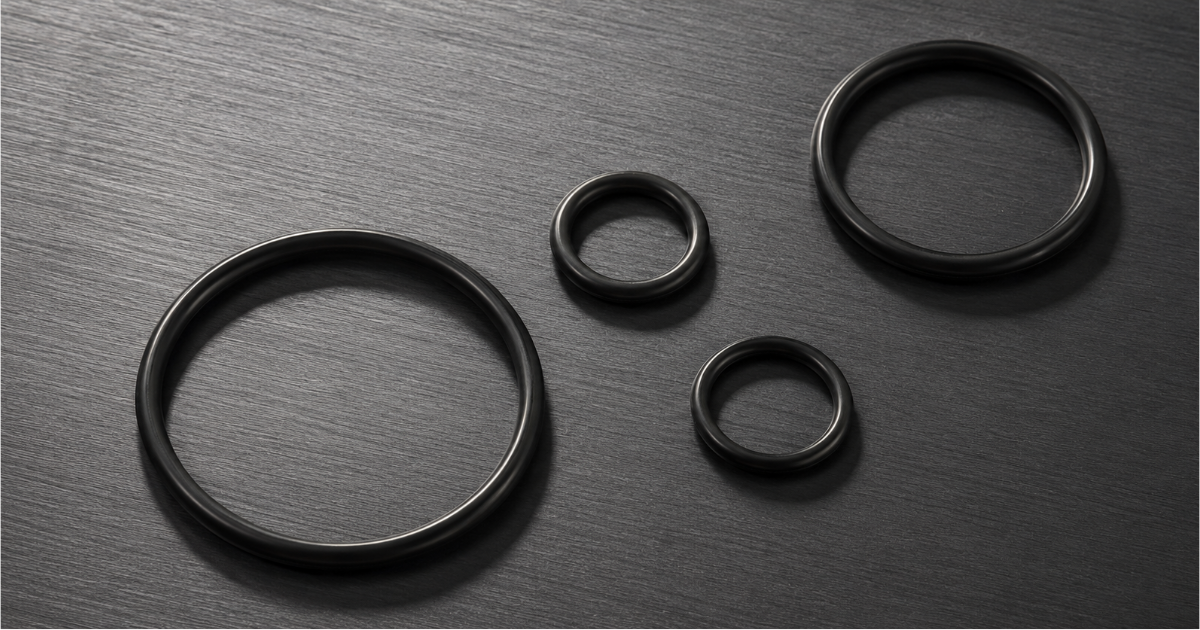
Despite their modest appearance, seals, gaskets, and O-rings are incredibly specialized. Selecting the wrong type can lead to early failure, system contamination, or costly downtime. That’s why understanding how performance requirements shape seal selection is so important.
Whether you're dealing with intense heat, extreme pressure, or aggressive fluids, the right seal is always a balance of design and material science. Below is a breakdown of key factors to help guide your decision-making.
Temperature Conditions
Temperature is one of the most critical variables in seal performance. Both the operational and ambient temperature ranges must be considered. While many materials can handle moderate conditions, performance can degrade quickly in extremes.
For instance, temperatures over 400°F or below -100°F can severely affect material flexibility and longevity. That’s where silicone-based materials shine—they're known for excellent stability across an unusually wide thermal range. Silicone seals typically maintain their integrity even under sustained thermal stress, making them a popular choice for demanding environments. Other materials may harden or crack under similar conditions.
The key takeaway? Know your application's temperature profile—both the highs, the lows, and how frequently those changes occur.
Pressure Requirements
High-pressure applications pose another significant challenge. Not all seals are engineered to maintain performance under extreme force or rapid pressure changes.
Different industries have their own benchmarks for pressure resistance. For example, the Norwegian Petroleum Industry uses the Norsok M-710 standard, while NACE International assesses how materials hold up to static high pressures and sudden depressurization.
For most industrial users, the essential question is: will this seal experience pressure beyond standard limits? If yes, it’s crucial to ensure that the seal design and material can endure without degrading, especially in dynamic applications.
Fluid Compatibility & Viscosity
Since many seals function as fluid barriers, it’s important to match seal material to the fluids present in your system. Compatibility isn’t just about resistance—it’s also about how well a material interacts with specific viscosities.
Water and oil are common, but each affects seal materials differently. Add in greases, gels, or slurries, and you introduce even more complexity. The wrong material may swell, soften, or chemically degrade over time.
You should also factor in the fluid's chemical composition, temperature, and pressure. The more you understand the full operating environment, the more likely you are to choose a seal that performs reliably over the long term.
Need Help? Talk to a Seal Expert
Selecting the right seal isn't about guessing—it’s about matching design, material, and application conditions with precision. At Gallagher Fluid Seals, we’ve built strong relationships with seal manufacturers over nearly seven decades. Our team is here to help you sort through thousands of sealing options to find the one that meets your specific needs—whether it’s a standard O-ring or a complex, custom-engineered seal.
Let’s find the right seal for your application. Reach out to Gallagher Fluid Seals for expert support backed by 70 years of experience.