Choosing the Right Seal for Your Industrial Application
In the world of industrial engineering and manufacturing, seals might not get the spotlight—but they do the heavy lifting when it comes to performance, reliability, and safety. With countless seal types and material options on the market, selecting the right one for your project can feel overwhelming.
So how do you know which sealing solution is best for your application? Understanding your system’s environment, pressures, and design requirements is the first step.
What Are Industrial Seals?
Industrial seals are critical components used to prevent leakage, contain pressure, block contaminants, and maintain system integrity across a wide range of equipment and applications. Whether it's a hydraulic press, a pump system, or a food-grade processing line, seals ensure safe and efficient operation by creating a barrier between moving parts, fluids, and the external environment.
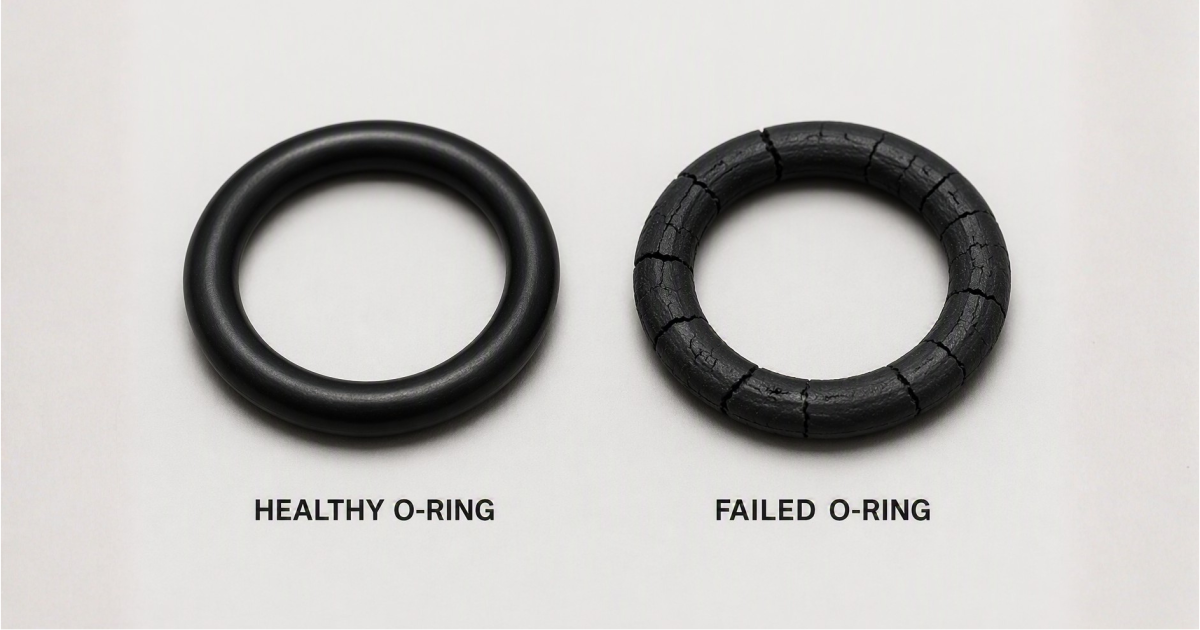
Although seals often go unnoticed, the wrong choice, or a poor-quality one, can lead to breakdowns, inefficiencies, or even catastrophic failure.
Common Types of Seals
Not all seals are created equal. While many fall under a few broad categories, each serves distinct functions and is suited to specific conditions:
1. Custom Seals
Custom seals are engineered for specialized applications—particularly where standard off-the-shelf options won’t suffice. These seals are commonly used in highly regulated or demanding environments like aerospace, medical devices, heavy machinery, and energy production. Because they’re tailored to unique design specs, custom seals are ideal for sealing irregular surfaces, operating in extreme temperatures, or withstanding aggressive chemicals.
2. Gaskets
Gaskets are flat sealing components placed between two surfaces to prevent leakage of fluids or gases under compression. They are frequently used in flanged connections such as piping systems or engine components and must be compatible with both the system’s pressure range and the type of media being sealed.
Gaskets can be made from a variety of materials, including:
Rubber or elastomers for flexibility and vibration damping
Graphite or metal for high temperature and pressure resistance
PTFE or other non-reactive materials for chemical compatibility
3. O-Rings
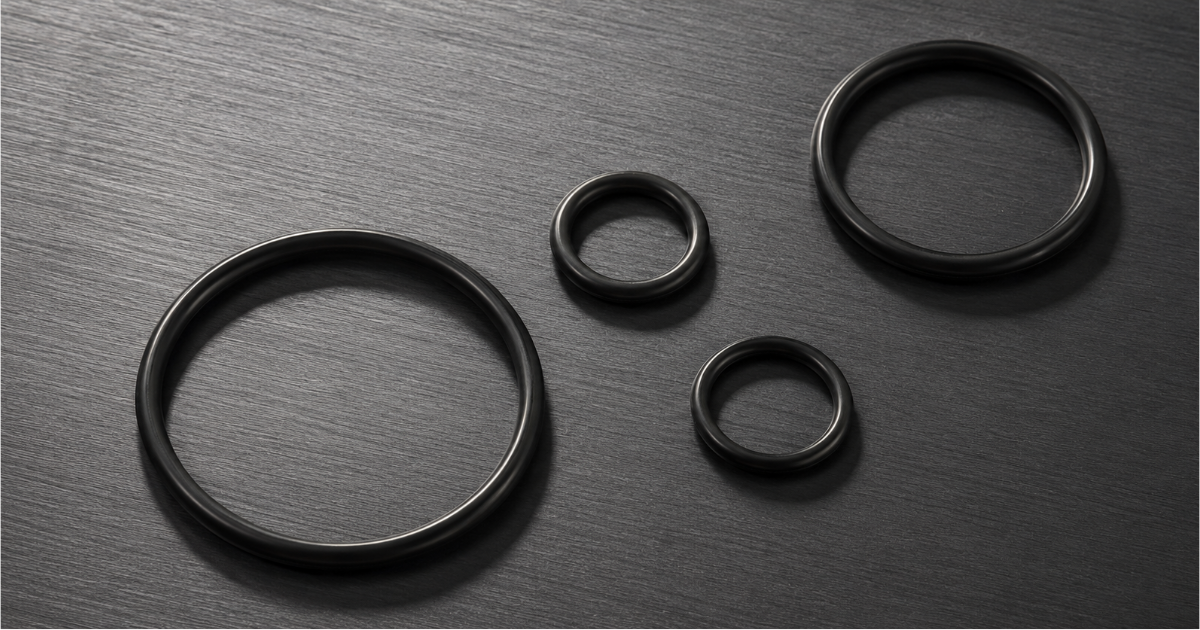
O-rings are among the most widely used sealing products in the world, and for good reason. Their simple, donut-shaped design belies their versatility and reliability. They work exceptionally well in static and dynamic applications where a tight, compact seal is needed, such as hydraulic pumps, valve assemblies, and pipe joints.
O-rings can be manufactured from a variety of materials, including nitrile, silicone, Viton, and EPDM, each offering different levels of chemical resistance, flexibility, and thermal tolerance.
Factors to Consider When Selecting a Seal
Choosing the right seal isn’t just about picking from a catalog; it’s about matching the seal to the real-world conditions of your application. Key factors to evaluate include:
Operating Pressure
The pressure within a system will directly impact how a seal performs. Higher pressures require materials and designs that can maintain integrity under load without deforming or failing. Certain seals are specifically engineered for high-pressure environments, such as hydraulic systems or pressurized vessels.
Temperature Extremes
Seals behave differently at elevated or sub-zero temperatures. Some materials harden or lose elasticity, while others may degrade or expand. Knowing your application's thermal range is essential for ensuring long-term performance.
Chemical & Fluid Compatibility
Whether you’re working with aggressive solvents, food-grade liquids, or abrasive slurries, the fluids in your system can have a major impact on seal life. Acidity, viscosity, and reactivity all influence material selection. Some seals are specially formulated for chemical resistance, while others prioritize wear protection or flexibility.
Making the Right Decision
Every project has different demands. In some cases, an O-ring might be all you need. In others, a multi-material custom seal with exacting tolerances might be required. Partnering with a knowledgeable sealing supplier can help you assess your project’s unique parameters and select the most effective and cost-efficient solution.
Your Trusted Partner in Sealing Solutions
Selecting the correct seal is more than a box to check. It’s a critical step in safeguarding performance, longevity, and workplace safety. Whether you need a high-performance gasket, an off-the-shelf O-ring, or a fully custom-engineered sealing solution, our team is here to help.
Have a sealing challenge? Let’s solve it. Reach out today to consult with our technical team and explore the best sealing products for your application.
The original article was posted to Real Seal.