Below is the first section of the white paper, diving into applications where the measurement is made at the process and the results then transmitted to a control system. This section will review the four types of in-line measurement devices, all involving slightly different elastomer sealing applications.
In-Line Process Applications
Flowmeters
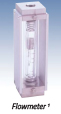
Note that these devices are “in-line” and require isolating the process line to remove and repair, or replace the measurement device. Shutting down a process to remove a device is time consuming, involves loss of production, and may require specific procedures to protect the operators and environment when a line is opened. All of these devices require seals to prevent leakage of the process to the environment and the elastomer seals should last the life of the flowmeter. For aggressive chemicals or high temperature applications, FKM or FFKM seals are an excellent choice. These products offer a long service life and resist deterioration in harsh environments.
When selecting an elastomer seal, first consider the process temperature, including a margin of safety for temperature excursions. Product data sheets usually list the upper service temperature for elastomers in dry air. In a chemical environment involving aggressive fluids, the upper service temperature for the elastomer will typically be lower than that listed on a data sheet. As an example, fluoroelastomers are rated for use up to 200°C, but exercise caution when using these seals over 175°C. For temperatures over 175°C, perfluoroelastomers may offer the best performance, especially in harsh chemicals. FFKMs can be used in services up to 325°C, but time in service may be limited at this top temperature. However, different formulations have subtle differences in performance, so be certain to understand the elastomer product in use, be it an FKM or FFKM. For low temperature applications, chemicals are less reactive and fluoroelastomers can provide excellent performance and sealing down to -30°C. For lower temperature applications, specialty formulations of FKM or FFKM products may be required.
Second, consider the chemical environment. Ideally, the elastomer should be tested in the actual fluid environment to determine its performance. Unfortunately, outside test data is rarely available on the exact conditions to which the seal will be exposed. Further, consider whether the seal is in a dedicated process line, or exposed to a variety of different fluids. Next, are there trace contaminants in the process that might attack the elastomer seal, even though the elastomer is resistant to the bulk process fluid? Finally, verify the elastomer is resistant to any cleaning fluids that may be used in the process.
Third, consider the pressure requirements for the elastomer seal. High pressure processes (>1000 psi) may require a higher durometer elastomer seal (e.g. 85-90 durometer Shore A), or anti-extrusion rings to prevent elastomer seal extrusion and subsequent failure. Also, will the elastomer be exposed to any rapid decreases in pressure? Specialty elastomer formulations are available that provide superior resistance to rapid gas decompression. For vacuum applications, specialty elastomer formulations or specific seal designs may provide the best performance. All these factors should be considered when selecting a high performance elastomer seal.
Pressure Gauges
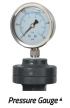
Probes

In-line or tank probes are used to measure process attributes such as pH, conductivity and various ion concentrations. These probes are inserted into a fitting in the process line or tank so the probe is in direct contact with the process fluid. These probes typically use o-ring seals which must withstand the application environment. Care must also be taken with the o-ring seal design for the probe. If the probe is screwed into a fitting, overtightening could result in damage to the o-ring due to over compression. The o-ring groove must have sufficient space to allow for part expansion in hot environments in order to avoid extrusion of the part. Finally if the seal is a circumferential seal around the probe, the o-ring compression and durometer (hardness) must be considered. Too high a compression or too high a hardness of the o-ring can make insertion of the probe into the tube well difficult and could result in damage to the probe. As in the previous examples, the elastomer seal should offer long term performance and chemical resistance to the range of chemicals used in the application.
Sensors