Parker's Bipolar Plate Seals for Fuel Cells and Electrolyzers
Gallagher Fluid Seals is a Parker Distributor and is proud to be one of the few premier distributors to qualify as a “Parker Seal Technology Center (STC)”.
Bipolar Plate Seals for Fuel Cells and Electrolyzers
Sealing solution for electrolyzers and fusers
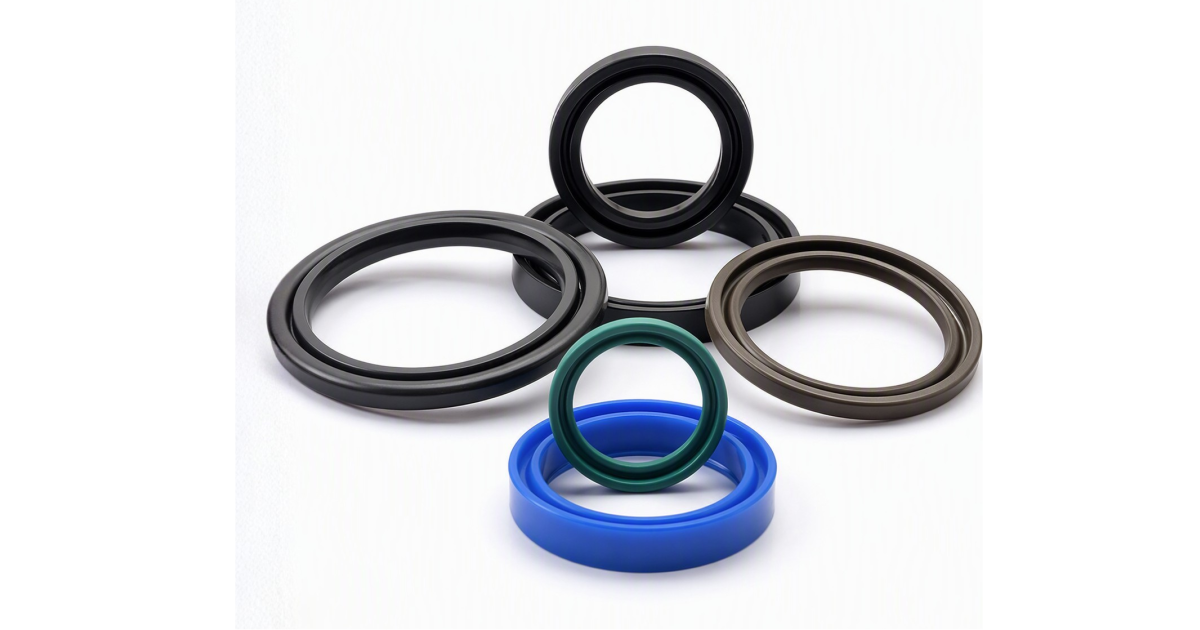
There are various solutions that are suitable for sealing bipolar plates. The simplest and least expensive method is using a fully elastomeric seal.
These seals can be produced conventionally in a mold or by using a continuous method for nearly any desired size and shape.
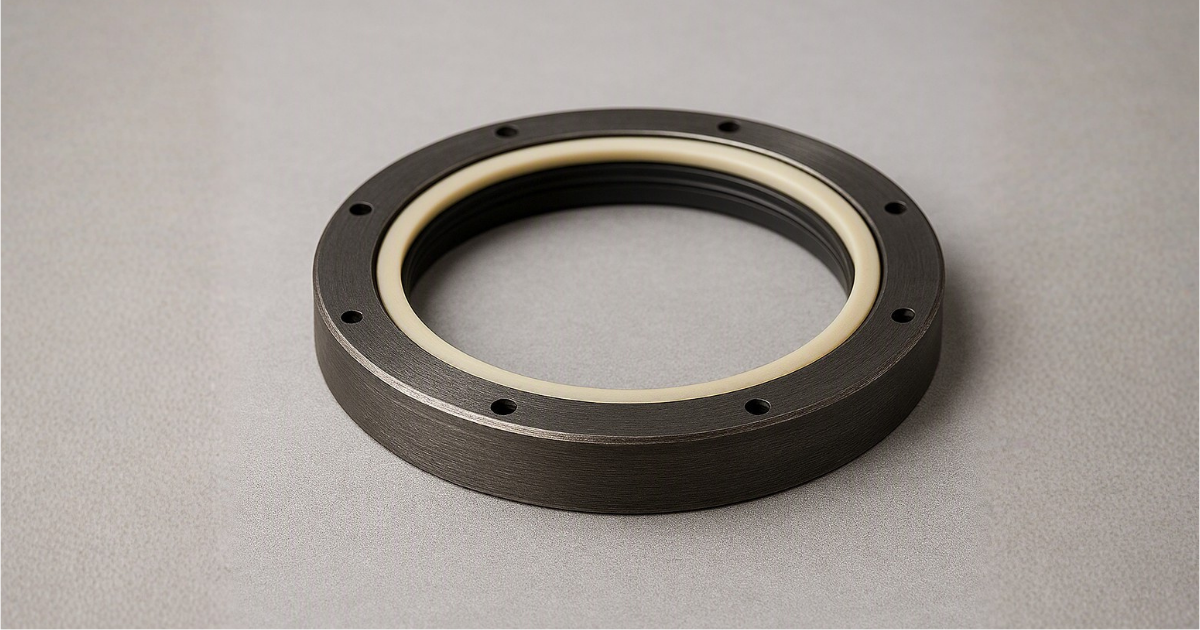
As an improved alternative to an elastomeric seal, Parker offers both Gask-O-Seals® and Integral Seals™, which are custom designed plates with over-molded elastomeric seals. Parker’s plate seals simplify assembly and reduce the risk of installation errors, especially in the case of smaller and more complex sealing structures. The utilization of a plate seal not only enhances handling of the seal, but also eliminates the need for set screws in the bipolar plates.
Bipolar Plate Seals Features Features
- Reduced handling effort
- No assembly mistakes
- Reduced tolerance stack
- XXL / segmented solutions available
- For temperatures up to 482°F
- High resistance against deformation under load
- Special compounds for improved permeation
- Fuel cells (e.g. FAFC, AFC, PEM)
- Electrolyzers (e.g., PEME, AE)
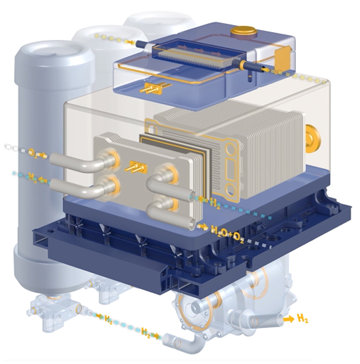
Fuel Cell Stack Bipolar Plate Seals
Parker’s bipolar plate seals are precision engineered and customized to fit the application requirements. The low permeation elastomer bonded to the rigid frame channels fluids, prevents f luid contamination and leakage of reactive gases of stack components, and offers reduced tolerance stack-ups.
For larger dimension applications, such as electrolyzer doors, Parker’s Gask-O-Seal can also be produced in individual interlocking segments. Subsequently, during the stack assembly process, these segments can easily be combined into the final assembly and adjoined which is assisted by a special overlapping design that not only reduces the seal manufacturing cost, but also simplifies the installation of the large seals.
Sealing System Requirements for Bipolar Plate Seals
When you look at various hydrogen applications, you can identify the following requirements for a hydrogen sealing system that, depending on the specific application, may vary in terms of importance.
- Low permeation/leakage
- Pressure resistance
- Chemical resistance
- Extreme low and extreme high temperature resistance
- Long service life
- Purity/cleanliness

Contact us today to start a project with our engineers.
The original content can be found on Parker's website.