Smarter Seals for 2025: From Passive Barrier to Predictive Asset
Seals have long served a quiet but vital role in food and process industries: keeping contaminants out and media in. But in today’s era of Industry 4.0 and advancing material science, seals are evolving from passive components into information-rich devices. What once was a radical idea is now entering validation and early deployment phases—and the benefits extend well beyond reliability.
When this article was first written, the concept of a “smart seal” capable of self-monitoring was largely speculative. Since then, Freudenberg Sealing Technologies and others have advanced this concept significantly:
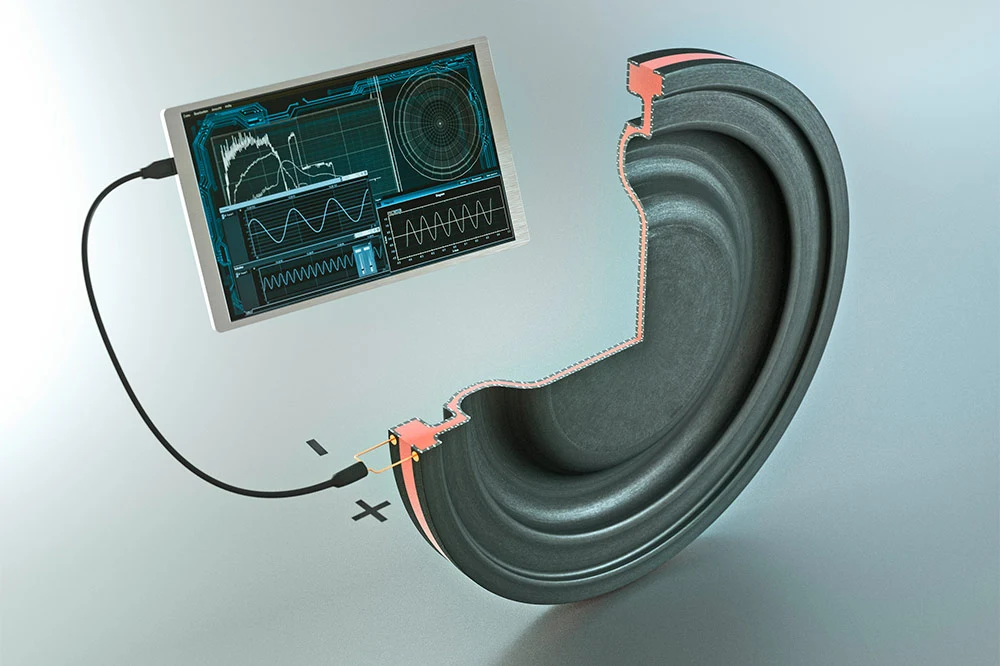
- In 2023, Freudenberg published a feasibility study confirming that a rod seal equipped with conductive and insulating elastomer layers can behave as a capacitive sensor: as wear thins the insulating layer, capacitance changes, which can be correlated to remaining service life.
- Their tests validated performance in aqueous and dry environments, confirming that the sensor function does not compromise sealing integrity.
- Freudenberg also explored applying the same principle to PTFE-based seals used under harsher conditions.
- Meanwhile, Freudenberg is pushing forward in other areas: in 2025 they introduced a pressure seal developed entirely via simulation-based methods, accelerating design cycles and optimizing geometry.
- At Drinktec 2025, Freudenberg revealed new, more sustainable and hygienic clamps and sealing systems (e.g. re-usable support rings, SmartChange clamping) and introduced novel high-performance materials like “75 HNBR 641” compatible with hygienic standards.
These developments show the shift from concept to concrete application. The idea of self-diagnosing, sensor-enabled seals is no longer just theory—it’s becoming a real option, at least in select use cases.
Predictive Maintenance, Not Just Reactive Repair
The real payoff of smart seals lies in predictive maintenance (PdM). Rather than replacing seals on a fixed schedule—or waiting until a leak occurs—operators can act when data indicate real wear thresholds. Some key advantages:
- Optimize lifetime: Use seals until just before failure risk, without premature replacement
- Reduce leakage risk: Avoided contamination, lost product, and equipment damage
- Better scheduling: Maintenance windows can be planned rather than reactive
- Data integration: Wear signals feed into overall equipment health (OEE, reliability) dashboards
In food processing specifically, AI-powered PdM tools are already using vibration, pressure, and flow signatures to detect early signs of seal degradation—even before visible anomalies arise. When a seal itself provides direct wear data, that signal becomes a strong addition to the system’s asset intelligence.
More information on Freudenberg Sealing Technologies’ products for the food and process industries can be found here.
Gallagher Fluid Seals is your source for Freudenberg Sealing Technologies entire product line. If you have any questions on how Freudenberg products can be implemented into your processes, please do not hesitate to contact us.
This article has been reposted, and updated, from Freudenberg’s NEWS section of their website.
Source Article: https://www.fst.com/press/2017/freudenberg-monitoredseals-press