Tackling the Challenging Sealing Requirements in Hydrogen Refueling Stations
Tackling the Challenging Sealing Requirements in Hydrogen Refueling Stations
Hydrogen as a medium places special demands on sealing systems. The small H₂ molecule has a pronounced permeation tendency and can diffuse through even the tiniest gaps. Even with formally intact sealing systems, a small but measurable permeation is therefore unavoidable. Parker Prädifa addresses this with low-permeation materials such as the TPU material P5009 and the FKM material VG323, which were specifically developed for hydrogen applications.
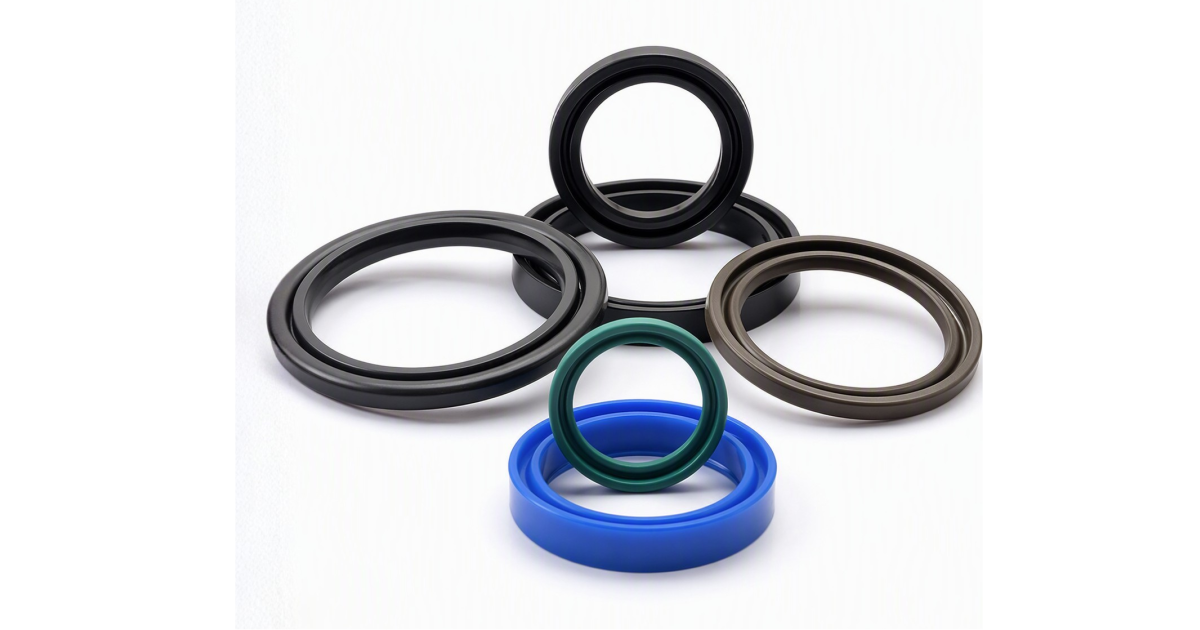
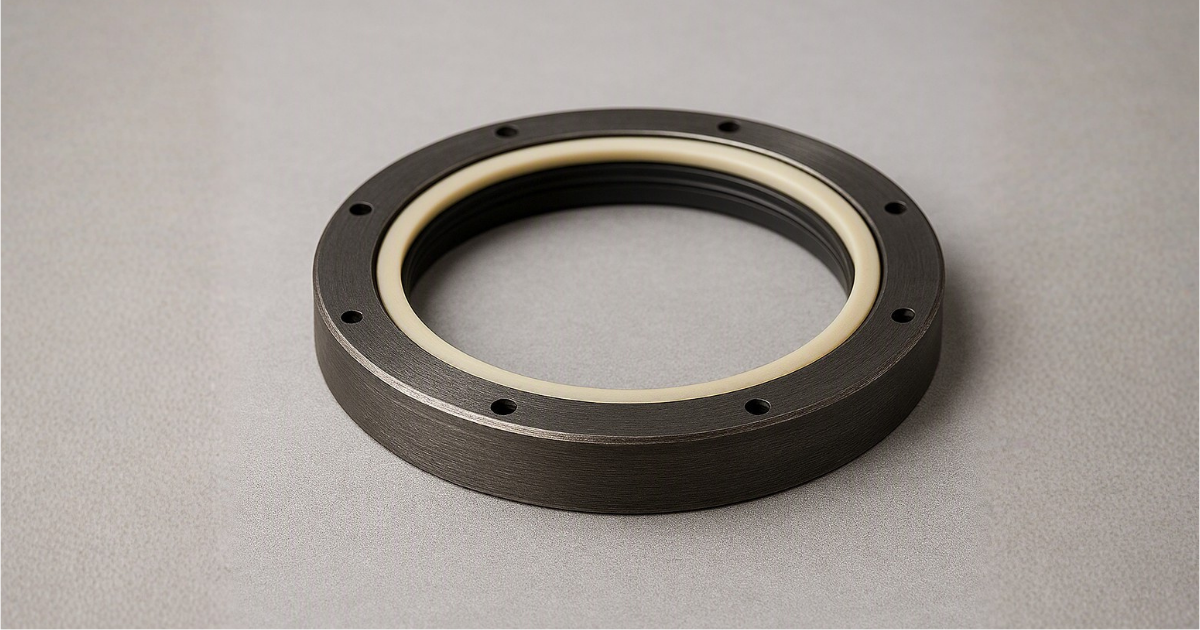
At the same time, pressures of up to 700 bar are common at filling stations for passenger cars, and sometimes up to 1000 bar and above in storage banks and compression stages. Only special sealing systems made of suitable materials can withstand these stresses: spring-activated PTFE seals – FlexiSeals®, metal C-seals , or seals made of high-strength elastomer materials, such as our TPU material P5009.
During refueling, temperatures as low as -40°C are used to reduce the thermal stress on the vehicle's fuel storage system. Subsequent pressure relief and regulation stages, however, lead to significant heating due to expansion. Seals must reliably perform their function under this constant stress of low temperatures and pressure fluctuations.
Furthermore, filling stations must operate with virtually no maintenance in daily use while simultaneously complying with relevant standards. ISO 19880, SAE J2600, and the European Pressure Equipment Directive define limit leak rates, testing procedures, and safety margins.
Low Temperatures
During filling, pipes, fittings, and seals cool to temperatures of -40 °C and below. Elastomers then tend to shrink and become brittle. The seal must still possess sufficient elasticity and resilience to close any leakage paths. Parker Prädifa offers special low-temperature materials, such as the PFAS-free EPDM material E8963, ensuring reliable sealing and sufficient elasticity even at temperatures of around -40 °C and below. Downstream pressure reducers, control valves, and distribution lines often experience rapid heating due to expansion and pressure drop. This rapid alternation between cold and heat creates additional mechanical stresses in the sealing material and increases the risk of cracking and fatigue. Parker Prädifa also offers reliable sealing systems for these requirements.
High Pressures and Sudden Pressure Drops
Situations involving sudden pressure differences, such as the rapid decompression of high-pressure lines or in safety valves, are particularly challenging. Here, the phenomenon of explosive decompression is a risk. During a sudden pressure drop, hydrogen that has previously penetrated the sealing material is released explosively, potentially causing microcracks or more extensive damage. Parker Prädifa offers hydrogen-compatible elastomer compounds with high resistance to explosive decompression, such as the TPU material P5009. For very high pressures and safety-critical shut-off and safety valves, Parker Prädifa also utilizes metallic sealing systems, such as metal C-Seals or O-rings made of austenitic steels or nickel-based alloys. These are less susceptible to hydrogen embrittlement and, in combination with special coatings, ensure a high level of hydrogen tightness.
Conclusion
For operators and plant engineers, this means that sealing concepts cannot be considered in isolation. They must be an integral part of system development. Parker Prädifa sees itself as a development partner and solution provider in this regard, offering hydrogen-compatible materials, seal design supported by finite elements analysis, and intelligently engineered sealing systems tailored to the specific requirements of the respective tank systems.
Only when material selection, structural design, and pressure control are understood as a complete system can hydrogen refueling stations be operated reliably and safely in the long term. Sealing technology thus becomes a key factor for a reliable, economical, and safe hydrogen infrastructure. Parker Prädifa offers a comprehensive portfolio of sealing systems and materials specifically for hydrogen refueling stations – from low-permeation, low-temperature materials and hydrogen-resistant compounds to metallic high-pressure seals – and supports operators and plant engineers in realizing future-proof hydrogen refueling station systems.
Compressors and high-pressure accumulators are particularly critical. In piston and diaphragm compressors, high pressure differentials act on piston seals, valve seats, and shaft seals, often with several hundred thousand load cycles over their service life. Here, the combination of material and geometry determines cycle stability and service life. Parker Prädifa offers sealing designs for these applications that optimally combine material, sealing contour, and support concept. One example are Parker Prädifa's low-friction FlexiSeal® solutions, spring-activated PTFE seals that guarantee a long service life even in low-lubrication or lubricant-free environments.
Parker's in-house developed EPDM, HNBR, or FKM materials are used in a wide variety of O-rings and molded seals and are also suitable for use in compressors. They are characterized by low permeation, sufficient elasticity down to -40 °C or lower, and defined resistance to oils and greases. In areas subject to particularly high thermal and mechanical stress, thermoplastic back-up rings made from PTFE, PEEK, or other high-performance plastics complement the elastomers to prevent extrusion under high pressure and increase service life. Parker Prädifa uses FEM-based calculations to optimize sealing geometries for the specific hydrogen application.
Gallagher Fluid Seals is an authorized distributor of Parker products. To learn more, contact us here.