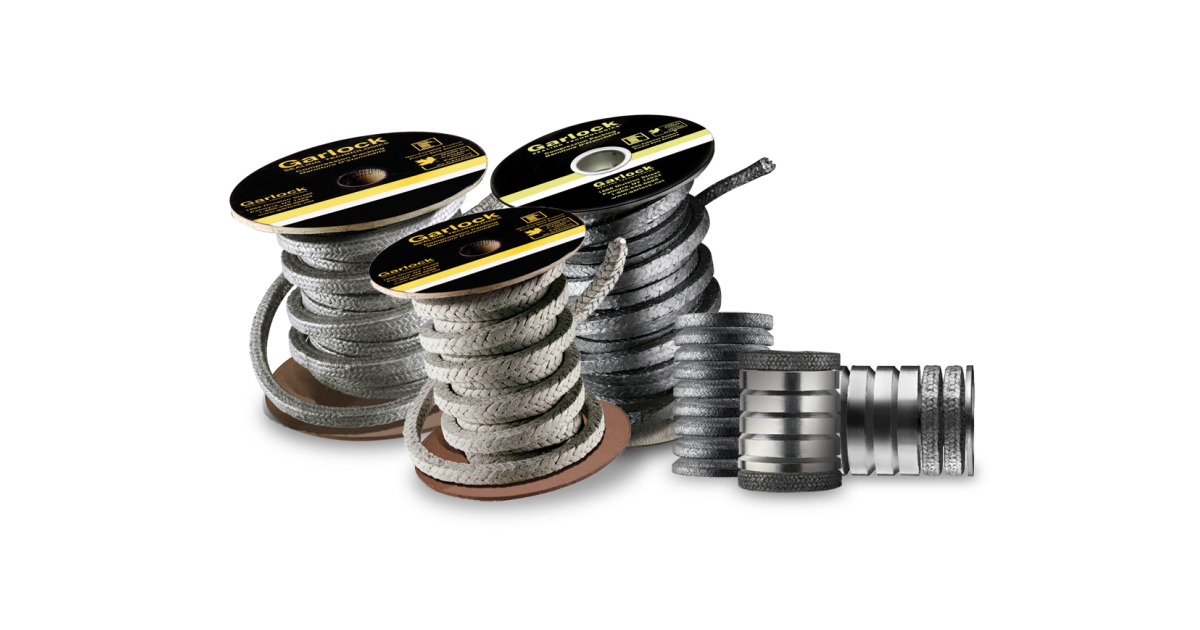
Material selection plays a defining role in how mechanical systems perform over time. The choice between thermoplastic and rubber components affects not only how a system functions on day one, but also how it holds up under real operating conditions such as temperature swings, chemical exposure, vibration, and wear. While both materials are common in industrial equipment, they are engineered to solve different problems, and understanding those differences is key to long-term reliability.
For engineers, designers, and maintenance teams, the decision is rarely about which material is “better.” It’s about which material is better suited to the demands of the application. When the material aligns with the operating environment, components last longer, perform more consistently, and require less intervention over their service life.
Understanding Thermoplastic Components
Thermoplastics are polymer materials that soften when heated and solidify when cooled, a process that can be repeated without permanently degrading the material. This behavior allows thermoplastics to be precisely molded or machined into components with tight dimensional control. Materials such as PTFE, nylon, polyethylene, polypropylene, and polycarbonate are commonly used in engineered systems where repeatability and stability are critical.
In mechanical applications, thermoplastics are typically selected for their rigidity, predictable wear behavior, and resistance to environmental factors. They maintain their shape under load and perform well in conditions involving chemicals, lubricants, or moisture. Because they can be produced with consistent geometry, thermoplastics are often used in applications where even small dimensional changes could impact system performance.
Why Thermoplastics Are Used in Demanding Applications
Engineered thermoplastics are valued for their ability to provide strength without excessive weight while maintaining low friction between mating components. In many systems, they help reduce wear on surrounding hardware and contribute to smoother, more controlled motion. Their resistance to corrosion and chemical attack also makes them reliable in harsh environments where metals or elastomers may degrade prematurely.
These characteristics make thermoplastics well suited for components such as bearings, bushings, wear elements, guides, and seal components that must operate consistently over long service intervals. In applications where precision and durability are essential, thermoplastics often deliver more predictable results than flexible materials.
What Makes Rubber Components Different
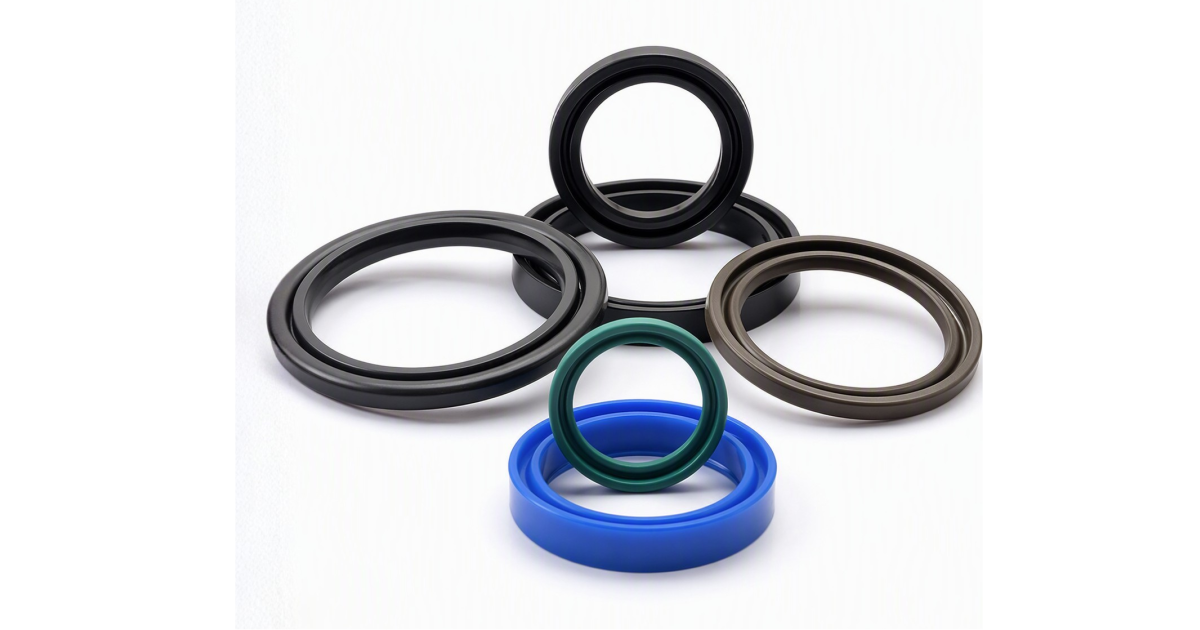
Rubber components are made from elastomeric materials designed to deform under load and return to their original shape once that load is removed. This elastic behavior is the defining feature of rubber and the reason it is so widely used for sealing and vibration control. Both natural rubber and synthetic elastomers, including nitrile, EPDM, silicone, and neoprene, are used across industries to accommodate movement and variation within mechanical systems.
Rather than relying on rigidity, rubber relies on flexibility and compression to perform its function. This allows rubber components to conform to surface irregularities and maintain contact even as parts move, expand, or shift during operation.
The Strength of Rubber in Sealing and Isolation
Rubber excels in applications where flexibility is essential. Its ability to compress and rebound allows it to create effective seals against fluids and gases, even when surfaces are not perfectly smooth or aligned. In dynamic environments, rubber also helps absorb vibration, reduce noise, and protect components from impact or shock. Because of these qualities, rubber is commonly used for O-rings, gaskets, hoses, vibration mounts, and protective elements. In systems where movement is constant or pressure fluctuates, rubber’s ability to adapt helps maintain performance where more rigid materials might fail.
Choosing Thermoplastics for Stability and Wear Resistance
Thermoplastics are typically the better choice when a component must retain its shape under mechanical stress and resist wear over time. In applications involving sliding contact, controlled motion, or exposure to chemicals and oils, thermoplastics provide a stable and durable solution. They are particularly effective when tight tolerances and low friction are required to maintain system efficiency.
When long-term dimensional stability is critical, thermoplastics often outperform elastomeric materials, especially in elevated temperature environments or continuous-duty applications where rubber may soften, creep, or degrade.
Selecting Rubber for Flexibility and Sealing Performance
Rubber components are best suited for applications where sealing integrity, vibration control, or impact absorption are primary concerns. Their ability to conform to mating surfaces makes them highly effective in preventing leaks, even when components experience movement, misalignment, or thermal expansion.
In systems where components are subjected to compression, pressure cycling, or dynamic motion, rubber’s elasticity provides a level of forgiveness that rigid materials cannot match. This makes rubber the preferred choice for many sealing and isolation challenges.
Combining Materials for Optimal Performance
In many mechanical systems, thermoplastics and rubber are not competing options but complementary ones. A rigid thermoplastic component may provide structural support or wear resistance, while a rubber element ensures sealing or vibration damping. When used together thoughtfully, these materials can enhance overall system performance and extend service life.
Selecting the right combination requires an understanding of operating conditions such as temperature, pressure, motion, and chemical exposure. Evaluating these factors early in the design or maintenance process helps prevent premature failures and unnecessary downtime.
Material Selection Backed by Application Experience
At Gallagher Fluid Seals, material selection goes beyond data sheets and generic recommendations. Real-world applications come with constraints, and the right solution balances performance, cost, and practicality. Our experience with both thermoplastic and elastomeric components allows us to help customers choose materials that align with their specific operating conditions.
When materials are matched correctly to the application, systems run more reliably, maintenance intervals are extended, and unexpected failures are minimized. Reach out to our engineering team today to discuss how we can help with your application.