Vesconite’s Early Impact on Deep-Mine Pumping in the Free State
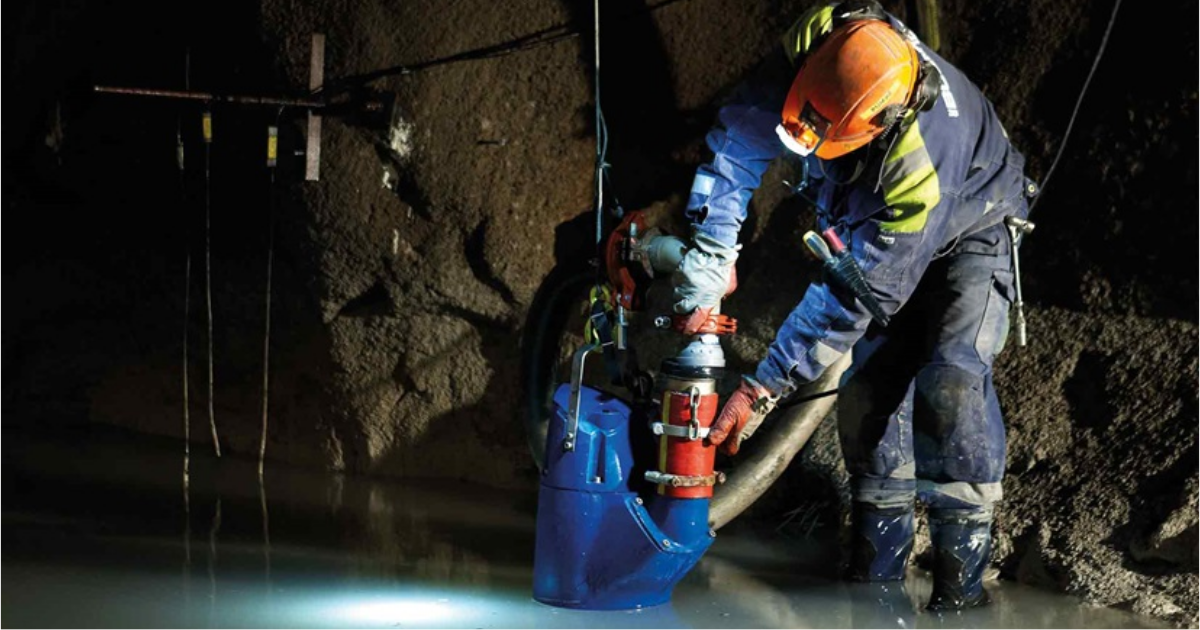
In the early 1980s, the Free State goldfields of South Africa were at the height of their productivity, with deep-level mining operations requiring robust, high-capacity equipment to manage water and ensure continuous ore extraction.
At the time, Ray’s Pumps and Service, a Welkom-based company formed 26 years earlier and employing 50 skilled personnel, played a key role in maintaining these critical systems. The company serviced a wide range of mines across the Free State, ensuring that water management equipment remained operational in the region’s challenging underground conditions.
One of the company’s landmark projects in the 1980s involved the repair of an 825 kW 11-stage centrifugal pump. Such pumps were used in deep-level mines, where the volume of water inflow demanded high-capacity machinery, and reliable operation was critical to avoid costly downtime.
The scope of work for a typical pump that was repaired by Ray’s Pumps and Service included stripping the pump when it was in the workshop, and cleaning and, if necessary, descaling it using specialist technicians. Lathes, boring mills, milling machines and other equipment were typically used to recover parts and manufacture new components.
The repair work undertaken by the company was significant not only for the technical achievement but also for its pioneering approach to materials, since the pumps tended to include Vesconite pump wear components.
This was not a new occurrence since the company had long advocated the use of Vesconite in refurbishing its customers’ pumps. What was new was that photos of the refurbished pump, together with various articles, appeared in engineering publications at the time. Vesconite Bearings MD Alain Leger, who ran the company under the name Vesco Plastics at the time, noted that the material had been in use in several gold mines for some years but remained unannounced until the success of the material in pumping applications had been proved.
“The application of engineering plastics in pumps is an entirely South African development, originated by a Welkom pump engineer, Doug Ray, and South Africa’s pioneer of engineering plastics, Alain Leger of Virginia,” a June 1982 Engineering News article highlighted.
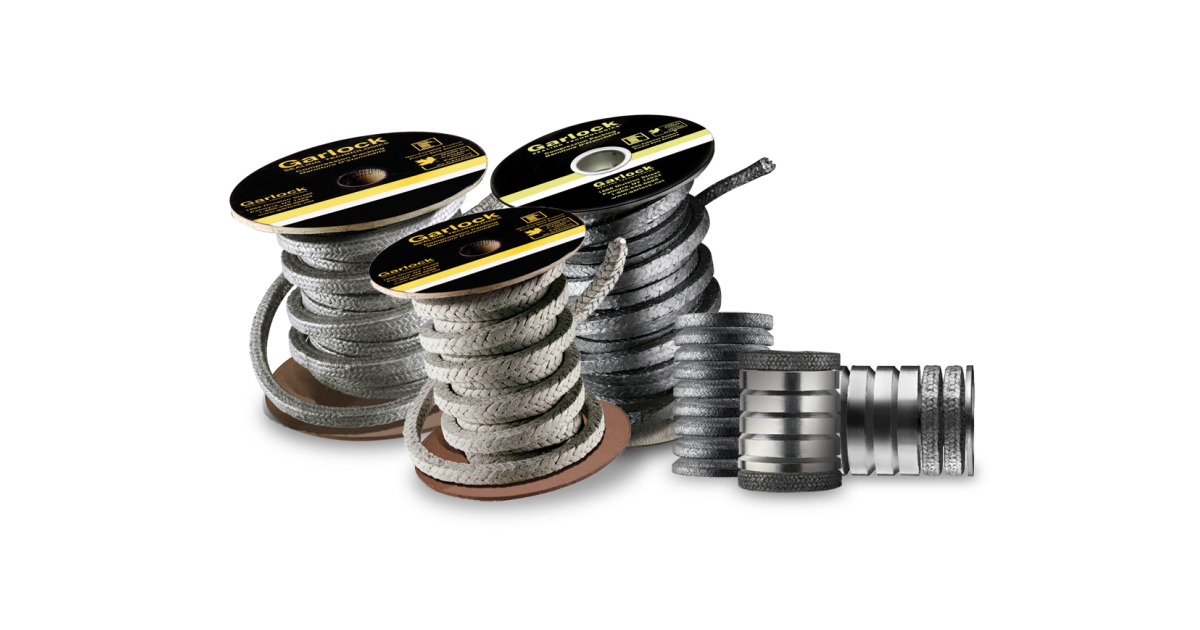
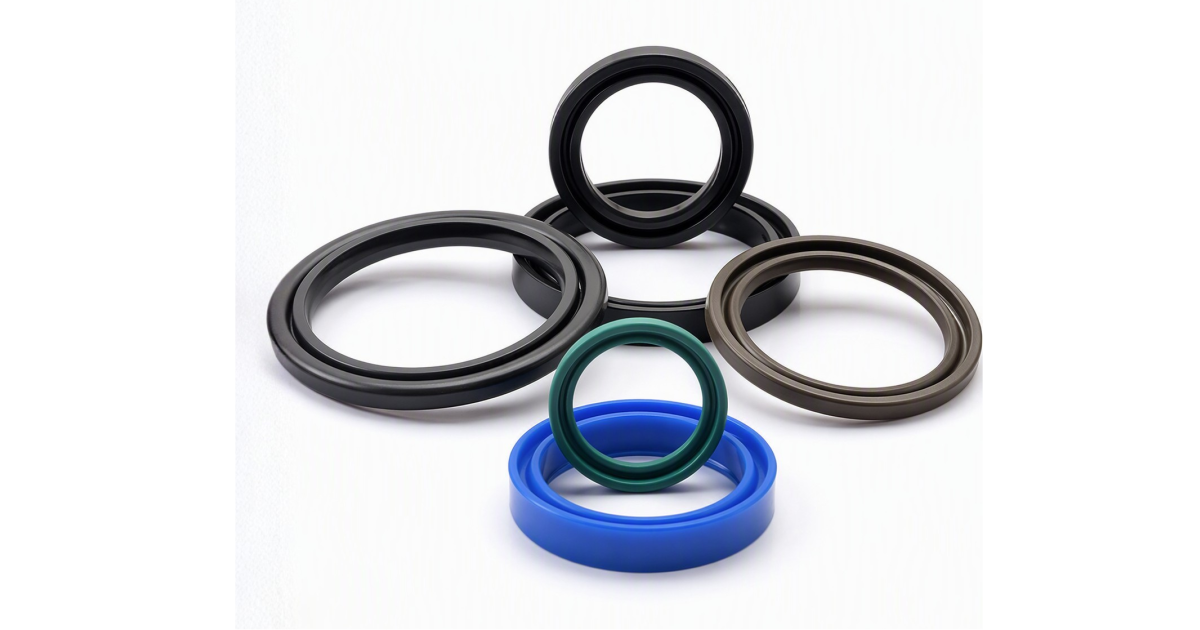
The article referred to the use of Vesconite in both wear rings and packing rings in the 825 kW 11-stage centrifugal pump application.
Vesconite’s success lay in its low-friction, wear-resistant characteristics, making it an effective alternative to traditional materials at the time, such as phosphor bronze.
A key advantage of Vesconite in pump components was its ability to prevent metal-to-metal seizure if pumps ran dry. In deep mines, pumps occasionally experience periods of low flow or momentary dry running, conditions that can cause traditional metal components to seize, leading to catastrophic damage and prolonged downtime. Vesconite’s self-lubricating properties reduced the risk of seizure, helping maintain operational continuity and protecting the integrity of impellers, shafts, and casings.
Many decades later, Vesconite materials are in use in hundreds of pumps globally, and still valued for the characteristics that were first identified as important in pump applications in deep gold mines five decades earlier.
This article was originally posted to Vesconite Bush Talk.