Put To The Test: Bevel Vs. Butt Cut O-Rings
Put To The Test: Bevel Vs. Butt Cut O-Rings
Vulcanized o-rings are manufactured by cutting a specific length of cord stock and joining the ends through a vulcanization process. The way those ends are cut, bevel cut or butt cut, directly affects joint strength, sealing continuity, and long-term performance. Understanding how each cut type behaves under compression and motion helps engineers and technicians select the most reliable option for their sealing application.
Understanding Bevel and Butt Cut Vulcanization
For vulcanized o-rings, seal quality and long-term performance depend heavily on how the cord ends are prepared before vulcanization. This preparation step uses one of two primary techniques, bevel cuts or butt cuts, each of which influences joint strength, sealing continuity, and manufacturing consistency. Understanding how these cut types differ is essential when designing, selecting, or maintaining industrial sealing systems.
Bevel Cut Vulcanized O-Rings

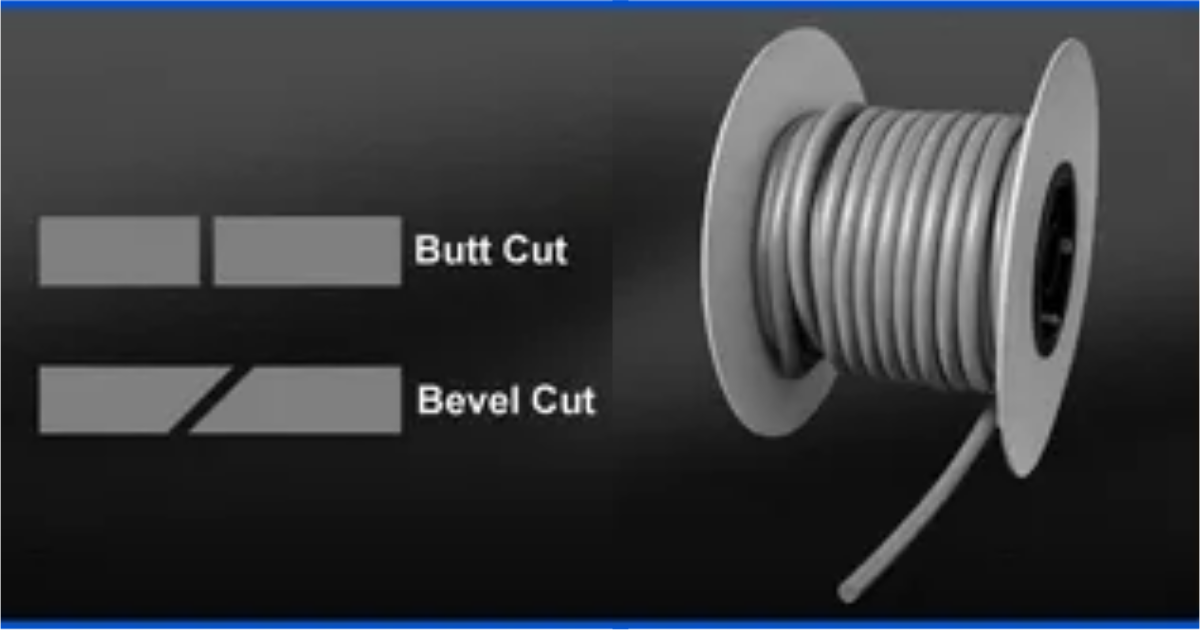
Bevel cut vulcanized o-rings are produced by cutting the cord stock at an angled face, typically around 45 degrees, before aligning and bonding the ends. The angled interface increases the available bonding surface area, which can improve joint strength and reduce stress concentration at the vulcanized seam. Because the mating angles must align precisely, bevel cuts require careful measurement and preparation to ensure a uniform bond during vulcanization.
Butt Cut Vulcanized O-Rings

Butt cut vulcanized o-rings are formed by cutting the cord ends perpendicular to the cord length, creating flat, straight faces that are joined end-to-end. This method simplifies alignment and preparation, making it easier to produce consistent joints with fewer variables during assembly. While butt cuts provide less bonding surface area than bevel cuts, proper vulcanization technique and material compatibility can still produce reliable, durable seals.
How Cut Type Affects the Vulcanization Process
Cut type directly affects how the vulcanization process must be controlled. Bevel cuts require precise adhesive application, alignment, and pressure to ensure full bonding across the angled interface. Butt cuts enable a more straightforward vulcanization process, emphasizing uniform pressure and direct contact at the joint. In both cases, process control and material selection play a larger role in final joint performance than cut geometry alone.
The Impact of Cut Type on Bond Strength
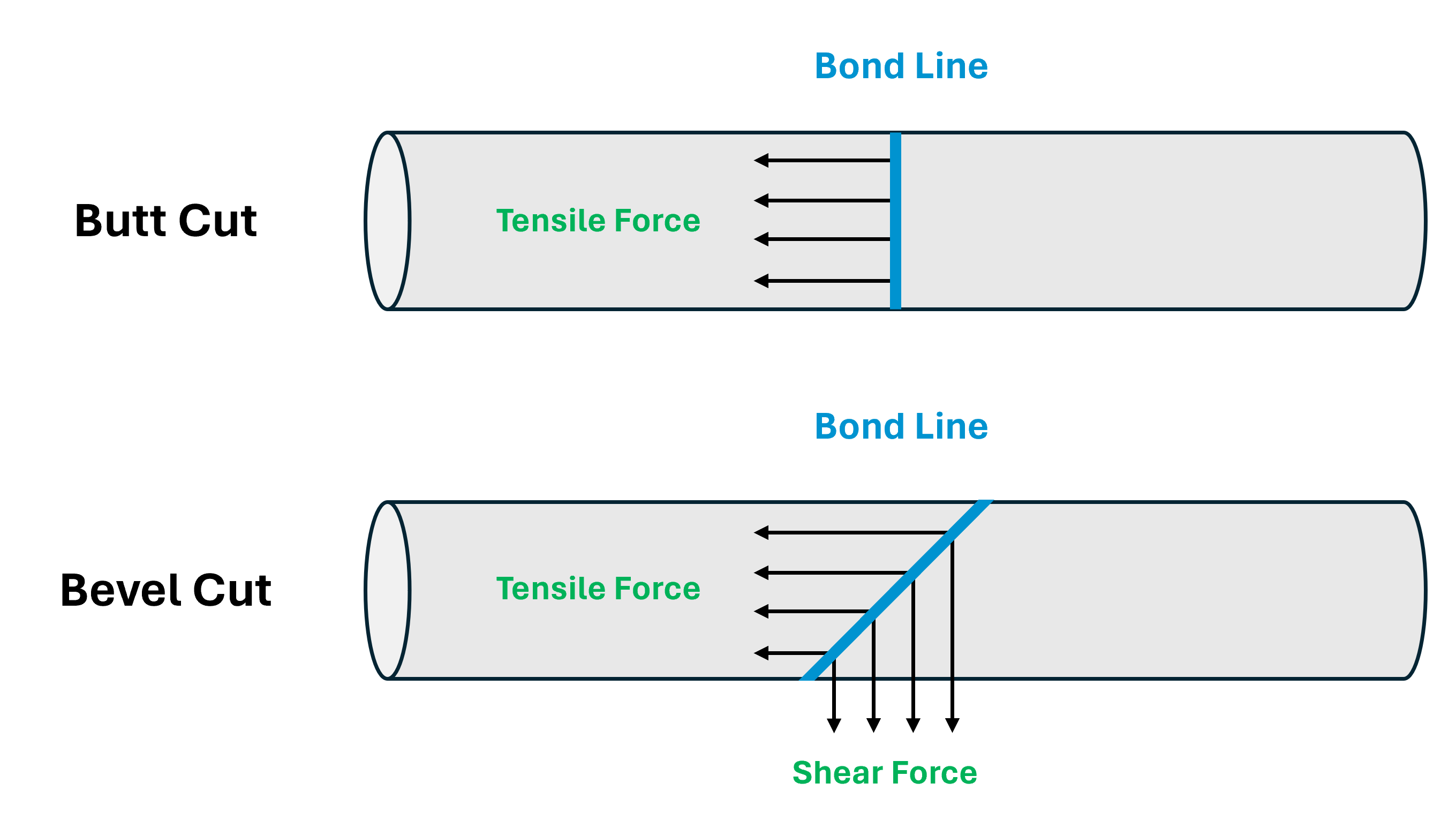
Cut type plays a direct role in the bond strength of vulcanized o-rings by influencing how the joint resists shear and tensile stresses. These mechanical properties determine how well the vulcanized joint withstands operational loads and ultimately affect seal durability and reliability.
- Shear strength describes a joint’s ability to resist forces acting parallel to the bonded interface, which attempt to slide one surface relative to the other.
- Tensile strength describes resistance to forces acting perpendicular to the joint, which attempt to pull the bonded surfaces apart. In elastomeric materials, tensile strength is typically higher than shear strength, as materials resist stretching more effectively than sliding.
Bevel Cut Bond Strength
Bevel cut joints experience a combination of shear and tensile stresses due to their angled bond geometry. The angled interface increases bonded surface area and distributes applied loads across a larger contact region. This load distribution reduces stress concentration at the vulcanized seam and improves overall joint strength, allowing bevel-cut o-rings to tolerate mixed loading conditions and dynamic stresses better.
Butt Cut Bond Strength
Butt cut joints primarily experience tensile stress, with forces acting perpendicular to the flat bond interface. Because the bonded surfaces are aligned straight across, the joint has limited ability to resist shear forces. The smaller bonding area further concentrates stress at the seam, reducing joint strength under shear-dominant or dynamic conditions. As a result, butt cut joints are generally less tolerant of applications involving motion, vibration, or uneven loading.
Quantifying the Difference in Bond Strength
The performance difference between bevel and butt cut joints can be evaluated by comparing the bonded surface area. For a given cord cross-section, a bevel cut provides approximately 41.4% more bonding surface area than a butt cut.
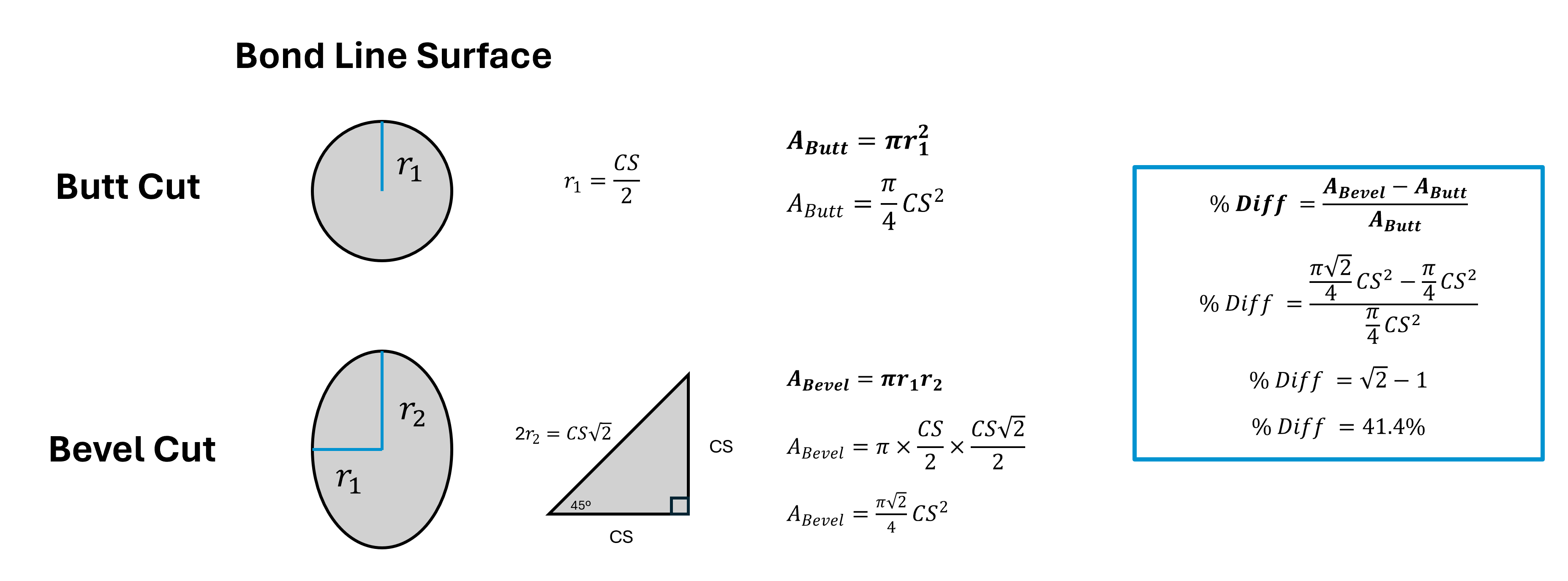
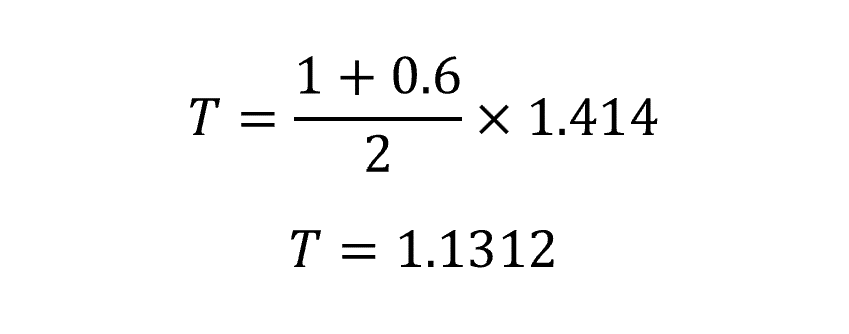
Using the von Mises yield criterion, shear strength can be approximated as 60% of tensile strength. When this relationship is applied to the increased bonding area of a bevel cut, the effective shear capacity of a bevel-cut joint is approximately 13.1% greater than that of a butt cut joint. This increase reflects both the larger bonded interface and the combined contribution of shear and tensile resistance within the angled joint.
Advantages and Limitations of Cut Type in Vulcanization
The choice between bevel cuts and butt cuts in vulcanized o-rings affects not only joint strength and sealing performance, but also manufacturing complexity, consistency, and cost. Each cut type offers clear advantages and tradeoffs that must be evaluated against application demands and production constraints.
Advantages of Bevel Cut Vulcanization
- Larger Bonding Area: The angled interface increases bonded surface area, improving both shear and tensile resistance at the joint.
- Improved Load Distribution: Forces are distributed across a larger contact area, reducing stress concentrations at the vulcanized seam and lowering the risk of premature failure.
- Higher Joint Strength and Durability: The combination of increased bonding area and balanced stress distribution results in a stronger, more durable joint suited for dynamic or high-demand applications.
Limitations of Bevel Cut Vulcanization
- Greater Manufacturing Complexity: Bevel cuts require precise cutting angles and careful alignment, increasing process sensitivity and production time.
- Higher Production Cost: The added precision and handling steps typically increase manufacturing costs, which may limit feasibility for high-volume or cost-sensitive applications.
Advantages of Butt Cut Vulcanization
- Simpler and Faster Production: Straight cuts are easier to prepare and align, enabling faster throughput and improved manufacturing efficiency.
- Consistent Assembly and Alignment: The flat interface reduces alignment variability during vulcanization, supporting consistent joint formation in volume production.
Limitations of Butt Cut Vulcanization
- Reduced Bonding Area: The smaller bonded interface limits shear resistance and overall joint strength compared to bevel cuts.
- Higher Stress Concentration at the Joint: Loads act directly across the seam, increasing the likelihood of failure in dynamic, vibrating, or high-load environments.
Selecting a Cut Type for Your Applications
Selecting the appropriate cut type for a vulcanized o-ring requires aligning joint geometry with the mechanical, environmental, and economic depends on the application. Bevel and butt cuts serve different purposes, and the correct choice depends on how the seal will be loaded, manufactured, and used in service.
Key Selection Factors
- High-Stress or Dynamic Applications: Bevel cut joints are better suited for applications involving high mechanical stress, pressure cycling, vibration, or motion. The increased bonding area and improved load distribution provide greater joint strength and durability under demanding conditions.
- Cost-Sensitive or Low-Demand Applications: Butt cut joints are appropriate when operating conditions are stable and mechanical demands are lower. Their simpler preparation and faster production make them a cost-effective solution for high-volume or budget-constrained applications.
- Bonding and Adhesion Characteristics: Elastomers with strong adhesive response during vulcanization benefit more from bevel cuts, where the increased surface area improves bond consistency and joint integrity.
- Mechanical Strength Requirements: Applications that rely on maximum joint strength or resistance to mixed loading conditions typically favor bevel cuts, particularly when paired with higher-strength elastomer compounds.
- Application Environments: Temperature extremes, pressure levels, chemical exposure, and mechanical loading should all be evaluated together. Cut type and elastomer selection must be combined to ensure reliable performance under actual operating conditions.
Choosing Bevel or Butt Cut Vulcanization
Neither bevel nor butt cuts are universally superior. Bevel cuts prioritize strength and durability, while butt cuts prioritize simplicity and cost efficiency. Evaluating application requirements against these selection factors enables engineers and manufacturers to select the cut type that delivers reliable sealing performance without unnecessary complexity or cost.
The Final Cut: Achieving Excellence in Vulcanized O-Ring Seals
Selecting between bevel and butt cuts in vulcanized o-rings is a design decision that directly affects joint strength, durability, and long-term sealing performance. Bevel cuts provide a greater bonding area and improved load distribution, making them better suited for high-stress or dynamic applications. Butt cuts prioritize simplicity and cost efficiency, offering a practical solution for stable, low-demand environments.
The most effective cut type depends on application-specific factors such as mechanical loading, material behavior, and environmental exposure. Evaluating these conditions together ensures that selected joint geometry delivers reliable performance without unnecessary complexity.
This article was originally posted to Global Oring. Reach out to Gallagher via our contact us form for any inquiries.