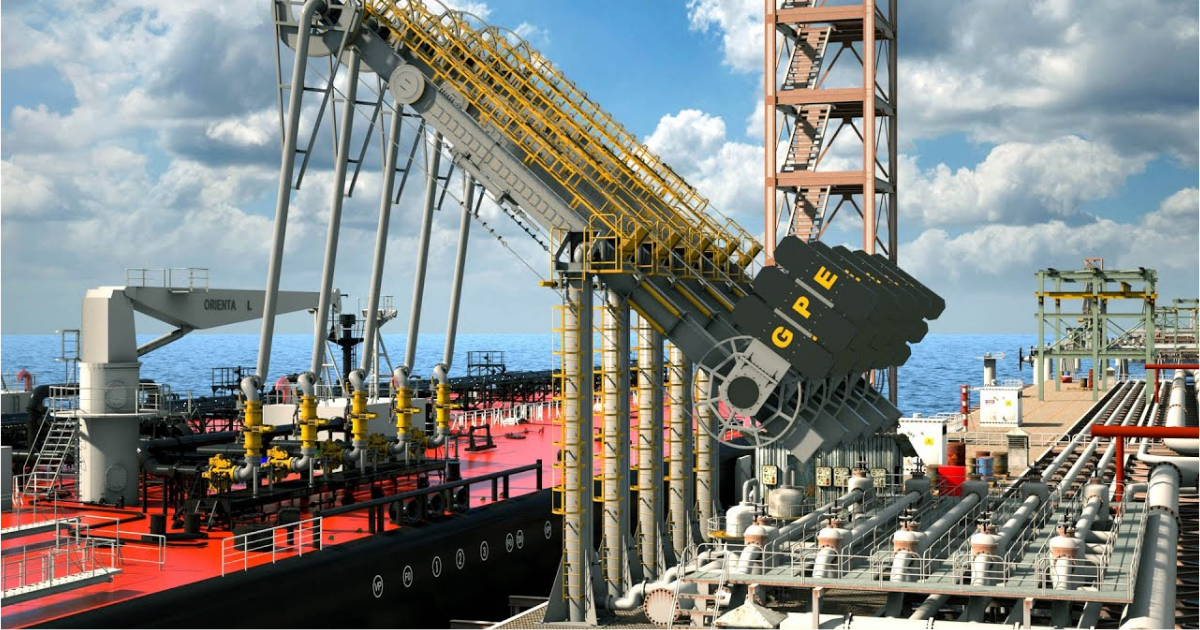
Why Swivel Arm Repairs Fail: The Hidden Role of Flange Seal Engineering
At LNG export and import terminals, swivel arms are among the most relied-on pieces of equipment during loading and unloading. When they operate as intended, they enable smooth movement, controlled flow, and safe transfer of product. When they don’t, downtime adds up fast.
Yet even with stringent maintenance schedules and skilled repair teams, swivel arm failures still happen. And far more often than most facilities realize, the root cause isn’t the swivel arm itself; it’s the seals inside it.
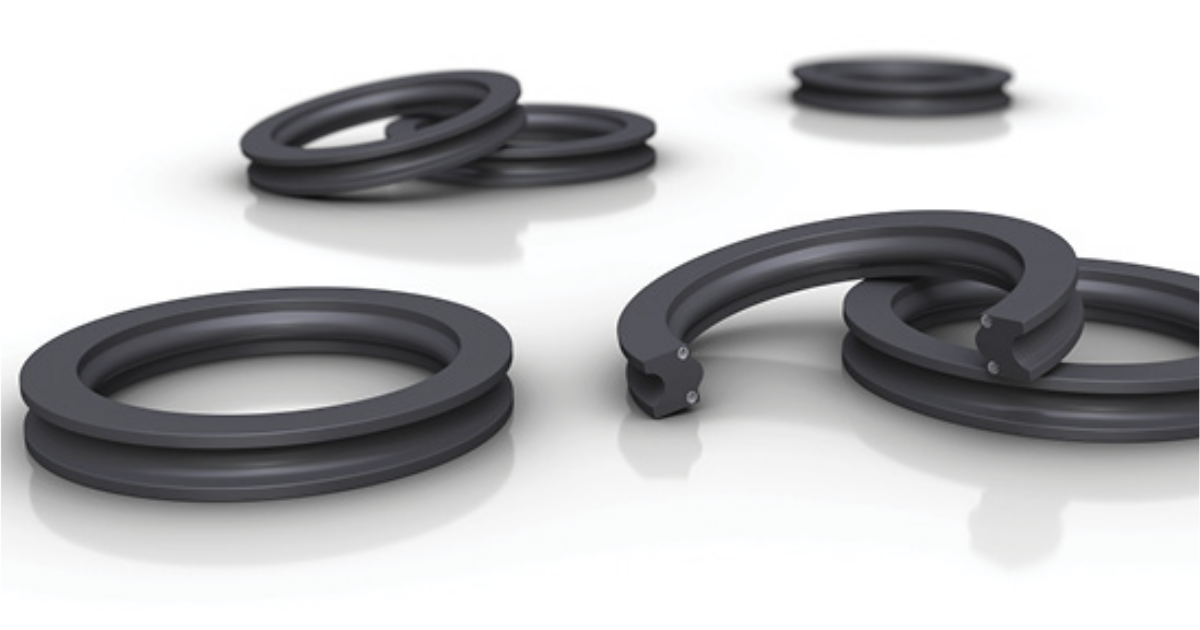
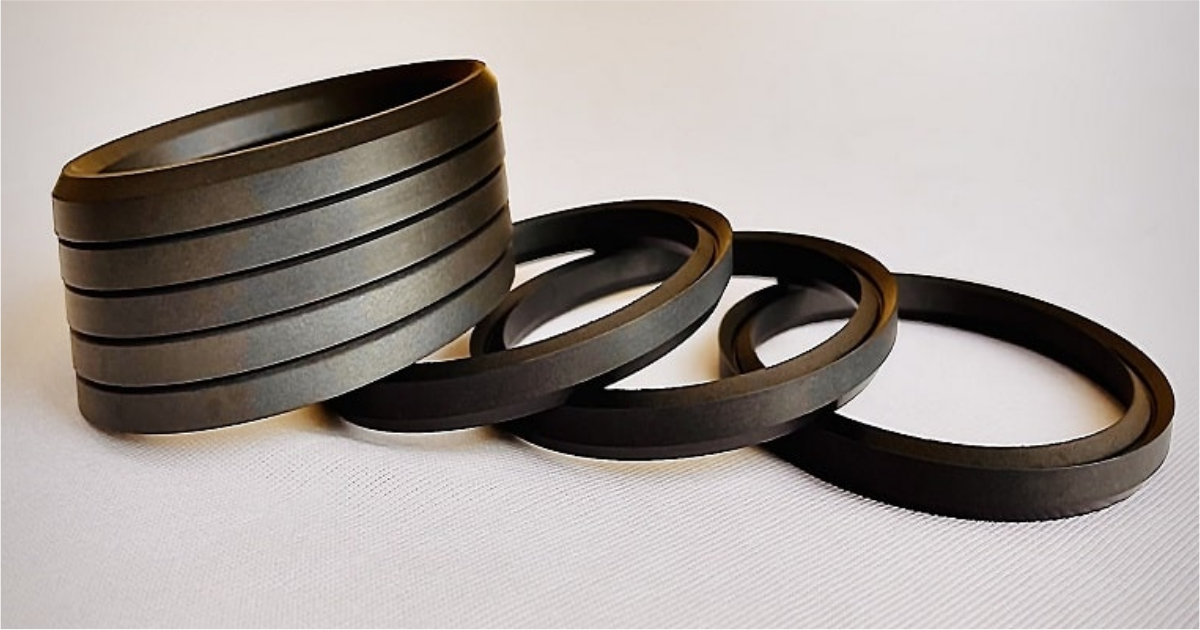
Flange seals are small components, but in LNG service they do outsized work. They manage extreme temperatures, high cycling, pressure fluctuations, and the demanding dynamic movement created during ship-to-shore transfer. When they’re not engineered correctly, failures eventually show up as leaks, blowouts, or excessive wear.
Understanding how and why these failures originate is the first step toward preventing them. And for many maintenance teams, it starts with recognizing the overlooked role of seal design.
The Critical Function of Flange Seals in LNG Swivel Arms
Swivel arms rely on precision sealing to uphold operational integrity. Each arm contains multiple rotating joints, all of which must remain leak-free despite constant movement and exposure to cryogenic conditions.
A flange seal inside these joints isn’t just there to stop leakage, it must:
- Maintain seal force across a wide temperature range
- Resist molecular shrinkage at cryogenic temperatures
- Handle oscillating or rotational movement
- Prevent permeation under long-term load
- Maintain even stress distribution around the flange
If the seal isn’t engineered specifically for these demands, the swivel arm becomes increasingly vulnerable.
That’s why engineers emphasize the importance of spring-energized seal designs. These seals provide consistent, reliable load even as components contract, expand, or cycle during operation. But not all spring-energized seals are created equal, and that’s where failures typically begin.
Where Swivel Arm Seal Failures Actually Start
When LNG terminals send swivel arms out for repair, the failure symptoms are usually obvious: leakage, pressure instability, or inability to maintain proper movement. But the underlying cause is usually hidden deeper inside the seal.
The most common failure points include:
1. Inconsistent or Insufficient Spring Force
Spring load is what maintains sealing pressure as temperatures and operating conditions change. Without a consistent, engineered spring element, seals could lose contact form gaps due to cryogenic contraction.
A weak spring or a poorly manufactured one leads to gradual performance loss, even if the seal material is technically “compatible.”
2. Deformation or Cold Flow of Polymer Materials
Many seals rely on PTFE or other engineered polymers. But without the right fillers, machining precision, or spring geometry, the material can deform under load—especially during long idle periods between ship arrivals.
3. Poor Fit-Up or Surface Finish Issues
If the seal is not manufactured precisely or is not matched to the flange dimensions, installation becomes a compromise. Any minor misalignment multiplies as joints rotate and pressure cycles.
4. Abrasive Wear Caused by Incorrect Seal Designs
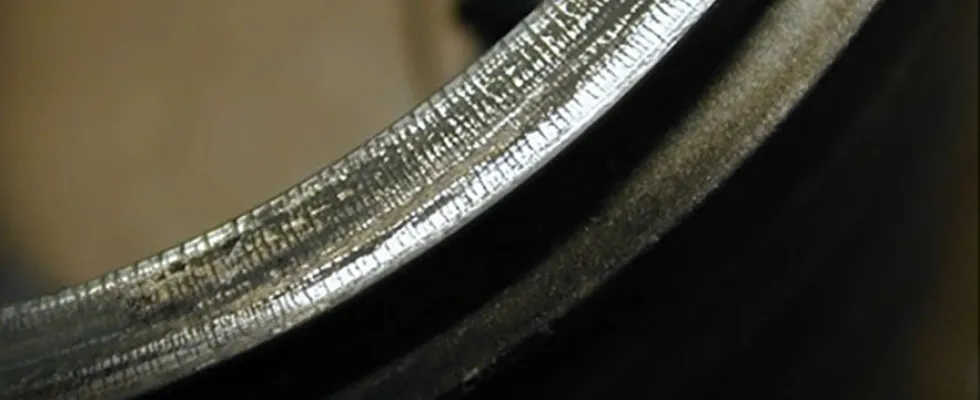
In dynamic joints, the wrong seal geometry can behave like a scraper instead of a seal. Over time, this accelerates wear on both the seal and the housing.
5. Seal Fatigue From High Cycle Counts
LNG swivel arms can see thousands of full loading cycles over their service life. If the energizing spring is not engineered for that duty, fatigue failure is almost inevitable.
In short: if the seal design isn’t right, the swivel arm doesn’t stand a chance, regardless of how well repairs are performed.
Why Advanced Seal Engineering is Becoming Essential
As LNG demand increases globally, so does the pressure on loading infrastructure. More frequent cycles, faster turnarounds, and tighter environmental requirements mean downtime thresholds are shrinking.
Seal engineering is becoming a key tool in creating a reliable system.
Better Spring Materials Mean Better Swivel Arm Performance
High-reliability spring systems, like RACO springs, deliver consistent load across the full thermal and pressure range of LNG service. They can withstand repeated cycling without losing force, and they maintain predictable elasticity even during cryogenic contraction.
Many seal manufacturers simply don’t have the capability to produce or source this type of spring technology. For LNG swivel arms, the difference can mean years of additional service life.
In-House Seal Manufacturing Reduces Failure Risk
A seal is only as good as the process that made it. When manufacturing is done in-house, the benefits stack up:
- Tighter dimensional control
- Faster adjustments to customer-specific geometries
- Better traceability and documentation
- No dependency on outside suppliers with long lead times
- More consistent surface finishes and tolerances
For repair facilities, this means seals that fit correctly and perform reliably long after installation.
Service Quality and Turnaround Time Matter More Than Ever
During a swivel arm rebuild, seals are often the final components needed before reassembly and pressure testing. If seals are late, everything is late.
Fast, reliable turnaround can directly impact a facility’s ability to return to operation. With in-house machining and spring production, high-end seal manufacturers can provide both high quality and fast turnaround without compromise.
Preventing Swivel Arm Failures Starts With Better Seal Selection
Swivel arm failures are rarely sudden. They are cumulative, caused by small variances in seal design, spring performance, or material behavior that grow over time.
When maintenance teams choose seals specifically engineered for LNG swivel arm service, the risk of premature failure drops dramatically. The right spring load, the right design geometry, the right materials, and the right manufacturing process all combine to provide a level of reliability that commodity seals simply cannot match.
For facilities focused on uptime, safety, and long-term cost control, upgrading seal engineering is one of the most effective ways to prevent recurring problems and extend swivel arm service life.