Cased Lip Seals vs. Spring-Energized Seals: Choosing the Right Sealing Solution
Cased Lip Seals vs. Spring-Energized Seals: Choosing the Right Sealing Solution
In demanding industrial environments, selecting the right seal design can determine whether equipment operates efficiently or fails prematurely. Among the many sealing options available, cased lip seals and spring-energized seals are two high-performance designs frequently used in rotating, reciprocating, and static applications. While both offer reliable sealing under harsh conditions, they differ significantly in construction, function, and suitability for specific operating environments.
What Are Cased Lip Seals?
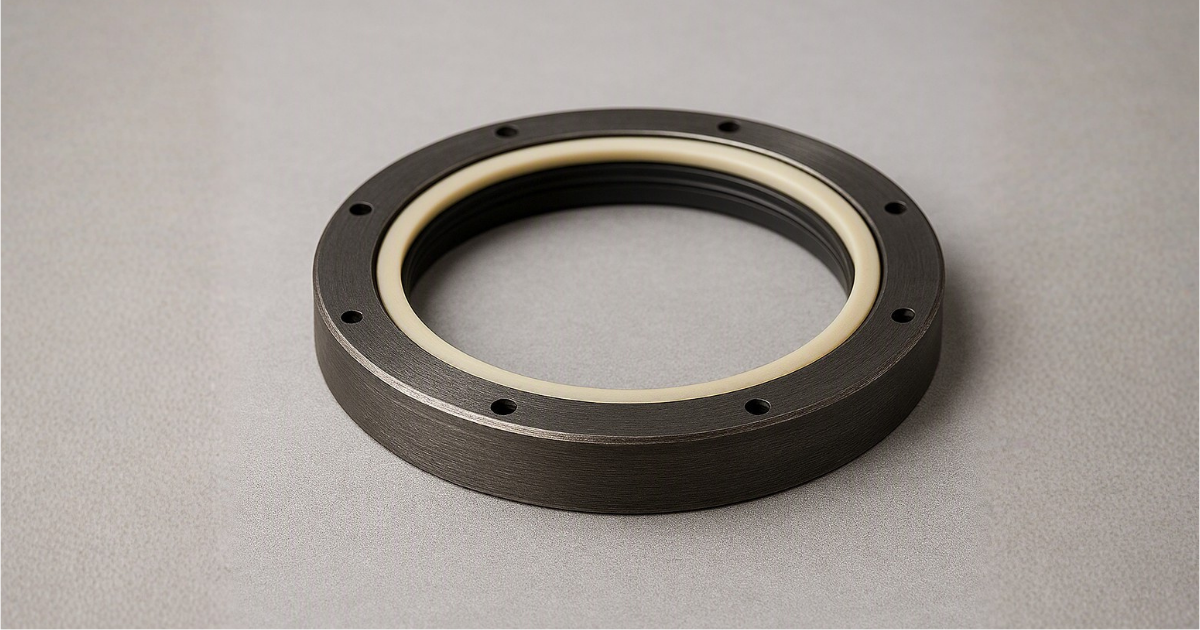
Cased lip seals combine the flexibility of a PTFE sealing lip with the rigidity and protection of a metal housing. The “can” is typically a thin metal casing that holds the lip in place, maintaining precise positioning and concentricity during installation and operation.
The PTFE lip runs against a rotating shaft or sleeve, forming a dynamic seal that retains lubrication and excludes contaminants such as dust, dirt, and moisture. This makes the seal particularly advantageous for better alignment, increased structural strength, improved heat dissipation, and enhanced durability.
Common features of cased lip seals include:
- A metal shell (usually stainless steel or carbon steel) for dimensional stability and protection from deformation.
- A PTFE lip is designed to maintain contact under moderate pressure.
- A secondary dust lip for added contamination control in harsh environments.

This design makes cased lip seals particularly effective for rotating equipment such as pumps, gearboxes, mixers, turbines, and compressors.
What Are Spring-Energized Seals?
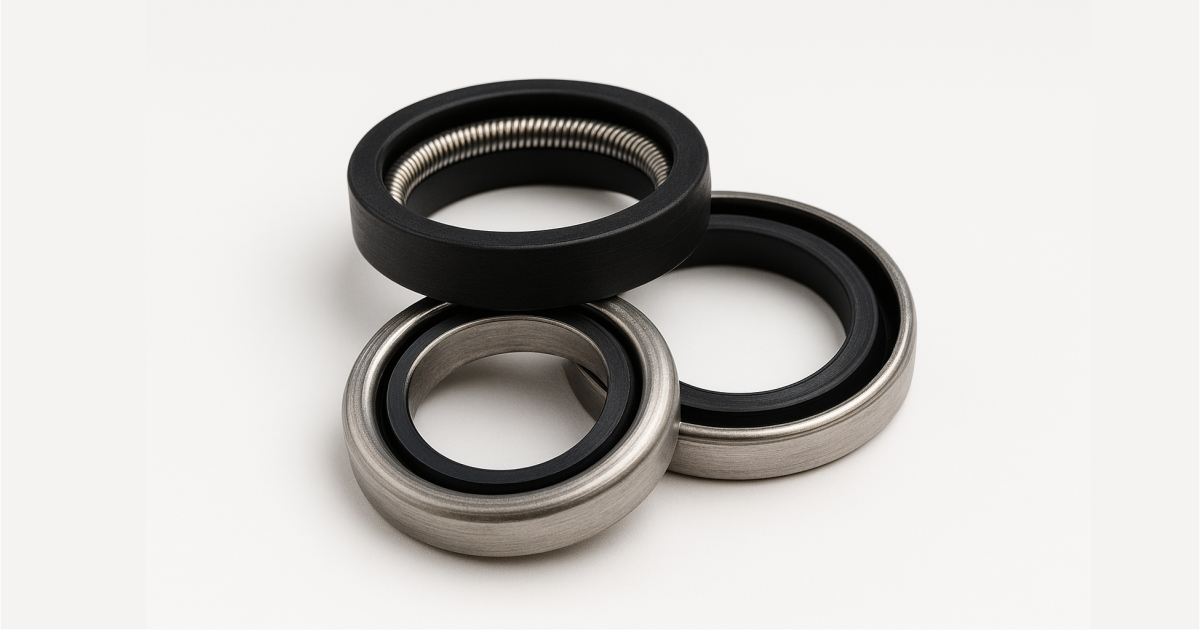
Spring-energized seals are a different class of precision sealing technology, designed for high-performance static or dynamic sealing in extreme environments. Instead of relying on a PTFE lip for sealing force, these seals use a metal spring energizer, often made of stainless steel, to apply consistent radial pressure to a polymer sealing jacket (typically PTFE or another engineered thermoplastic).
This unique construction allows spring-energized seals to maintain sealing integrity across a broad range of pressures, temperatures, and chemical exposures, far beyond the capability of standard elastomeric seals.
A typical spring-energized seal consists of:
- A polymer jacket (PTFE, PEEK, UHMWPE, or other materials) chosen for chemical compatibility and low friction.
- A spring energizer (helical, cantilever, or canted coil) that applies continuous force to maintain lip contact under varying conditions.
- Because the spring compensates for wear, thermal expansion, and hardware misalignment, these seals perform exceptionally well in applications where pressure cycling, vacuum, cryogenic temperatures, or aggressive chemicals would quickly degrade conventional seals.

| Category | Cased Lip Seals | Spring-Energized Seals |
|---|---|---|
| Operating Pressure | Up to ~500 psi | Up to 30,000 psi or more |
| Temperature Range | –53°C to +252°C | –250°C to +300°C (depending on material) |
| Media Compatibility | Excellent with dry / abrasive media | Excellent with aggressive chemicals, gases, cryogenics |
| Shaft Speed | High-speed rotary applications | Moderate speeds; better for reciprocating, oscillating, or static |
| Friction & Wear | Very low friction; minimal wear, no stick‑slip | Low friction; PTFE jacket minimizes wear |
| Cost | Lower cost than spring energized | Higher initial cost but longer service life |
| Typical Applications | Gearboxes, pumps, motors, turbines | Valves, compressors, cryogenic systems, aerospace, semiconductor |
Making the Right Choice
While both cased lip and spring-energized seals provide dependable performance, the best choice depends on your application parameters including pressure, temperature, media, motion type, and required service life.
- For general-purpose rotary applications, cased lip seals deliver strong value and straightforward installation.
- For extreme or mission-critical environments, spring-energized seals offer unmatched durability and chemical resistance.
In some cases, hybrid solutions or alternative materials can further optimize performance and longevity.
When to Choose a Cased Lip Seal
Engineers often choose cased lip seals when:
- Shaft speeds are high but operating pressures are moderate.
- The sealing media are oils, greases, or other non-aggressive fluids.
- Equipment operates in dirty or wet environments where debris exclusion is critical.
- Maintenance intervals are regular and replacement cost is a consideration.
Common use cases include industrial pumps, motors, mixers, and turbines, especially in manufacturing, food processing, or general industrial settings.
When to Choose a Spring-Energized Seal
Engineers typically specify spring-energized seals when:
- Exposure includes aggressive chemicals, high vacuum, or cryogenic temperatures.
- Seals must endure extreme pressures or wide temperature ranges.
- Equipment cannot tolerate frequent maintenance or downtime.
- Low friction and minimal leakage are top priorities.
You’ll find spring-energized seals in aerospace systems, hydraulic systems, semiconductor manufacturing, chemical processing, cryogenics, and high-pressure fluid handling—industries where performance and reliability are paramount.
Partnering with Gallagher Fluid Seals
At Gallagher Fluid Seals, we help engineers identify the most effective sealing solution for their specific operating conditions. Our team works closely with customers to evaluate pressure, temperature, speed, and media to recommend the best design, whether a cased lip seal, a spring-energized seal, or a custom-engineered configuration.
With decades of sealing expertise and access to top global manufacturers, Gallagher ensures that your system achieves maximum reliability, safety, and efficiency, no matter how demanding the application.
Contact us today to get started on your custom solution, or shop our thousands of in-stock products now.