Mechanical Seals
-
May 23, 2019
Mechanical sealing conserves water, improves energy efficiency, and minimizes environmental impact
The environmental performance of products and processes in all industrial sectors increasingly is cause for critical inspection, with sustainability, conservation of natural resources, and reduced environmental contamination concerns influencing equipment design and selection.
Many industrial processes can be addressed to improve sustainability and minimize environmental impact, while at the same time maintaining or reducing operating costs. Implementing energy-efficient and environmentally friendly processes and technologies should be embraced as a priority at the component, process, and system levels.
One aspect of these processes is mission-critical rotating equipment, and specifically centrifugal pumps, which represent a significant proportion of the equipment found in industrial operations. One vital component of a centrifugal pump is the seal around the rotating shaft that passes through a stationary pressure casing or housing. The seal contains the liquid or gas from escaping to the environment.
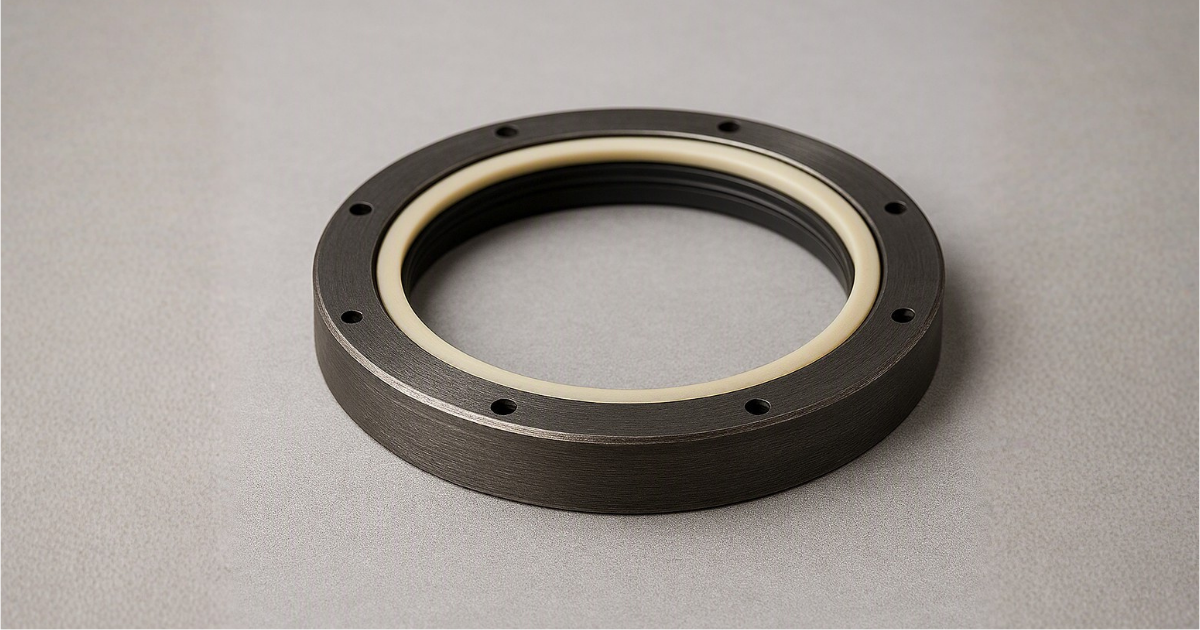
Sealing systems help maintain acceptable pump efficiency, reliability, energy consumption, water usage, and emissions control. These factors can materially facilitate achieving total-life cycle cost-reduction and sustainability objectives. Sealing performance can be improved for centrifugal pump applications by upgrading from traditional compression packing to mechanical seal technology.
When sealing a centrifugal pump, the objective is to allow the rotating shaft to enter the wet area of the pump without large volumes of pressurized fluid escaping. The pump discharge pressure forces the fluid back behind the impeller, where it is induced to exit by way of the rotating drive shaft. To minimize leakage, a seal is needed between the shaft and pump housing to contain the pressure of the process being pumped and withstand friction caused by shaft rotation.
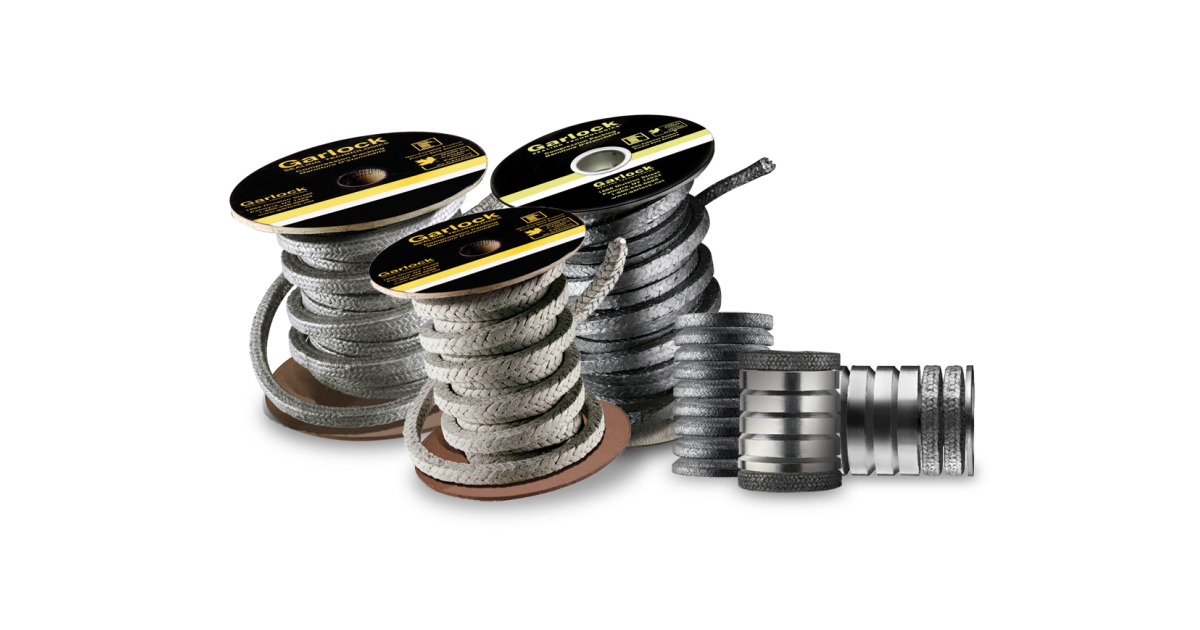
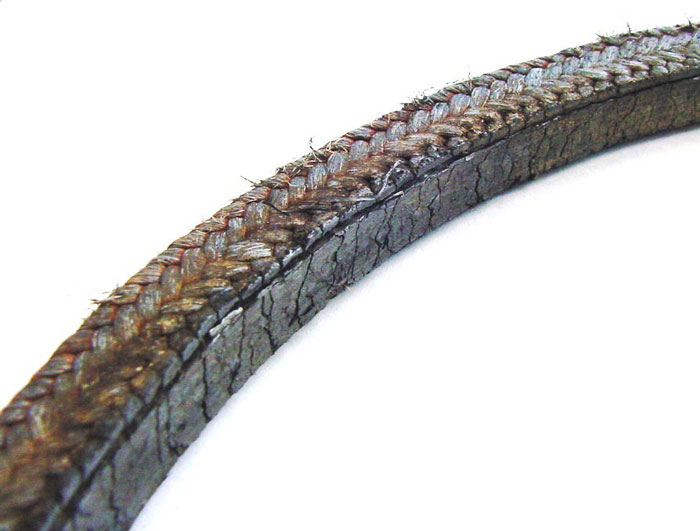
Compression packing is the traditional means to seal centrifugal pumps, going back more than 100 years. Also referred to as gland packing, it is a braided, rope-like, and lubricated material packed around the shaft in rings, physically stuffing the gap between the shaft and the pump housing, within a stuffing box.
Water leakage and consumption
For compression packing to work, some leakage must be maintained to lubricate and cool the packing material. Therefore, packing rings allow for an adjustable, close-clearance leak path parallel to the shaft axis. As the packing is used, however, some of the lubricant that is embedded into the packing is lost, reducing the packing ring’s volume. The pressure squeezing the rings together is also reduced, increasing leakage.
Periodic adjustment of the packing follower brings the pressure back into specification and controls the excess leakage. In today’s world, however, this maintenance is not always being done at required intervals or adjusted correctly. As the number of centrifugal pumps incorporating the use of compression packing decreases, training for and understanding of packing maintenance has waned.
Consequently, under-tightening and over-tightening of packing rings is a prevalent and growing misapplication of centrifugal pump maintenance, with critical consequences to both water consumption and energy draw.
Under-tightening results in too much leakage. Already, when properly adjusted, packing leakage can amount to gallons of liquid leaked per minute. This can be either aqueous solutions comprised of varied benign or caustic chemical compositions, or particles in suspension or slurry, depending on the process.
The heavier the suspension or slurry content in the pumped liquid, the more water is needed to get packing to work reliably. Typically, a clean external flush is piped into the stuffing box through a lantern ring, which keeps the packing lubricated and cool while flushing abrasives and chemicals.
Normally, some portion of the leakage is released continually into the atmosphere. Under-tightening of the packing rings and use of external flushes increase this atmospheric release proportionately, along with environmental impact potential.
-
May 22, 2019
Mechanical Seal SHVI and Plan 66A for Unmanned Pump Station of an Oil Pipeline
A well-known Canadian operator of an oil pipeline commissioned EagleBurgmann to develop a sealing solution for crude oil pumps. The requirement: It needed to be a single seal that was just as safe as a double seal with buffer pressure system. In addition, the sealing solution was not to be designed for only one pump type but should be installed in various pumps of one station.
-
April 17, 2019
Retrofitting a Pump with an EagleBurgmann H75VN
Cumene, the common name for isopropylbenzene, is an aromatic hydrocarbon and a colorless liquid under atmospheric conditions with a characteristic smell. It is a component of crude oil and refined fuels and is mainly used in the production of phenol.
The Problem
Ineos in Gladbeck
-
April 01, 2019
Gallagher Fluid Seals, Inc. Awarded Exclusive Distribution Rights with EagleBurgmann
Partnership will expand Gallagher's OEM and MRO business into the mechanical sealing industry
Gallagher Fluid Seals, Inc. has exciting news for its customers. EagleBurgmann, a leading provider of industrial sealing technology, has awarded Gallagher Fluid Seals with exclusive distribution rights in the Northeast and Mid-Atlantic territory of the United States. The territory includes Maine, Vermont,