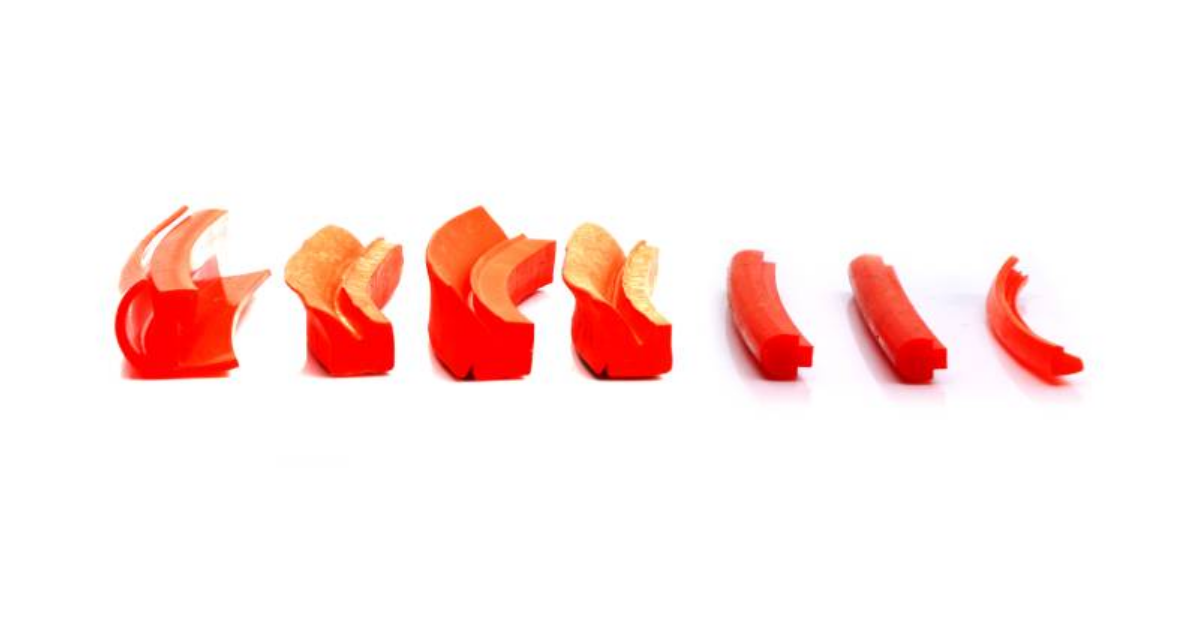
spring energized seal
- December 01, 2021
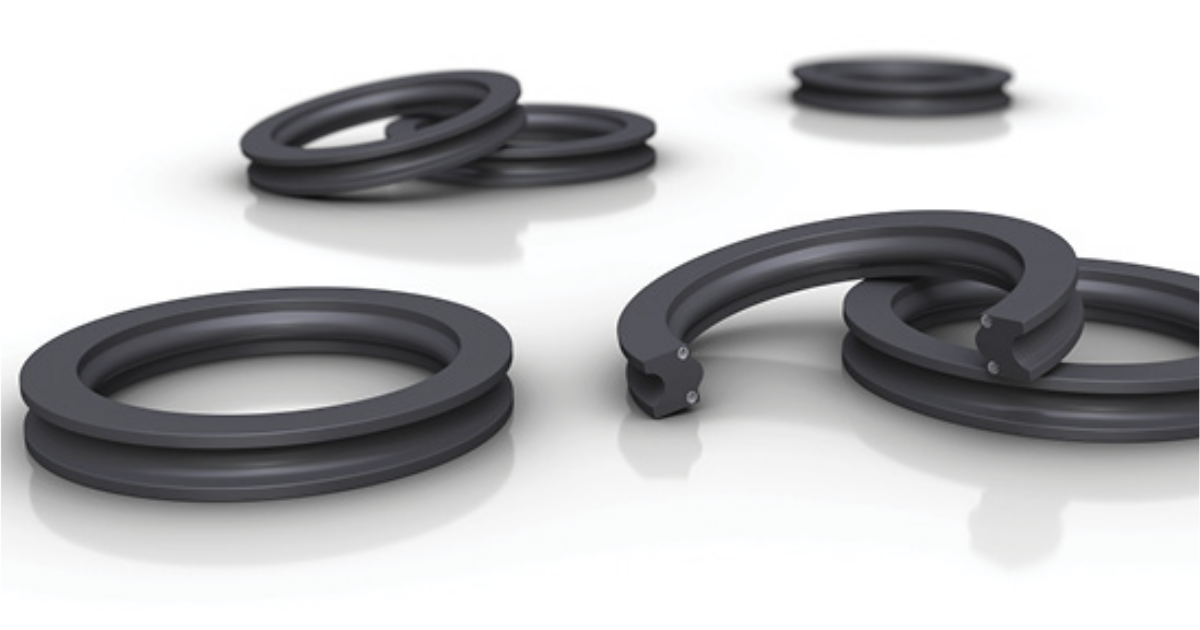
Spring Energized Polymer Seals and O-Rings are very different products, yet they can ultimately accomplish the same goal of sealing a system.
The humble O-Ring is, in simplest terms, a ring of rubber. A Spring Energized Seal consists of an engineered plastic jacket, usually a PTFE blend or
- September 15, 2021
With the marijuana and cannabis industry expected to take in nearly $24 billion by the end of in 2021, and more than $40 billion by 2025, the market is primed for innovation in production volume and technology.
The growth in popularity of vaporizers, infused edibles, and topical cannabis products means the demand for cannabis oil extraction is a fast multiplying industry.
The two primary means for oil extraction is via petroleum based solvents such as butane or propane, or by supercritical
- October 20, 2020
When considering polymer jacketed seals — especially PTFE-based products — some form of energizer is typically required. These types of seals are usually specified to operate both in very high pressures, low pressures, or even in a vacuum.
At certain pressures (typically above 100psi), the system pressure will energize the seal and prevent leakage. But at low pressures, additional energy is required to force the jacket material to mate with the hardware.
The solution to this is to add a spring to the seal. The spring provides the needed sealing-energy to prevent leakage at low media pressures.
When considering a high pressure-application, there are start/stop conditions where the system is at low pressure. If the seal allows some amount of leakage at low pressure, it becomes possible for that leakage level to increase once as the pressure builds.
This phenomenon is called “blow-by.” Once it occurs in a system, it’s difficult to get the seal to seat and seal correctly.
Canted Coil Spring Energizer
There are several types of energizers to consider when specifying a seal. These can be as simple as an O-Ring or some other elastomer.
- January 17, 2020
Eclipse Engineering has in-house capabilities to manufacture seals up to 55 inches in diameter, and over 100 inches through production partners.
While seals with huge diameters certainly grant their own significant levels of intricacy, here we’ll look at the other end of the spectrum: the micro-sized seals.
We won’t just look at a simple seal ring, but an inherently more complicated and geometrically detailed spring energized seal. As we’ll see, very small diameters make multiple manufacturing aspects more involved and challenging.
The Client’s Issue
A sealing solution in a customer's epoxy dispensing equipment. They needed an effective seal for the reciprocating rod responsible for the flow-control and metering of the epoxy while being dispensed.
Operating Conditions:
- Reciprocating Rod Seal
- Epoxy Dispensing Head
- Rod Diameter: 1.2mm [0.047”]
- Stroke Length: 6mm [0.236”]
- Cycle Rate: 15 per min
- Media: Epoxy
- Operating Pressure: 1,500 PSI
- Temperature: 70° to 150°F
In general terms, most viscous media sealing solutions have three things in common:
- A variant of UHMW for the seal jacket,
- heavy spring loading, and
- multiple point contacts with increased interference.
In most cases, multiple nested V-Springs are incorporated to provide optimal load and energize the compound contact points on the seal. With this formula, we’ve had great success sealing media like epoxy, urethane, silicones and acrylics.
The heavy loading is necessary to effectively wipe the reciprocating rod. This is balanced with the correct material and design geometry to provide long wear life of the seal, which has the potential to be compromised under such loading.
The challenge in this case was to incorporate these same proven principles in a micro-sized seal.
The Eclipse Solution
- November 12, 2019
Springs are an integral part of all sealing systems. A simple air cylinder has O-rings to seal in the air, and the O-ring exhibits spring-like qualities to ensure a good seal over a broad temperature range.
But what are the different types of springs and materials in sealing systems? And how do you choose the best for your application?
- September 24, 2019
A ball valve is a simple and robust valve used in applications and industries across the spectrum. It consists of a ball with a hole through the center that can be rotated 90°.
The hole is either aligned with flow and open, or perpendicular to flow and closed. The straightforward, quarter-turn action is fast and simple to operate, and the position of the handle provides a clear indicator of whether the valve is open or closed.
Most ball valves are typically used as a shut-off valve. Many households likely use ball valves at some point in the water supply plumbing.
Not relegated to common plumbing, many industries use ball valves for critical control applications including aerospace and cryogenics. Their reliable operation and high-pressure handling ability make them an attractive solution for many specialty operations.
Seals Inside a Ball Valve
The seals inside the ball valve play an important role in their performance and reliability. There are two main seals in a common ball valve, which are referred to as seats.
The seats are typically machined or molded to match the diameter of the ball and are mechanically compressed against the ball face. Seat material varies by application needs, but virgin PTFE is frequently used for this application.
The Client’s Issue
The customer wanted a very specialized ball seat: utilizing a spring energizer in the seat. While easy to suggest, this would create a significant challenge in how the seal is manufactured.
The customer was looking for a sealing solution for a ball valve in their industrial gas processing plant. The ball valve would serve as a critical shut-off point in the system. The valve would be actuated by an electric motor, and could therefore be operated remotely.
The customer was looking for an improvement in the overall wear life of the ball seats, while still providing consistent and predictable actuation torque. Being motor activated, the torque required to move the ball open or closed was limited—so the friction generated by the ball seats would need to be carefully controlled.
Operating Conditions:
- Ball Valve Seat
- Ball Diameter: Ø2.500”
- Media: Petroleum Processing Gases
- Pressure: 100 PSI
- Temperature: -40° to 175°F
The Challenge