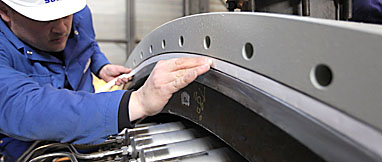
gasket
-
January 11, 2018
Sealex® joint sealant, specially processed, 100% pure PTFE on a roll, provides soft, highly compressible gasketing for longer life and trouble-free sealing. Its form-in-place versatility also cuts maintenance and storage costs. The high compressibility of Sealex® enables it to effectively fill flange imperfections for a tight, leak-free seal. Under pressure, it provides a very wide, thin ribbon-like joint sealant. Unlike conventional PTFE which is prone to cold flow, Sealex® has good creep resistance and bolt torque retention properties.
Sealex® joint sealant does not support bacterial growth or cause product contamination and is FDA compliant. It has virtually no shelf-life concerns since PTFE is unaffected by normal environmental conditions.
It has excellent resistance properties to chemical attack. It is ideal for most chemical services at temperatures to 500°F (260°C) and pressure to 2,000 psi (138 bar). It is also suitable for cryogenic use to -321°F (-196°C).
-
October 24, 2017
When sealing raised or flat face flanges, there are two choices of gasket shape: ring-type or full-face. Each has its own advantages, so you should know which will best suit your application before ordering and installing. First, let's discuss the types of flanges in which gaskets are installed.
Flange Faces
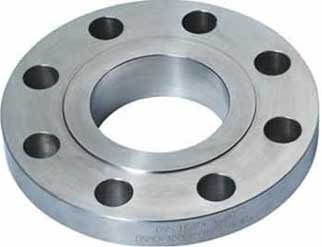
Different types of flange faces are used as the contact surface to seat the sealing gasket materials. ASME B16.5 and B16.47 define various types of flange facings, including the raised face, the large male and female facings which have identical dimensions to provide a relatively large contact area.
Raised Face (RF) Flanges
The Raised Face flange is the most common type used in process plant applications, and is easily to identify. It is referred to as a raised face because the gasket surfaces are raised above the bolting circle face. This face type allows the use of a wide combination of gasket designs, including flat ring sheet types and metallic composites such as spiral wound and double jacketed types.
The purpose of a RF flange is to concentrate more pressure on a smaller gasket area and thereby increase the pressure containment capability of the joint. Diameter and height are in ASME B16.5 defined, by pressure class and diameter. Pressure rating of the flange determines the height of the raised face.
-
May 30, 2017
Over time, and for any number of reasons, flanges are prone to surface deviations. Damaged areas will tend to create a leak path that the gasket must try to seal.
Flange damage most commonly occurs when removing previously used gasket material from the sealing surface - tools such as chisels, or screw drivers, should be avoided. A brass wire brush is suggested.
The video below proves how well GORE® Gasket Tape Series 500 works on flanges with surface deviations versus a standard filled PTFE gasket.
[embed]https://www.youtube.com/watch?v=nwuxtiFbxH0[/embed]
-
February 21, 2017
A spool of GORE® Gasket Tape Series 500 provides an immediate, cost-effective solution to sealing challenges that demand reliable performance and extended durability. This advanced product, with its industry-leading creep resistance, is designed to maximize the operational reliability of large steel-flanged applications, especially those with thermal cycling.
It eliminates the lag time, costs and complexities associated with engineering, specifying, procuring, shipping, storing and installing traditional one-piece prefabricated gaskets. It also delivers exceptionally reliable sealing performance, while making multiple gasketing installations faster, more cost-effective and simpler.