packing
- October 15, 2024
Investigating Compression Packing Failures
Over-tightening, excessive speed and improper installation can cause a system to falter.
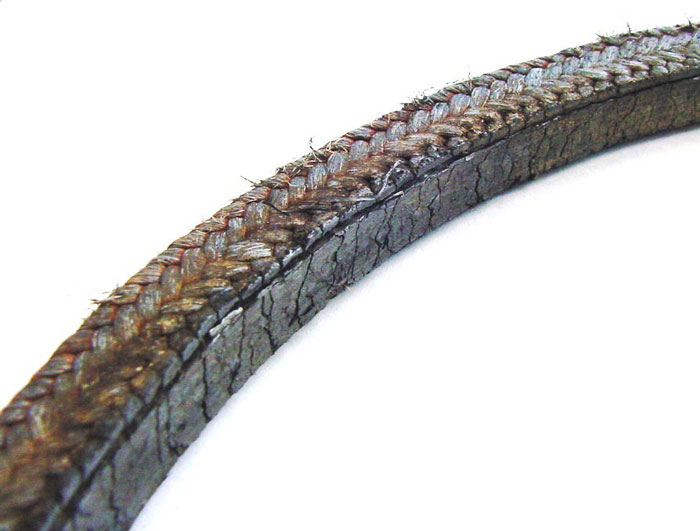
In many respects, troubleshooting and failure analysis of compression packing materials is similar to the investigation of a crime scene. A good investigator knows how to gather clues from many different sources and put them together to understand what has happened. A good troubleshooter uses the same information gathering method, familiarizing themselves
- February 02, 2024
Corrosion with Braided Packing
Galvanic corrosion is an electrochemical process that occurs between two dissimilar metals, or between a metal and a conductive non-metallic material, when both are exposed to an electrically conductive media. In the case of a packing gland, it occurs between a metal component and the carbon or graphite packing. Under these conditions, the material that is closest to the anodic end of the galvanic scale will be corroded in preference to the one that is closest
- October 27, 2023
Abrasive media comes in many forms—from mining slurries to wood pulp and even substances as seemingly mild as liquid chocolate. This diversity rules out a one-size-fits-all solution for abrasive pumping applications. However, today’s broad range of materials, from carbon fiber packing to graphite-filled polytetrafluoroethylene (PTFE) bushings, includes products capable of meeting an equally broad range of abrasive wear requirements.
Carbon Fiber Packing
Few materials offer the
- February 01, 2023
Variations of Compression Packing
Successful fluid sealing of valves and pumps cannot be accomplished without the appropriate sealing device. Whether using mechanical seals or compression packing, one must understand the specific needs of the application.
While mechanical seals in general are considered the superior sealing device, they are more expensive and less versatile than compression
- May 23, 2019
Mechanical sealing conserves water, improves energy efficiency, and minimizes environmental impact
The environmental performance of products and processes in all industrial sectors increasingly is cause for critical inspection, with sustainability, conservation of natural resources, and reduced environmental contamination concerns influencing equipment design and selection.
Many industrial processes can be addressed to improve sustainability and minimize environmental impact, while at the same time maintaining or reducing operating costs. Implementing energy-efficient and environmentally friendly processes and technologies should be embraced as a priority at the component, process, and system levels.
One aspect of these processes is mission-critical rotating equipment, and specifically centrifugal pumps, which represent a significant proportion of the equipment found in industrial operations. One vital component of a centrifugal pump is the seal around the rotating shaft that passes through a stationary pressure casing or housing. The seal contains the liquid or gas from escaping to the environment.
Sealing systems help maintain acceptable pump efficiency, reliability, energy consumption, water usage, and emissions control. These factors can materially facilitate achieving total-life cycle cost-reduction and sustainability objectives. Sealing performance can be improved for centrifugal pump applications by upgrading from traditional compression packing to mechanical seal technology.
When sealing a centrifugal pump, the objective is to allow the rotating shaft to enter the wet area of the pump without large volumes of pressurized fluid escaping. The pump discharge pressure forces the fluid back behind the impeller, where it is induced to exit by way of the rotating drive shaft. To minimize leakage, a seal is needed between the shaft and pump housing to contain the pressure of the process being pumped and withstand friction caused by shaft rotation.
Compression packing is the traditional means to seal centrifugal pumps, going back more than 100 years. Also referred to as gland packing, it is a braided, rope-like, and lubricated material packed around the shaft in rings, physically stuffing the gap between the shaft and the pump housing, within a stuffing box.
Water leakage and consumption
For compression packing to work, some leakage must be maintained to lubricate and cool the packing material. Therefore, packing rings allow for an adjustable, close-clearance leak path parallel to the shaft axis. As the packing is used, however, some of the lubricant that is embedded into the packing is lost, reducing the packing ring’s volume. The pressure squeezing the rings together is also reduced, increasing leakage.
Periodic adjustment of the packing follower brings the pressure back into specification and controls the excess leakage. In today’s world, however, this maintenance is not always being done at required intervals or adjusted correctly. As the number of centrifugal pumps incorporating the use of compression packing decreases, training for and understanding of packing maintenance has waned.
Consequently, under-tightening and over-tightening of packing rings is a prevalent and growing misapplication of centrifugal pump maintenance, with critical consequences to both water consumption and energy draw.
Under-tightening results in too much leakage. Already, when properly adjusted, packing leakage can amount to gallons of liquid leaked per minute. This can be either aqueous solutions comprised of varied benign or caustic chemical compositions, or particles in suspension or slurry, depending on the process.
The heavier the suspension or slurry content in the pumped liquid, the more water is needed to get packing to work reliably. Typically, a clean external flush is piped into the stuffing box through a lantern ring, which keeps the packing lubricated and cool while flushing abrasives and chemicals.
Normally, some portion of the leakage is released continually into the atmosphere. Under-tightening of the packing rings and use of external flushes increase this atmospheric release proportionately, along with environmental impact potential.
- February 05, 2019
Compression Packing
How this application fits as a versatile solution.
Stem packing is a familiar product. The most common type is braided compression packing. Braided packing is used in a wide range of applications. Depending on the service, construction materials can be as diverse as plants or animal derivatives, mineral fibers or synthetic plastics and even metal. The process of cutting rings from rope packing, inserting them into a stuffing box and torquing them to the right density is common, but it is not always the best choice.
Another widely used manufacturing method is die-molding. It is the process of wrapping a material around a mandrel, placing it in a die and preforming it to make a seal. Using these and other manufacturing technologies, packing is found to work in applications as different as aerospace, heavy trucking and power generation. A review of some unusual applications demonstrates the versatility of compression packing as a sealing solution.
The Origin of Packing
Compression packing is an ancient technology dating back more than 5,000 years. Boats and ships used a rudder as a steering mechanism. The rudder shaft penetrates the hull of the vessel below the water line, so water can leak into the bilge. Ancient sailors, using the top technology of the day, would take pieces of clothing, sail cloth and rope, cover it with animal fat or wax and stuff it into the gap around the shaft. Eventually, a box was secured around the shaft and a gland, which could be tightened to compress the packing material, was created to improve sealing and longevity. The terms compression packing, stuffing box and gland come from these early sailors.
Compression Packing
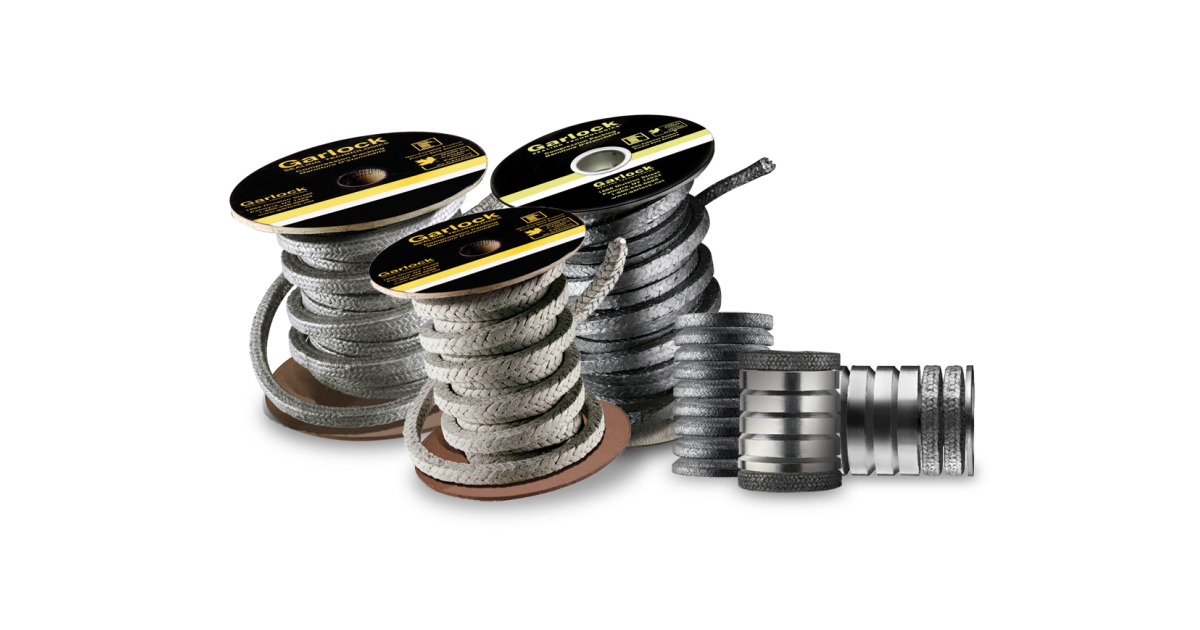
Over time, many improvements in packing construction and materials were made. Packing today can be made of flax, Kevlar, polytetrafluoroethylene (PTFE), graphite or metal. It typically has a square cross-section and is sold in precut rings or in large coils, as shown in Image 1. Synthetic aramid fibers are abrasionresistant and can handle higher temperatures and shaft speeds. PTFE has excellent lubricity and chemical resistance. Graphite coupled with mica or an aramid fiber can stave off the heat generated by a rotating shaft and provide long life in challenging applications.
Die-Formed Packing
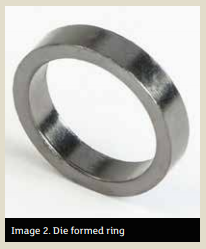
Die-formed compression packings are excellent in terms of sealing performance and reliability and offer a wide range of long-term, low-emission and low maintenance products. See Image 2.
Not only are die formed rings easier and quicker to install, but the pre-compression increases the density of each ring and reduces the gland loads necessary to seat and compress multiple rings in the stuffing box. The result is lower friction on the shaft or the spindle, with improved sealing performance and a longer life.
Factor in STAMPS
As mentioned in an article previously published by the Fluid Sealing Association, (Sealing Sense, Pumps & Systems, March 2005), there are several key factors to consider when choosing the right packing. They include:
- size or stuffing box bore
- temperature inside the stuffing box application: whether it’s a pump, valve, mixer, refiner, process, characteristics such as pH level and chemical compatibility
- motion: rotary, helical or reciprocal
- pressure inside the stuffing box
- surface speed expressed in feet per minute or meters per second
Keeping this in mind, here are some applications to consider when you are going way beyond the typical stuffing box:
- November 14, 2017
[embed]https://www.youtube.com/watch?v=QbUD3nJfEb4[/embed]
Garlock compression packing is rigorously tested to ensure effective sealing in valves, pumps, agitators, and other rotary equipment. The development of the compression packing line reflects the evolution and innovation in the materials used in its production. Garlock develops and manufactures it's own technical yarn braided into packing, along with high performance proprietary coatings, that are essential in this age of sealing