Understanding the Complexities of Rotary Sealing
Sealing technology spans virtually every sector—energy, aerospace, food processing, medical devices, and more. Across this wide range of industries, sealing requirements vary dramatically depending on the motion involved: static, reciprocating, or rotary. Of these, rotary sealing often proves to be the most demanding, due to the combination of continuous motion, pressure, speed, and mechanical variability.
Let’s explore why rotary sealing stands apart in its challenges and what engineers need to consider when designing for these conditions.
Motion Types in Sealing Applications
Not all sealing environments are created equal. Static seals, where no relative motion occurs between components, are often the simplest to manage. With no dynamic movement, wear is minimal, and seals can often be compressed more heavily for improved leak prevention. However, even static environments, such as cryogenic gas systems, can pose serious challenges due to extreme temperatures and pressures that demand specialized materials and surface finishes.
Reciprocating seals are more complex. These are commonly found in hydraulic and pneumatic systems, where rods or pistons move back and forth. Here, seals must cope with friction, pressure variations, and contact with a wide range of process media from aggressive chemicals to food-grade fluids. Wear, thermal expansion, and material compatibility are all key considerations.
Rotary applications are an entirely different beast. Most often, these involve sealing around a rotating shaft. Even when no pressurized fluid is involved, rotary seals play a vital role in retaining lubricants or keeping contaminants out. The constant circular motion introduces a unique set of problems that static and reciprocating seals don’t encounter.
Why Rotary Sealing Is So Demanding
1. Pressure-Velocity (PV) Effects
Rotary motion makes it relatively easy to achieve high surface speeds, especially with electric motors that can reach tens of thousands of RPMs. When pressure is introduced into the system, the combined load (PV) rises sharply. This can rapidly degrade seal materials, especially if they aren’t specifically formulated for high PV applications.
As electrification advances in industries like automotive, where compact motors rotate at extreme speeds with minimal lubrication, rotary sealing becomes even more critical—and difficult.
2. Shaft Runout and Eccentricity
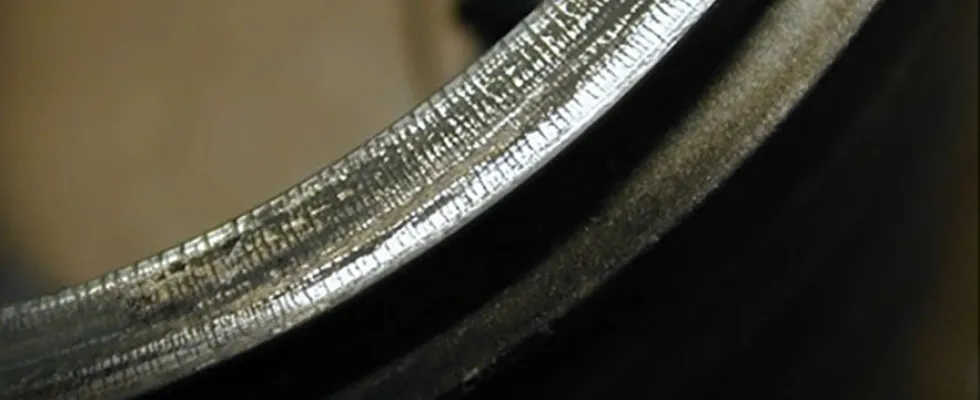
Rotating shafts are rarely perfect. “Runout” describes how much a shaft deviates from true center as it spins. Even small amounts of runout can cause big problems at high speeds. The seal lip is forced to flex and adapt with every revolution, which leads to uneven wear, potential leakage, and premature failure.
In many high-runout applications, spring-energized seals are used to maintain constant contact with the shaft. However, this adds friction, heat generation, and material fatigue, all of which reduce seal longevity.
3. Anti-Rotation Requirements
Unlike many reciprocating seals that can be installed without much concern for orientation, rotary seals must be held securely in place to avoid rotating within their gland. If a seal turns along with the shaft, it will quickly wear against the housing.
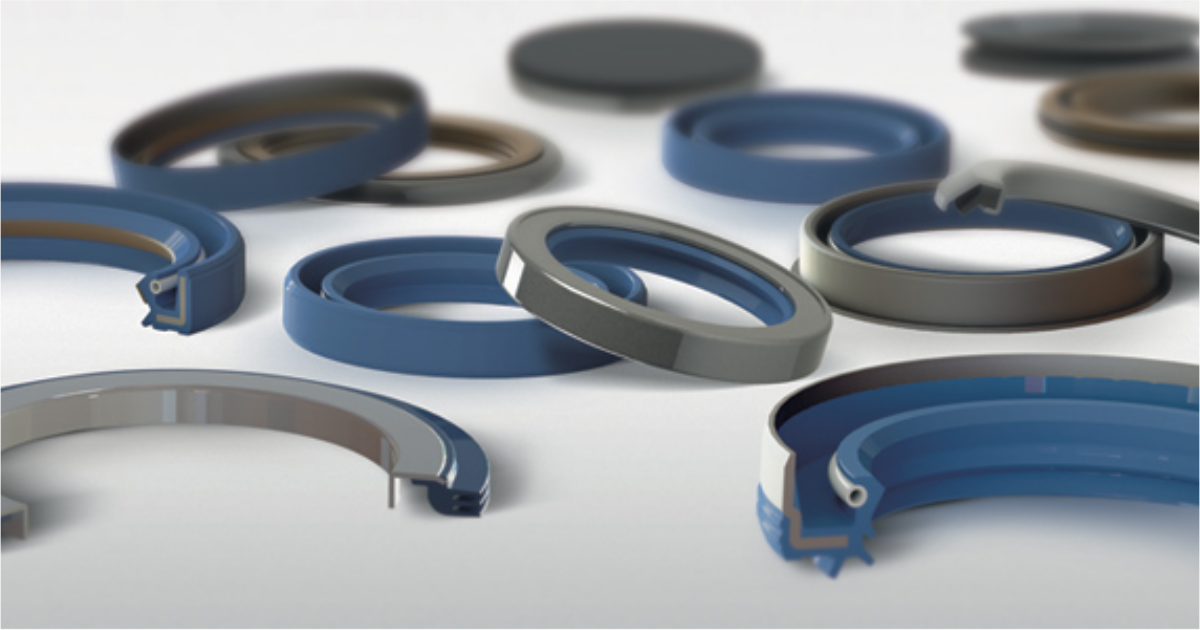
Anti-rotation can be achieved through a variety of designs. Lower-speed seals may rely on static friction between an O-ring and the housing. For more robust needs, flanged seals or press-fit metal-cased designs are used. These solutions provide physical anchoring and prevent unintended movement within the groove, ensuring consistent performance under load.
4. Localized Wear and Heat Buildup
A major challenge unique to rotary sealing is the concentration of wear on a single circumferential line. Unlike reciprocating seals, which contact a range of surface area over time, rotary seals maintain contact at a fixed location. This constant friction generates heat, especially in high-speed or dry-running environments.
This thermal buildup can limit the materials that can be used. While polymers like UHMW-PE may perform well in low-speed reciprocating systems, they often fail in rotary settings due to thermal distortion. In high-demand rotary applications, high-performance PTFE-based materials or filled composites are typically required.
Engineering Around Rotary Sealing Challenges
Designing for rotary motion is rarely straightforward. Seal geometry, material selection, shaft finish, groove design, lubrication, and even installation techniques must all align to prevent failure. In some cases, hardware must be hardened (55+ HRC) to withstand friction against reinforced seal materials.
High-speed rotary sealing might also call for proprietary material blends engineered for exceptional wear resistance, thermal stability, and chemical compatibility. While these solutions may cost more upfront, they reduce unplanned downtime and increase system reliability.
Conclusion
Rotary sealing challenges can’t be solved with off-the-shelf parts or one-size-fits-all solutions. When high speeds, pressures, or temperatures are involved, successful sealing requires a deep understanding of mechanical dynamics and material science.
If you’re tackling a rotary sealing application that’s giving you trouble, or just want to make sure you get it right the first time, the Gallagher Fluid Seals team has the experience and resources to help engineer a solution tailored to your needs. Reach out today.