Freudenberg Sealing
- June 16, 2026
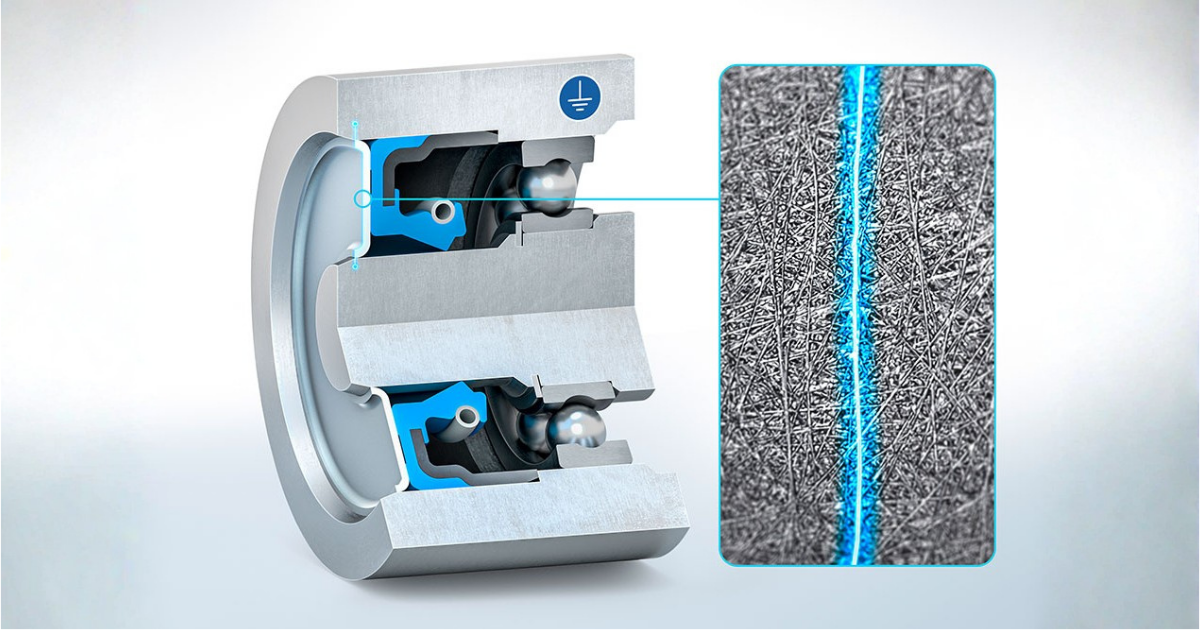
Freudenberg Sealing Technologies developed a new generation of conductive seals designed to ensure a durable electrical connection between housings and shafts while preventing bearing damage caused by electricity and electromagnetic radiation.
In many operating conditions, the shafts used in electric powertrains are electrically insulated from their housings. The insulation is created by the lubricating films in the contact zones for the bearing and the shaft seals.
- June 11, 2026
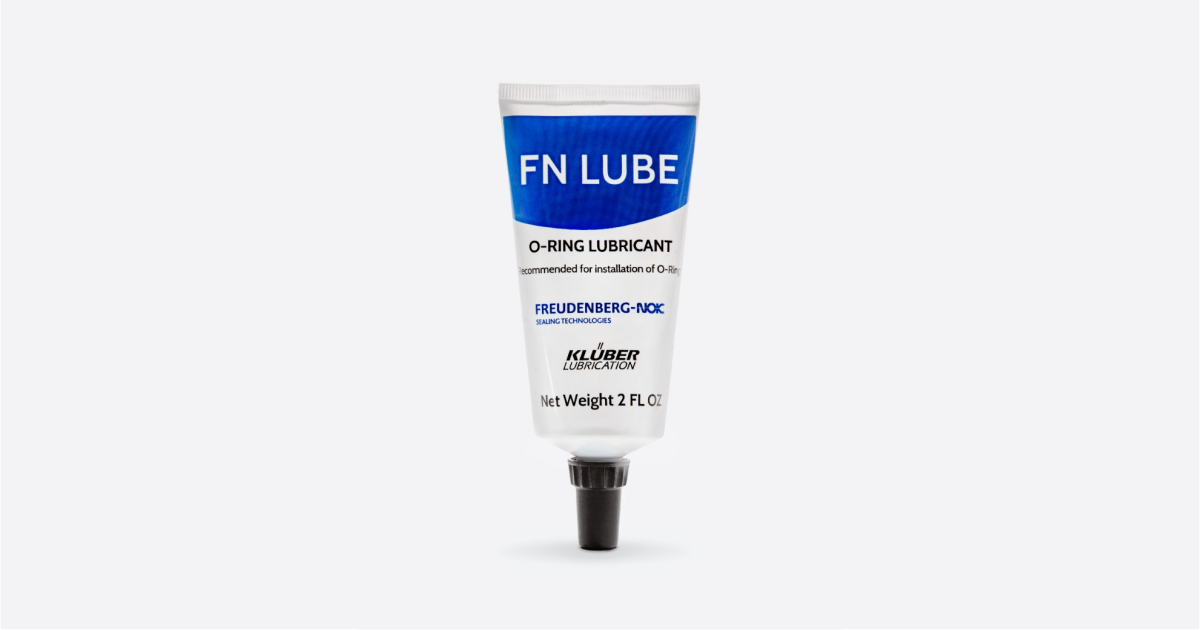
The Right Lube for the Job: Introducing Freudenberg FN Lube and FN Lube Plus
- May 12, 2026
The Future of Seals: Identifying and Communicating Levels of Wear
Seals do their jobs tirelessly, usually behind the scenes. Until now, machines mostly had to be dismantled to check the condition of these parts. That’s expected to change: At Freudenberg Sealing Technologies, a cross-disciplinary team is testing seals that identify and communicate their level of wear. They are based on a novel material that functions as a sensor.
It’s time for maintenance at a beverage bottling facility.
- April 16, 2026
The Perfect Wave: The Gerromatic Rotary Seal
Gear motors, pumps and stirring units keep process material in constant motion in the process industry’s production facilities. A large number of shaft seals are used at drive shafts to keep liquids securely within the equipment. But leaks may be more likely to occur if the pressure acting on the seals becomes too great. Freudenberg Sealing Technologies has developed a new rotary seal, the Gerromatic, which has a wave-shaped sealing lip. This increases the maximum amount of pressure that can be applied. The sinusoidal contact path also reduces friction and provides self-cleaning, which extends operating life.
In the process industry, including the food and beverage sector, shaft seals used in equipment mostly have a rotation-symmetrical seal lip, which abuts the rotating shaft with a groove-like contact pattern. During wet-running, this can cause the medium to be displaced at the contact surface. The seal then runs in a more or less dry condition, leading to increased friction and higher temperatures. The increased friction increases wear and reduces the efficiency of the equipment. The accompanying rise in temperature is not desirable, especially when the process media are temperature-sensitive. If the seal lip is also exposed to high temperatures at high rotational speeds – for example, due to a process material that applies pressure to the seal lip in a vessel with a stirring unit below it – the lip can fold down on the low-pressure side, which would result in immediate leakage and the seal’s failure.
- March 16, 2026
Wettablility of the Sealing Lip
The optimum function of rotary shaft seals depends on many factors. One of them is the "wettability" of the sealing lip. This parameter plays a particularly important role with synthetic lubricants such as polyglycol. If wetting is too low, not only does wear on the sealing lip increase, but the contact with the rotating shaft can also damage the shaft itself. The engineers at Freudenberg Sealing Technologies (FST) and Freudenberg Technology
- March 02, 2026
Permeation under Control: Sealing Materials for Climate Friendly Substations
Electricity often travels long distances before it reaches consumers. To make this possible, substations rely on sulfur hexafluoride (SF₆), a protective gas used primarily as an insulating and arc extinguishing medium in high and medium voltage electrical systems. If SF₆ escapes as a result of leaks, however, it poses a serious threat to the climate: its global warming potential is around 23,500 times higher than
- February 16, 2026
Diaphragms Designed to Precisely Fit Different Gas Meter Designs
In the safety-driven natural gas industry, system leaks are a dangerous and costly issue. Residential gas meters and regulators, in particular, are at risk when crucial components such as diaphragms are not optimally designed and manufactured for the environment in which they will work.
An advanced polymer technology, trademarked by Freudenberg Sealing Technologies’ Metflex Precision Moulding organization, addresses these challenges with fiber-reinforced materials that improve the reliability, functionality and longevity of critical gas system components. Diaphragms made using Metflex Dispersed Fibre Technology (DFT)™ offer better sealing performance, longer flex life, improved low temperature resilience and enhanced design capabilities than standard diaphragms made from fabric coated polymers. To date, more than 40 million DFT diaphragms have been used in medium and low-pressure application, primarily in North America but also in other regions of the world.
Safety concerns and costs associated with gas leaks and equipment failures
- January 26, 2026
How to Properly Measure an O-Ring
Measuring an O-Ring is quite simple when you have the right tools at your disposal. All that is required is a clean, level surface; an o-ring; and a measuring device such as a caliper or other measuring tools such as cones, gauges, and size charts.
Directions to Measure an O-Ring
To measure an O-Ring, following the directions below:
- Place your o-ring on a flat surface clean of debris.
- Determine the inside diameter (ID) and
- January 08, 2026
Sealing Heavy-Duty Equipment
The seals and the hydraulic systems of any piece of mining, construction, agricultural or other heavy industry equipment operate under extreme conditions. Variable temperatures, aggressive hydraulic oils, dust and extended periods of operation place seals and their tribological systems under continuous duress. A new generation of material, 94 AU 30000, expands the boundaries for polyurethane use. This innovative compound can be used in standard cylinder applications where higher pressures, larger extrusion gaps, reduced internal friction, improved hydrolysis resistance and compatibility with bio fluids, among other factors, are important. DMRW2 hydraulic wipers made from 94 AU 30000 and sheet metal and the availability of this polyurethane as part of Freudenberg Sealing Technologies’ Xpress rapid replacement part service are applications discussed in the following article.
Today’s extreme environmental climates place extreme demands on the material and structure of the hydraulic seals used to maintain the performance and operation of heavy-duty equipment. The excavators, tractors, backhoes and tunnel boring machines that grind through the earth every day must work harder, longer, cleaner and more cost efficiently than ever to feed the plant, build its infrastructure and harvest its natural resources.
Sealing requirements for these machines must now include high values for tensile strength and elongation at break, resistance to oils and ozone, high elasticity and abrasion resistance. Polyurethane materials (PU) have traditionally met these industrial requirements. In comparison with elastomers, PU has a four times greater capacity for mechanical resistance, as well as outstanding resistance to ozone. At the same time, it stands up well to the stresses of mineral-based fluids.
- November 24, 2025
Freudenberg Sets New Standards With Innovative BPAF-Free Sealing Solutions
Weinheim, November 24, 2025. In accordance with EU Directive 2024/3190, a Europe-wide ban on the use of bisphenol A (BPA) and its derivatives took effect on January 20, 2025. This decree applies to all industrial companies that produce, market or use materials that come into contact with food. The ban is based on comprehensive studies
Latest Blog Posts