elastomeric seals
- April 28, 2021
In the Oil & Gas industry, the need for elastomers to seal higher pressures for sustained periods of time with minimal damage is abounding. Applications such as drilling tools, completions equipment, blow out preventers, and subsea pressure control systems now routinely require or exceed 15,000 psi with both liquid and gas media for functional testing and qualification. Parker meets this challenge, providing a best-in-class extrusion and rapid gas decompression resistant hydrogenated nitrile
- April 13, 2021
Have you been frustrated with going through multiple design iterations when rubber components are failing due to high stresses or your device has been leaking due to insufficient compression? Have you lost months and months of precious time having to recut tools and make design changes?
FEA takes out the guesswork
Finite element analysis, also known as FEA, is an effective tool used in design iterations. It allows for different design ideas, options, and alterations to be quickly,
- February 12, 2021
The manufacturing and installation of specialty seals must be handled in a certain way to ensure their quality and longevity.
The following guidelines and/or rules are the basics for regulating the engineering of seals to ensure top performance.
Performance vs Knowing Your Seals
The performance of your machine(s) depend on the quality of your seal and the conditions they succeed in. They can directly affect how well or how poorly your machines function.
- April 15, 2020
Article re-posted with permission from Parker Hannifin Sealing & Shielding Team.
Original content can be found on Parker’s Website and was written by Jarrod Cohen, marketing communications manager, Chomerics Divison.
Electrically conductive elastomers are elastomeric polymers filled with metal particles. They can be grouped by filler type and elastomer type. Then within each of these classes, there are standard materials and specialty materials.
Parker Chomerics manufacturers electrically conductive elastomers in gasket form, also known as EMI elastomer gaskets, under the CHO-SEAL brand. We won't get so much into gasket configurations and dimensions here, we'll just stick to classes of materials. So what is available? Let’s find out.
Conductive elastomers are metallic particle filled elastomeric polymers, the particles giving the shielding performance and the polymer making them “rubber." There are many materials within this generic material type, but we'll focus on the below.
Particle fillers
Setting up the grades of conductive elastomers by filler types involves six different particles:
Three types of elastomer material
- Silicone
A polymer that has a large temperature range especially on the low end down to -55F. It is a very soft material with a low compression set. - Fluorosilicone
Close to silicone, but will not swell and degrade when exposed to solvents, fuels hydraulic fluids and other organic fluids. Although slightly harder than silicone, it is still relatively soft with low compression set properties. - Ethylene propylene diene monomer (EPDM)
Does not have the temperature range nor the softness of silicone, but is resistant to highly chlorinated solvents used for compliance with NBC decontamination and is only used for applications with those needs.
All of these materials are cured or cross linked when the gasket is made. The cure either happens with heat or atmospheric moisture.
- Silicone
- February 07, 2020
The term “plastics” is generic way of describing a synthetic material made from a wide range of organic polymers. Organic polymers describes a man-made substance that is formulated using polymer chains to create what we commonly refer to as…(you guessed it), plastics.
Before plastic, leather had been used to create Backup ring devices behind O-rings. Leather allows fluids to be retained, providing lubrication for the O-ring when the system was running dry.
The problem with leather was that it could become dry and shrink away from the sealing service, exposing the elastomer to same pressure it was intended to protect against.
With the advent of polymers, a piece of plastic could be cut or formed into the exact shape to allow for zero extrusion gap, and for continued protection for the O-ring.
Some polymers were very brittle. Since they needed to be deformed to allow for installation into solid glands, the cut of the plastic could nibble at the O-ring, causing premature failure of the element it was supposed to be protecting.
The Revolution of PTFE
When PTFE moved out of the lab and into industrial use, it quickly found itself adjacent to the O-ring. PTFE offers extrusion resistance and, at the same time, doesn’t erode or nibble at the O-ring due to the “softness” of the polymer.(Hardness between 55 and 65 Shore D)
Given the composition of PTFE, or Teflon, it could be utilized as a sealing element to protect Backup rings and conform to the shaft. The bonus was it was generally easy on shafts (depending on the filler added to the PTFE).
There are some negative aspects to Teflon that needed to be overcome by early engineers. First, it has a fairly high rate of Thermal expansion which, by its own nature, could often times lose contact with the sealing surface. This meant some kind of loading was necessary to ensure contact.
PTFE is as tough as other polymers, so the fact that it could seal on a shaft made it vulnerable during installation for tears or nicks on sealing surface.
Second, if it were stretched during installation, the material had to be sized back to its original shape due to its poor elastic properties.
- December 11, 2019
Back in the mid 70’s, an engineer named Roy Edlund of Busak & Luyken designed a high-pressure seal that had an uncommon effect of rocking in the groove. This action occurred when pressure was created on the retract side of a cylinder as the rod was being retracted into the cylinder.
The material used for the seal was generally a bronze-filled Teflon, which could resist extrusion and have a long seal life. Because the seal ring was made from a grade of filled Teflon, a small amount of oil would leak under the lip as the cylinder was being extended.
One of the most unique features of this style seal was that as the rod was being retracted back into the cylinder, the buffer ring would rock or rotate slightly to the low pressure side thereby forcing leaked oil back into the retract side of the cylinder under the buffer ring.
This seal is commonly called a Buffer Ring (for reasons we’ll explore in this blog), but this seal helped usher Teflon into most high-pressure hydraulic systems today.
Pre-Buffer Ring Sealing Problems
Manufactures of high-pressure hydraulic systems in equipment, such as back hoes or hydraulic cranes found that their products were having seal failures prior to reaching warranty. This resulted in downtime and large warranty expense to repair these cylinders in the field.
In normal operations, the standard U-Cup made from a variety of Urethanes did an excellent job of creating a “near” zero leak sealing system. The problems would occur as the “bulk” oil temperature rose due to usage, pressure spikes in the system would cause premature failure of the Urethane U-Cup.
It was the pressure spikes that usually wreaked havoc with the U-cup seal design, causing the urethane to break down and eventually crack, creating a leak, and resulting in equipment shut-downs.
The Buffer Ring Solution
The Buffer Ring turned out to be the answer. By adding another sealing element in front of the Urethane U-cup, the life of the U-cup was greatly extended, overall friction in the system was reduced, and the bulk temperature in the hydraulic system was lowered.
All these advantages came by adding a sealing element. The true savings showed up in dramatically improving equipment up time. This also reduced warranty costs of equipment to the OEM.
How Does the Buffer Ring Work?
The answer to this question was initially difficult for many manufacturers to understand. Normally, putting one seal in front of another should cause a pressure trap, sending pressure loads much higher than relief valve settings, which locks up the cylinder.
The secret was in the way the Buffer Ring performed its job.
The seal leaking is very important to its design. If oil didn’t reach the U-Cup, the U-cup would generate heat and begin to wear out prematurely. So, since the Buffer Ring allowed a small amount of fluid to seep under the lip, this fluid lubricated the U-cup and kept its friction to a minimum.
Being elastomeric in nature, the U-cup did an excellent job of wiping the rod nearly completely dry.
But what about the pressure trap?
The Buffer Ring and its unique quality allowed fluid back into the system. Testing verified that this would happen anywhere from zero to about 100 PSI.
The U-cup spent most of its life in a well-lubricated, low-pressure / low-temperature environment compared to the original design.
The Buffer Ring also made suppliers of U-Cups extremely happy, as their failed seal had been given new life compared to the holes blown through the back of their urethane product.
- October 01, 2019
Jay Berwanger, Heisman Winner.
To football aficionados, Jay Berwanger is well-known as the winner of the first Heisman Trophy and the first player chosen during the National Football League’s first draft. Less well-known is that he achieved his athletic successes at the University of Chicago, a school now more closely associated with Nobel prizes than big-time football. Berwanger, a halfback, played for the University of Chicago Maroons at a time when Chicago was a member of the Big
- August 08, 2019
Valve Seals Help Control Oil Consumption and Valve Lubrication
Valves are an important part of regulation in any system, and their seals are designed to be used in different types of engines for controlling oil consumption, and valve lubrication.The design and manufacturing of the seal is the key to ensure seal performance and longevity.
- August 06, 2019
Rubber seals are used in numerous industries to prevent the unwanted leakage of liquids and gases in various components such as pumps, valves, pipe fittings, and vacuum seals, to name only a few. However, all seals are not created equally. Rubber seal design consists of several elements to ensure that the seal delivers optimal performance in the given environment.
One of the most common types of industrial rubber seals, the O-ring, relies on mechanical compressive deformation to act as a barrier
- May 14, 2019
Seals are one of the most important components in many medical devices. While small in cost, seals for medical devices have a profound affect on the function of said device and the outcome of a medical procedure.
Engineered sealing solutions have advanced to meet the new medical device designs due both to new materials and to new processes for producing these seals. An understanding of the fundamentals of seal design, the tools available to assist in the manufacturing process and pitfalls to avoid will help in achieving a successful seal and medical device outcome.
Classifying the three basic seal designs
When approaching a new seal design, It is important to classify the seal based on its intended function. All seals fall into one of three distinct groups. While certain applications may combine more than one group, there is always one that is dominant. The three basic seal designs are:
Static -- seal applications where there is no movement.
Reciprocating -- seal applications where there is linear motion.
Rotary -- seal applications where there is rotation.
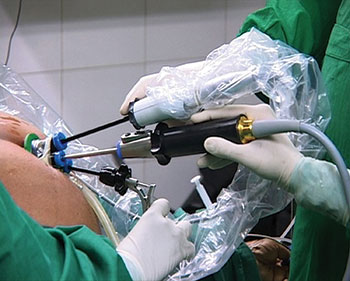
Static seal applications are the most common and include those that prevent fluids and drugs from escaping into or out of a medical device. The seal design can range from basic O-rings to complex shapes. Static seals can be found in the broadest range of medical devices from pumps and blood separators to oxygen concentrators.New advances in trocar designs incorporating specialized seals allow multiple instruments to be inserted in the single trocar. A reciprocating seal application with linear motion would include endoscopes that require trocar seals. These trocar seals are complex in design and allow the surgeon to insert and manipulate instruments to accomplish the medical procedure. These procedures range from relatively simple hernia repairs to the most difficult cardiac procedures. All of these minimally invasive surgeries employ endoscopes with seals that rely on seal stretch, durability and ability to retain shape during lengthy and arduous procedures. This particular seal application combines both reciprocating and rotary motion with the main function being linear motion.
A rotary seal application most commonly includes O-rings used to seal rotating shafts with the turning shaft passing through the inside dimension of the O-ring. Systems utilizing motors such as various types of scanning systems require rotary seals but there are many other non-motorized applications that also require rotary seals. The most important consideration in designing a rotary seal is the frictional heat buildup, with stretch, squeeze and application temperature limits also important.
Function of a particular seal design
What is the function of the seal? It is important to identify specifically if the design must seal a fluid and be impermeable to a particular fluid. Or will the seal transmit a fluid or gas, transmit energy, absorb energy and/or provide structural support of other components in device assembly. All of these factors and combinations need to be thoroughly examined and understood to arrive at successful seal design.
A seal's operating environment
In what environment will a seal operate? Water, chemicals and solvents can cause shrinkage and deformation of a seal. It is important therefore to identify the short and long term effects of all environmental factors including oxygen, ozone, sunlight and alternating effects of wet/dry situations. Equally important are the effects of constant pressure or changing pressure cycle and dynamic stress causing potential seal deformation.
There are temperature limits in which a seal will function properly. Depending on the seal material and design, a rotary shaft seal generally would be limited to an operating temperature range between -30° F and +225°F. To further generalize, the ideal operating temperature for most seals is at room temperature.
Expected seal life - How long must the seal perform correctly?