elastomeric seals
-
May 07, 2019
Dynamic Sealing Applications
This article will discuss how we understand and control friction in dynamic sealing applications.
It’s easy to stop a leak in a system by just welding it shut. But when you create a dynamic application, you generally have a limited amount of power to move the device you’re sealing.
Friction is a force that must be overcome in all moving pieces. Controlling friction allows us to make efficient equipment that can have a long wear life and move with a limited amount of force.
There are many factors that drive friction up or down in a dynamic application. Although this blog will focus on shaft seals, the same considerations apply to piston or face seals.
Below we’ll cover the following factors and how they affect the friction calculation in our seals:
- Shaft material, hardness, and finish.
- If the system will operate when lubricated or dry.
- The system pressure or vacuum.
- System operating temperature
- Seal material and the types of fillers.
Seal Substrate
As a seal supplier, we usually like shaft materials to be hardened steel with surface finishes that are highly effective. Hardness above 50 Rc usually gives long wear life.
Having a good finish of 8 Ra. will insure long seal life and carry lubrication. However, depending on the application, there are times when a super finish of 2 or 3 Ra is justified.
Depending on shaft loading, there are many choices of surface finish that can reduce friction and improve the life of the seal. Understanding the bearing load under the seal helps to understand what finish is required to withstand the operating conditions.
There are some finishes that are detrimental to seal life. An example is a heavy chrome surface that looks sturdy, but usually can’t be ground smooth and is left with large peaks or valleys. Thin, dense chrome is often the opposite, giving good seal life if applied correctly. The engineers at Eclipse Engineering are prepared to make recommendations on hardness and finish.
-
February 07, 2019
Article re-posted with permission from Parker Hannifin Sealing & Shielding Team.
Original content can be found on Parker’s Blog.
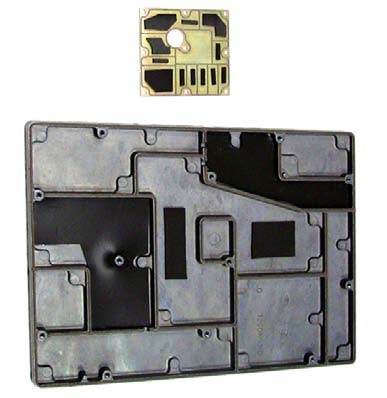
You’ve probably heard a bit about microwave absorbers and how they are used to reduce or absorb the energy that is present in a microwave. But what are they exactly? And how do they work? Go ahead, read on.
What are microwave absorbers?
Simply put, microwave absorbers are special materials, often elastomer or rubber based, which are designed to offer a user-friendly approach to the reduction of unwanted electromagnetic radiation from electronic equipment. They also work well to minimize cavity to cavity cross-coupling, and microwave cavity resonances. When comprised of a silicone elastomer matrix with ferrous filler material, microwave absorbers provide RF absorption performance over a broadband frequency range from 500 MHz to 18 GHz.
-
September 08, 2016
Gallagher Fluid Seals is a longtime partner of DuPont®’s, having specified thousands of DuPont perfluoroelastomer parts over the past few decades.
While elastomers were originally created as an alternative to natural rubber, they have expanded to include materials such as high-performance perfluoroelastomers for demanding applications.
These materials can also be used in place of plastics in most, if not all, applications. DuPont is at the forefront of perfluoroelastomer development, creating elastomers with properties that can help meet highly specific application requirements.
Read on to learn more from Dupont about the differences between elastomers and plastics, and how elastomeric seals perform compared to plastic seals.
-
January 19, 2016
Kalrez® parts made from compounds 6221 and 6230 provide superior chemical resistance and low contamination from extractables in pharmaceutical and food handling applications where FDA compliance is required. Compounds 6221 and 6230 are especially suited for Water For Injection (WFI) systems, Steam-in-Place (SIP) cleaning and other critical systems,
Unlike other elastomeric seals made with FDA compliant elastomers, Kalrez perfluoroelastomer parts are thermally stable up to 260°C (500°F), permitting use in applications such as Stage II Sterilization processes, where other elastomers lose their sealing capabilities.
-
December 03, 2015
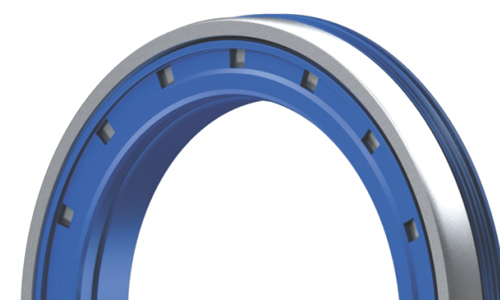
Freudenberg’s Simmerrings seal rotating shafts reliably and are used in millions of applications and with a variety of equipment in general industry and the automotive sector.
This radial shaft seal ring is based on know-how gained from years of experience. It continually undergoes further refinement based on the latest technological developments, and is particularly functionally reliable, flexible and extremely stressable.
Always “up-to-date”
The tried-and-tested original Simmerring keeps up with the times. Freudenberg’s experts have continued to develop it, with improvements in seal lip profiles. This has made it possible to further enhance its reliability and functionality across a broad range of applications. The advances include a friction-optimized design – the Low Friction Simmerring® – to decrease fuel consumption, which leads to reductions in CO2 emissions.Gallagher Fluid Seals offers a comprehensive selection of Freudenberg Sealing Technologies products suited to a variety of requirements.
-
December 01, 2015
Drop-in-place seals offer easy installation and time-saving assembly, providing seal retention in straight-wall or dovetail grooves.
Gallagher and the Parker ISS Division design each drop-in-place seal with the application in mind, taking into consideration the material and manufacturing process of the mating surfaces to determine the most efficient design.
The drop-in-place design utilizes a rubber encapsulated plastic or metal backbone, lined with retention and stabilizer ribs. This design holds simple or complex seal shapes, easing installation and providing automation possibilities. Small contact points require less flange loading, providing maximum sealing under minimal pressure for non-ideal surfaces.