New Video: Metal Cased Lip Seals — Your Durable Seal Solution
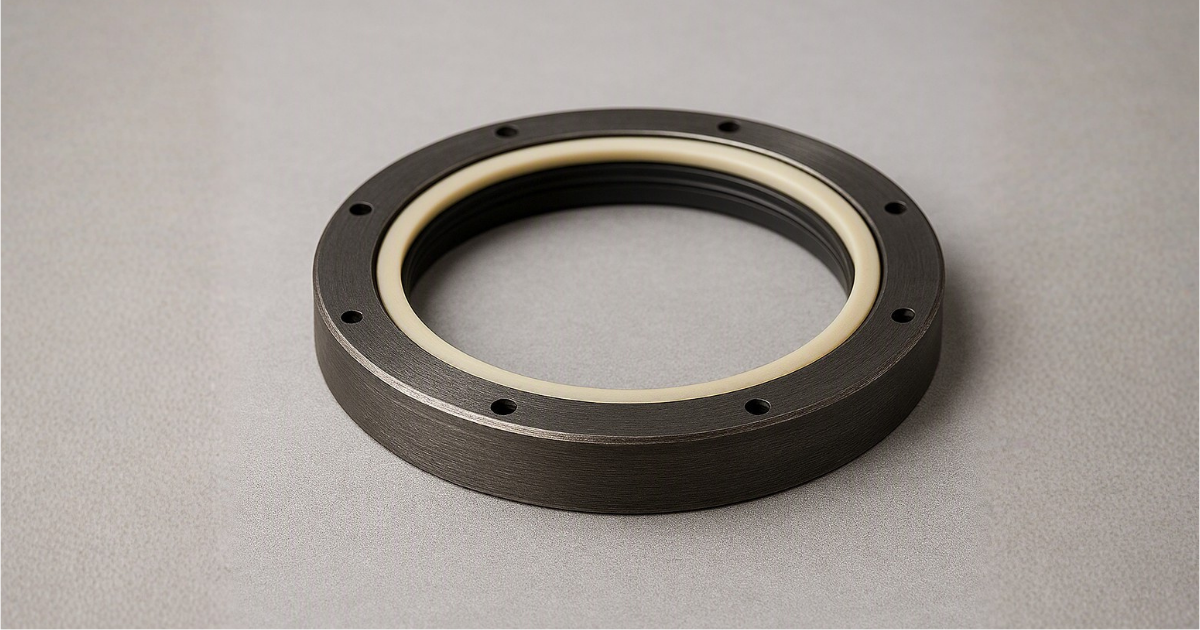
Metal cased lip seals are one of the most widely used sealing solutions for rotating equipment, helping retain lubricants while protecting critical components from dirt, moisture, dust, and other contaminants. Their durable construction and long service life make them a popular choice for pumps, gearboxes, electric motors, agricultural equipment, and heavy industrial machinery. However, not all metal cased
Why Spring Energized Seals Are Ideal for Cryogenic LNG Applications
Liquefied natural gas (LNG) systems operate under some of the most extreme conditions in industrial engineering. At temperatures approaching -320°F, conventional sealing technologies quickly reach their limits.
Materials behave very differently at cryogenic temperatures. Elastomers lose elasticity, metals contract,
In part 4 of our rotary seals series, we cover a very important topic: failure modes. In this video, we'll go over the importance and role of rotary seals, and we'll take a dive into the most common failure modes for rotary seals.
Fluroelastomers, also known as FKM are a class of synthetic rubber designed for very high temperature operation with excellent levels of chemical resistance. FKM is not a single entity but a family of fluoropolymer rubbers. FKM, sometimes referred to as Viton®, is a registered trademark for fluroelastomer by DuPont.
Fluoroelastomers differ from other elastomers in that it has fluorine linked to the polymer backbone.
Expanded polytetrafluoroethylene, or ePTFE, is the core material in many of Gore’s solutions. An ePTFE membrane is created when PTFE — a linear polymer consisting of fluorine and carbon molecules — is expanded, creating a microporous structure with very desirable characteristics, including a high strength-to-weight ratio, biocompatibility, high thermal resistance and many others.
Calcuating O-ring squeeze can seem complicated, but it's quite simple. In this video from the experts at Gallgaher Fluid Seals, calculating O-ring squeeze is broken down into four simple visual steps so you can ensure you are getting the right amount of squeeze for your specific application.
Part 3 of our video webinar series on rotary seals discusses the most common types of lip materials and case materials.
From an application perspective, it's imperative that any application or equipment utilizes the right material for temperature compatibility as well as media it may encounter.
This new video provides an overview of common lip materials and case materials
This video, part of our webinar series on rotary seals, dives into elastomeric rotary seals. This video will discuss the differences between traditional oil seals, Parker Clipper oil seals, and Garlock KLOZURE®
oil seals. And we'll also dive into the various applications for each oil seal, features and benefits,
How Rotary Seals work, Applications, Components, Shaft Recommendations, and Housing Recommendations
GFS is excited to bring you the newest video webinar series, this time covering Rotary Seals. In this first video, we will cover the basics of PTFE rotary seals. We'll talk about what they are, how they work, common applications, the components of a rotary seal, and various recommendations (lubrication, shaft,
HOW TO MEASURE AN O-RING | USING A CAPLIER | O-RING SIZING CONE
Our newest video release is something we tend to get asked somewhat frequently at Gallagher Fluid Seals. Despite it being a relatively easy subject, the question of "How do I find the size of my o-ring?" comes up more than you would think. We felt it made complete sense to do a quick video on the two most common methods to measure an O-Ring.