Fluoroelastomers
- August 21, 2018
Gallagher recently released our High Performance Elastomer Seals for the Instrumentation Industry White Paper. This was written by Russ Schnell, an Elastomer Consultant contracted by Gallagher Fluid Seals, and a former Senior Application Engineer with the Kalrez® perfluoroelastomer parts business at DuPont. This white paper is now available for download on our Resources page.
Below is the third and final section of the white paper, which will discuss the importance of proper seal and groove design.
Proper Seal & Groove Design
Proper seal design is a necessity for elastomer seals to perform reliably over the long term. Many of the instrument applications mentioned above use o-ring seals. The suggested compression for an elastomer o-ring seal to perform properly is typically a minimum of 16%, and a maximum of 30%. However, this range must also take into account the thermal expansion of an elastomer at elevated temperatures as well as any swell due to chemical exposure. Many of the elastomer seals used in instruments are small o-rings, which can create design issues. This is especially true for perfluoroelastomer parts which have a relatively high coefficient of thermal expansion (CTE). Fluoroelastomers have a lower CTE, making seal design easier at elevated temperatures.
- July 31, 2018
Gallagher recently released our High Performance Elastomer Seals for the Instrumentation Industry White Paper. This was written by Russ Schnell, an Elastomer Consultant contracted by Gallagher Fluid Seals, and a former Senior Application Engineer with the Kalrez® perfluoroelastomer parts business at DuPont. This white paper is now available for download on our Resources page.
Below is the second section of the white paper, diving into applications where the measurement is made in analytical laboratories which employ numerous solvents in a wide range of analyses and test equipment.
Laboratory Equipment
The final set of instrumentation is laboratory test equipment. As opposed to the laboratories in chemical plants, which often perform the same routine analyses on plant process streams, general analytical labs employ numerous solvents in a wide range of analyses and test equipment. As such, the ability of seals to resist a breadth of chemicals without degradation or leaching contaminants into a sample is of great importance. Although instrument seals are easily replaced in a laboratory environment, this operation still takes a technician time. It is always easier if the system can be flushed with a cleaning solvent and then be ready to run the next sample versus having to change out an elastomer seal due to incompatibility with a solvent.
- July 10, 2018
Gallagher recently released our High Performance Elastomer Seals for the Instrumentation Industry White Paper. This was written by Russ Schnell, an Elastomer Consultant contracted by Gallagher Fluid Seals, and a former Senior Application Engineer with the Kalrez® perfluoroelastomer parts business at DuPont. This white paper is now available for download on our Resources page.
Below is the first section of the white paper, diving into applications where the measurement is made at the process and the results then transmitted to a control system. This section will review the four types of in-line measurement devices, all involving slightly different elastomer sealing applications.
In-Line Process Applications
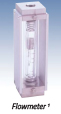
Flowmeters
Flowmeters are used to measure the flow of liquid. In this section we will only consider the measurement of liquid flow in a closed piping system. Several examples of flow measurement devices include: flowmeters, Venturi tubes and orifice plates.
Note that these devices are “in-line” and require isolating the process line to remove and repair, or replace the measurement device. Shutting down a process to remove a device is time consuming, involves loss of production, and may require specific procedures to protect the operators and environment when a line is opened. All of these devices require seals to prevent leakage of the process to the environment and the elastomer seals should last the life of the flowmeter. For aggressive chemicals or high temperature applications, FKM or FFKM seals are an excellent choice. These products offer a long service life and resist deterioration in harsh environments.
- June 05, 2018
Gallagher Fluid Seals recently posted our new Fluoroelastomer Basics webinar on gallagherseals.com. This is the third and final section of our webinar, focusing on Considerations When Choosing a Fluoroelastomer. The full video is now available on our Resources page.
This
- May 01, 2018
Gallagher Fluid Seals recently posted our new Fluoroelastomer Basics webinar on gallagherseals.com. This is the second section of our webinar, focusing on Fluoroelastomer Materials. The full video is now available on our Resources page.
This section of the video discusses different
- March 27, 2018
Gallagher Fluid Seals recently made our Fluoroelastomer Basics webinar available on the website.
This webinar will discuss:
- Differences between an elastomer and a fluoroelastomer
- The important role fluorine plays
- Types of fluoroelastomers and their features and benefits
- Material performance comparisons
- Chemical resistance of fluoroelastomers
- Temperature ratings of fluoroelastomers
- Considerations when choosing the right fluoroelastomer for your application
What is an Elastomer?
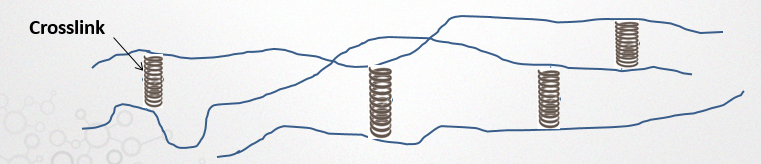
An elastomer is made up of long chain polymers which are connected by crosslinks. Crosslinks are analogous to springs and provide an "elastic" (recovery) nature to the material. The crosslinks are relatively stable, but can break down under extreme temperatures and pressures.