gasketing
- September 20, 2023
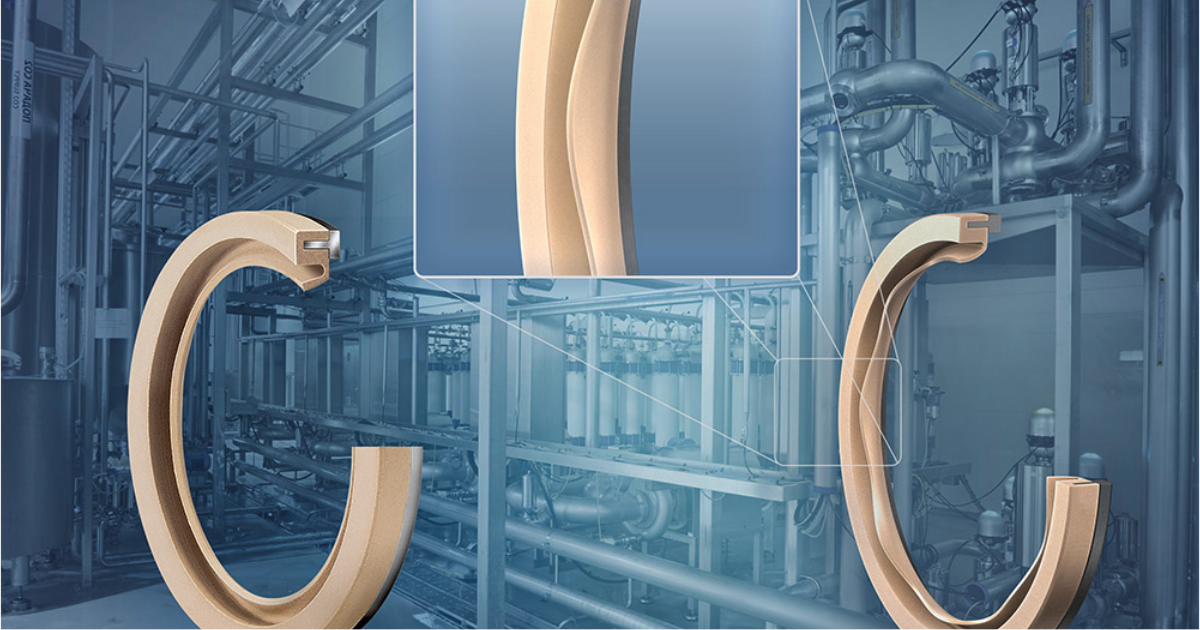
Material certifications, seal geometry and even seal color must also be factored in to allow for maximized seal life, minimized risk and reduced total cost of ownership for both the seal and the rotating equipment.
The most challenging operational environments for sealing mixers, agitators and pumps are often found in the food and pharmaceutical industries. When designing, selecting, or implementing a dynamic seal into operation in the food and pharma space, it is crucial to consider
- September 01, 2023
KLINGER® QUANTUM
Unique gasket material with the highest flexibility at high temperatures
KLINGER® Quantum is the first fiber reinforced gasket material in the world that is exclusively HNBR-bound. Together with a unique production process developed specifically for the purpose, this material can be used at higher temperatures and with a much wider range of media than any other fiber reinforced gasket material that is currently available.
This material is suitable for use in
- August 18, 2023
The world has entered a pivotal moment in water treatment, and the challenges continue to worsen as municipalities grapple with the risk of encountering premature failure in elastomeric gaskets. Such a risk brings up several problems, including reduced efficiency, sudden equipment failure, costly maintenance and downtime, and perhaps worst of all — contamination.
Prior to 2013, gasketing products were not subject to the NSF61 (Drinking Water System Components – Health Effects) standard, leaving
- July 19, 2023
What is Die Cutting? The Benefits of Flat Bed Die Cutting
Die cutting is an all-inclusive term for the process of using a die to cut sheets or rolls of a variety of materials, such as foils, laminates, gasket materials, polyesters, polycarbonates, and more.
- July 12, 2023
What is a tanged gasket?
Tanged gaskets are metal (typically carbon steel or stainless steel) punctured through a perforating process and combined with facing materials (commonly fibers, graphites, and other high-temperature materials). They are usually 3 layers, and the “fingers” or “tangs” in the punctured metal are attached to the facing through a combining process creating a mechanical bond. Oftentimes, no adhesive is required.
- June 02, 2023
GYLON EPIX™
GYLON EPIX™ is a newly developed family of PTFE gaskets. It is manufactured using a patented, profiled surface based on Garlock's proven Fawn, Off-White, and Blue GYLON® to create highly conformable materials for optimum sealing performance.
- May 18, 2023
The Best Gasket Types for Increased Heat
Under pressure? Absolutely. The increasingly high temperatures and harsh conditions to which gaskets are exposed makes selecting the right gasket all the more important.
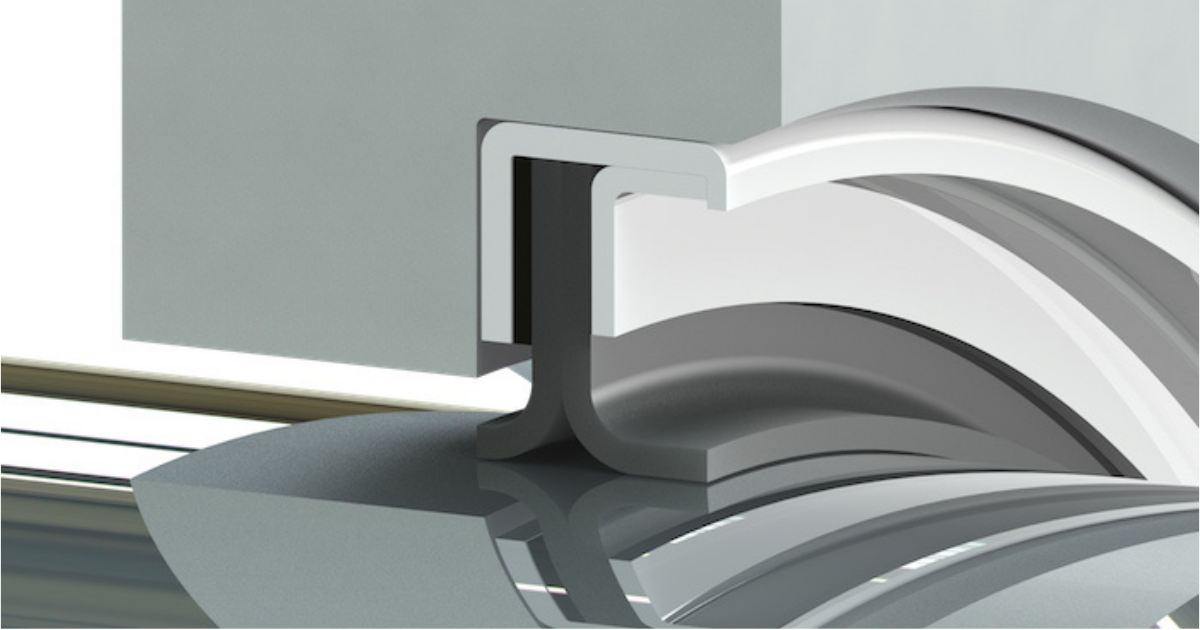
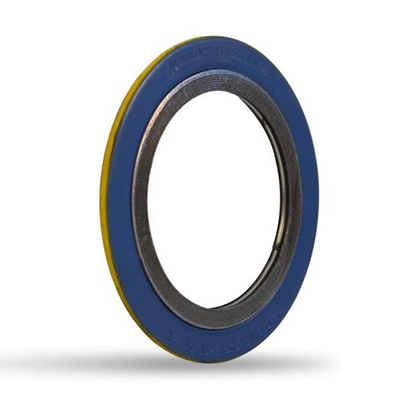
In industries such as chemical processing, hydrocarbon refining, and power generation, leakage from extreme temperature process streams can result in loss of efficiency and production as well as adverse environmental impacts and compromised employee safety. One of the most commonly used sealing products in systems subject to high pressures and temperatures is a spiral-wound gasket. These gaskets typically consist of filler and winding materials selected on the basis of application requirements and end-user preference. Proper selection of these materials is critical to achieving the desired performance in all applications.
Material Selection for High Temperature Gasketing
Sealing at temperatures above 850 ºF (454 ºC) is particularly challenging because of the limited number of filler materials that can resist thermal degradation at extreme temperatures – these temperatures affect both the sealing material and metal components. For instance, the yield strength of fasteners decreases as the temperature is increased. In addition certain chemicals can become more volatile and aggressive in high-temperature reaction processes.
The two most common filler materials in spiral-wound gaskets are graphite (can withstand temperatures up to 850 ºF) and polytetrafluoroethylene (PTFE; tolerance up to 500 ºF). Other filler materials are used mainly for their thermal insulating properties, not for sealability; these include mica, exfoliated mica, and ceramics. While graphite and PTFE perform satisfactorily in terms of temperature and chemical resistance, they have limitations. Graphite is not compatible with heavily oxidizing media at any temperature, nor can it withstand continuous operating temperatures above 850 ºF. Beyond 850 ºF, volume loss through oxidation becomes excessive and sealing effectiveness is compromised.
Many high-temperature systems, such as exhaust manifolds and flanged piping connections in exhaust systems, are oxidizing. Other services are oxidizing because of the operating temperature and media involved.
- May 12, 2023
- May 05, 2023
KLINGERSIL The Original Green Gasket
KLINGERSIL gasketing materials are hard to beat. A proven track record makes them one of the premier gasketing companies in the United States. Because of this, some competitors have cleverly posed their compressed gasket materials as KLINGERSIL green (C-4401).
However, their offerings aren't equal in terms of quality, performance, or specification. And just because it's green doesn't mean it's KLINGERSIL. To ensure you're getting what you want and
- April 14, 2023
Lubricating Bolts for Your Gaskets
Our friends and partners at KLINGER Thermoseal recently did a survey with their customer base.
- 90% of their customers NEVER lubricate
- 10% of their customers lubricate sometimes
- 0% of the respondents indicated they ALWAYS lubricate.
Relationship between friction coefficient and gasket surface pressure
So, what's the effect of lubricating your bolts? This blog explores the relationship between