Parker Hannifin Seals
- October 13, 2025
Parker’s Extreme Dirt & Water Seal Boosts Motor Durability on LSHT Motors
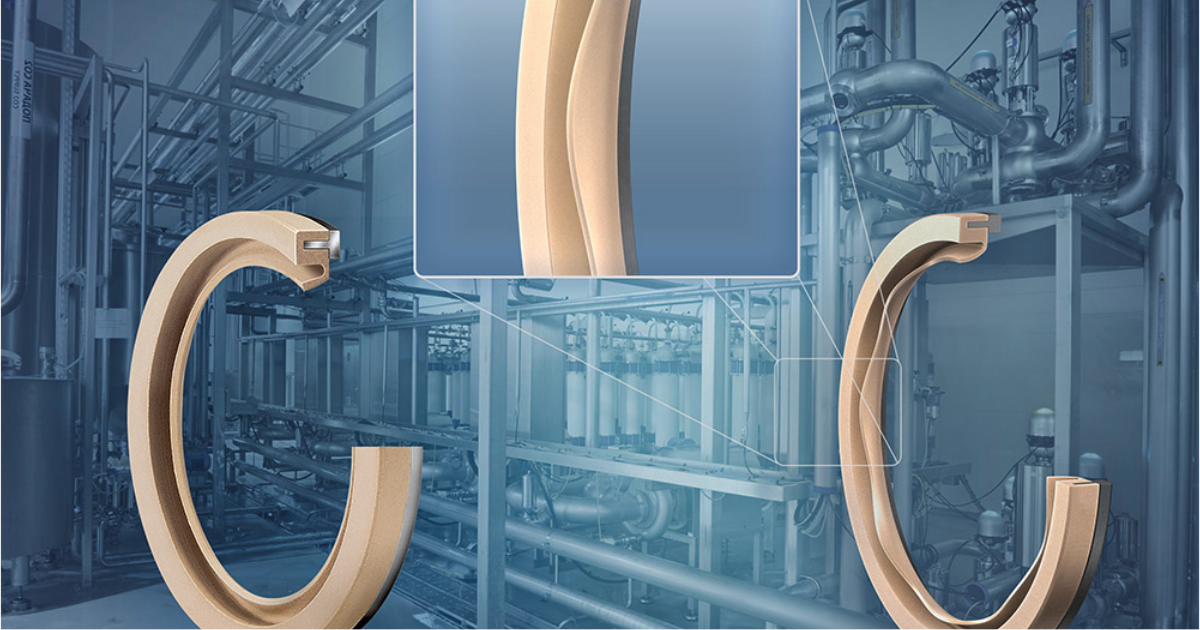
Parker’s new Extreme Dirt & Water Seal enhances hydraulic motor protection in harsh environments with an improved design and increased resistance to external contaminants. OEMs who tested the seal and who are now in production report improved reliability and reduced maintenance with this innovative sealing solution.
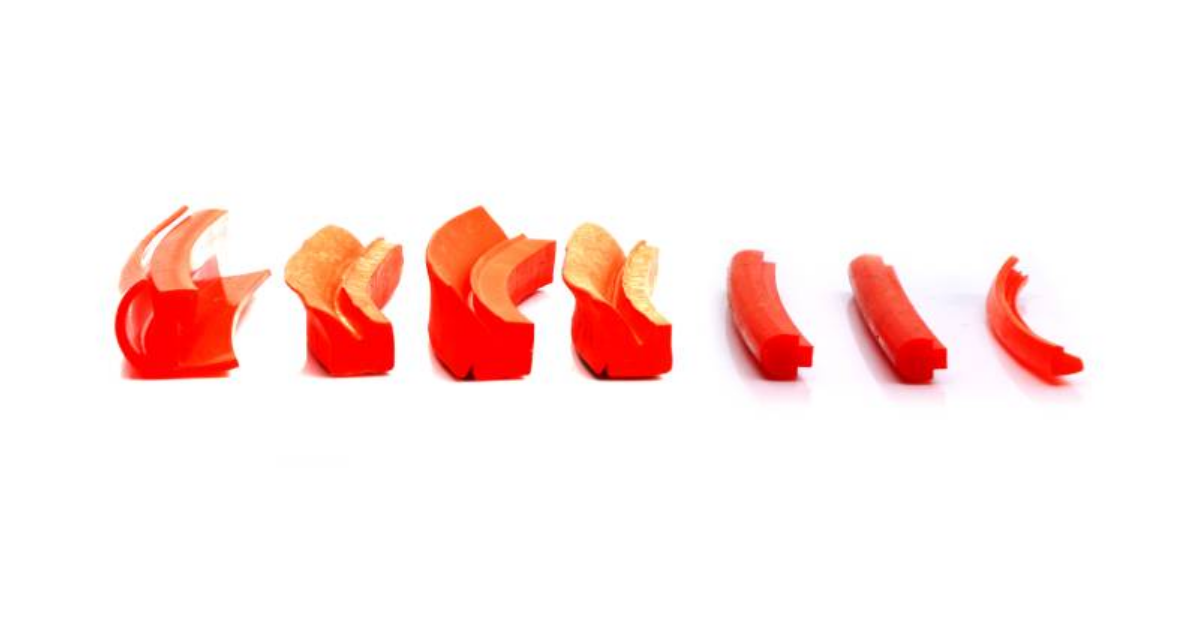
The Extreme Seal Guard overcomes these challenges with a two-piece design that fits all
- September 22, 2025
Protect Your Seal Aftermarket with Part Identification Technologies
Parker is revolutionizing part identification technology with a multitude of options. Customers are able to benefit from various identification methods such as non-permanent and permanent part markings by selecting their part number and company logo on the seal. For more advanced identification, a customer may opt to use the Parker Tracking System or utilize our RFID seals for tracking purposes. These identification methods ensure product authenticity and reduce seal installation errors by providing visual indicators for the assembly process.
Basic part marking – non-permanent identification
Non-permanent markings are applied to the surface of the seal and can be in the form of a company logo, unique part number, barcode, or other seal information. Non-permanent markings ensure Parker’s part origin, enables part level traceability and provides an easily visible cue to operators. This value-added feature helps reduce installation errors in addition to protecting customers against counterfeit seals.
- September 02, 2025
Extrusion-Resistant Nitrile O-Rings: Reliable Sealing for High-Pressure Boss Fittings
In aerospace and defense applications, sealing performance can make the difference between mission success and costly downtime. O-rings used in hydraulic systems must be able to resist extrusion under high pressures, perform reliably in low temperatures, and maintain compatibility with standard aerospace fluids.
That’s exactly what
- May 19, 2025
Gallagher Fluid Seals is a Parker Seal Technology Center
Custom Environmental Seal Solutions: When Unique Requirements Throw a Curveball
When it comes to the topic of utilizing elastomeric seals, it’s stereotypical to consider environmental sealing as one of the simpler categories of applications. Near-ambient pressure and temperature conditions and a lack of exotic or aggressive chemistries are the kinds of details that typically come to mind. However, throw in a curveball
- April 29, 2025
Gallagher Fluid Seals is a Parker Distributor is proud to be proud to be one of the few premier distributors to qualify as a “Parker Seal Technology Center (STC)”.
What does a good seal engineering drawing look like?
You just spent 6 months testing, stretching, aging and exposing your new seal design to 12 different chemicals. Finally, you are done. So what does a good technical drawing for a seal include? For most companies, the drawing is simple. For an O-ring,
- April 07, 2025
Poppet Seals for Demand Flow Regulators
Avoid Leakage and Support a More Accurate System
Poppet seals are sealing elements used to control fluid or gas flow in various applications. They consist of a movable component, the "poppet," that fits snugly against a valve seat to stop or allow fluid to pass through. When the poppet lifts, it opens the flow path, and when it returns to its seat, it creates a seal, stopping the flow.
There are many applications in industrial
- April 01, 2025
Video - Parker Clipper® Oil Seals – Speed, Pressure, and Temperature Capabilities
This video is part 2 in our Clipper® Oil Seals video series.
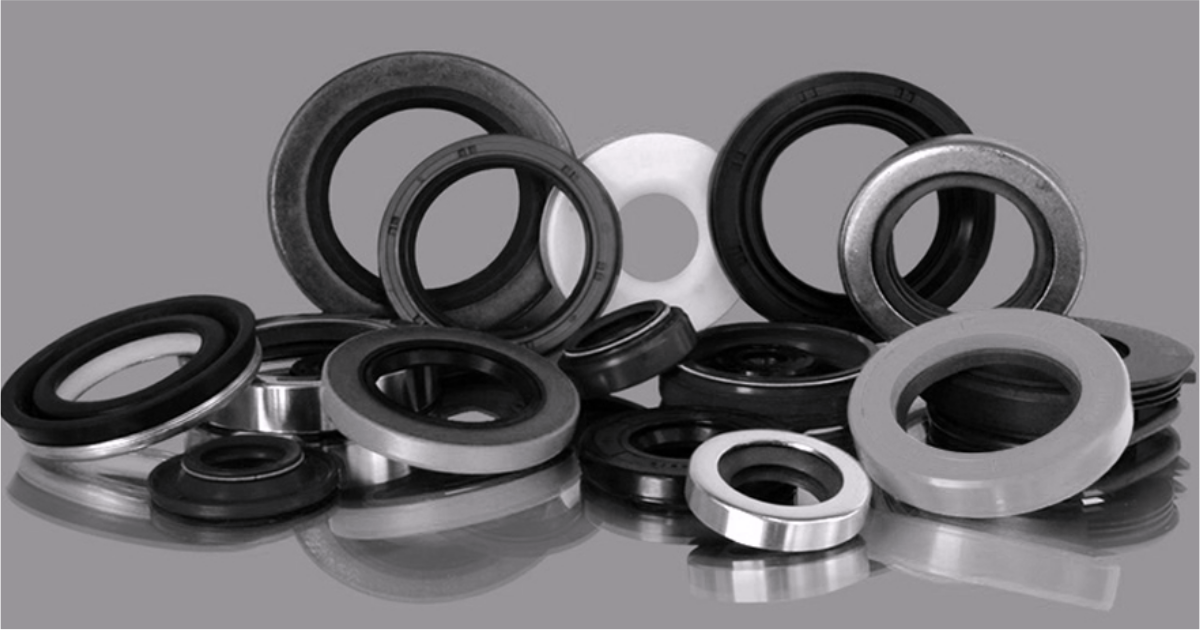
Often known as shaft seals or lip seals, oil seals are used in hundreds of applications around the globe and are commonly found in equipment such as: pumps, motors, gearboxes, crushers, mixers, compressors, cranes, drag lines, hoists, elevators, flywheels, bearings, and much more.
Since their introduction in 1969, there have been more than
- March 28, 2025
Conductive Seals from Parker Hannifin
When unprotected electrical currents flow through the bearings, the currents can cause issues such as arcing, pitting, fluting, and frosting, damaging the bearings and degrading the reliability and longevity of your motor. These stray currents lead to issues such as noise, vibration, higher temperatures, and ultimately, premature failure. Traditional solutions include shaft grounding blocks, carbon fiber grounding rings, and ceramic insulated bearings.