ptfe
-
August 29, 2019
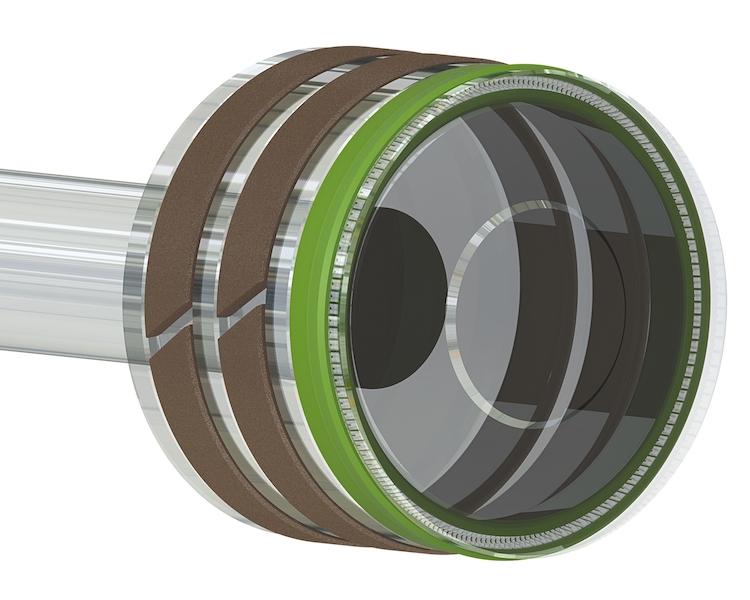
Polymer wear rings were developed to offer an alternative to dissimilar metal wear rings.
One of the advantages to using a polymer material such as nylon or filled-Teflon instead of a metallic bearing . Whereas when you use bronze or metallic bushings, these materials are prone to point loading on the edges of the bearing.
This property of polymer bearings combined with solid lubricants can yield a product that is much less likely to damage moving components.
5 Advantages
-
July 04, 2019
When it comes to designing and developing seals, the aerospace and industrial industries need a basis to allow production anywhere in the world.
One of the first PTFE (Teflon) standards, AMS3678, describes Teflon and the addition of fillers. This was used in conjunction with Mil-R-8791, which is one of the Mil specs describing a backup ring device.
The origin of all these specs dates back to the creation of the O-ring.
The Origin of the O-Ring Patent
In 1939, Niels A. Christensen was granted a U.S. Patent for “new and useful improvements in packings and the like for power cylinders.” These referred to improved packing rings made of “solid rubber or rubber composition very dense and yet possessive of great liveliness and compressibility.” These products were suitable for use as packings for fluid medium pistons (liquid or air). The improved packing ring is the modern O-ring.
There was a progression of standards for the O-rings created by individual countries, such as AS568, BS 1806, DIN 3771, JIS B2401, NF T47-501, and SMS 1586. Eventually, AS568 became more accepted in the industry.
The backup ring was originally created to help improve the O-ring’s ability to resist extrusion. Teflon was widely used as one of the materials for backup ring devices. Standards were created to unify the production of this Teflon device.
The Progression of Mil Specs
The progression of standard changes has led to AMS3678/1 for Virgin PTFE through AMS3678/16. These standards describe a group of Virgin- and filled-PTFE materials accepted by the industry for manufacturing seals and back-up ring devices.
Mil-R-8791 was canceled in February 1982. This spec was superseded with AS8791, which eventually evolved into AMS3678.
AMS3678 is a tool used by customers and Teflon suppliers to create uniformity in the manufacturing and processing of seal and bearing materials. The standard is inclusive of most of the compounds upon which the industry was built.
When customers approach with an old “mil spec”, they are pushed to the new AMS spec which is currently active. Eclipse manufactures to the spec so their customers will have the confidence that they manufacture to a known standard.
When crossing custom materials from well-known sources, customers are driven to an accepted spec that is equivalent to the original source of the material. This helps customers sell their products with internationally-known materials rather than custom, home-grown compounds that are often intended to single source those materials.
There are several qualifications of the spec that suppliers must observe. This includes dimensional stability tests. This test ensures the material has been properly annealed, and that the seal or backup ring will fit and function as it was originally intended.
Eclipse is uniquely qualified to supply parts to the latest AMS3678 specification. They understand the scope of the specification which allows us to ship parts with fully traceable certification.
AMS3678 helps validate a material to a customer to ensure they get the same material processed the same way with each order. Beyond this, there are other ways to determine what makes a part process-capable.
-
June 27, 2019
Freudenberg Sealing Technologies introduced several new material and sealing innovations at the 2019 International Paris Air Show.
These new products are designed to help aerospace customers address ever increasing safety and performance requirements in the industry.
During the June 17-23 event in Paris, Freudenberg showcased a new high temperature, fireproof material; an Omegat OMS-CS cap seal; and new ethylene propylene diene monomer (EPDM) and a fluoroelastomer
-
May 30, 2019
Seal designers often feel caught in the constant struggle to balance the demands of a sealing application with physical and material constraints.
At Eclipse, it’s an engineer’s job to understand and weigh these limitations
-
March 26, 2019
Fried Snack Foods and GYLON® Style 3504 Gasket
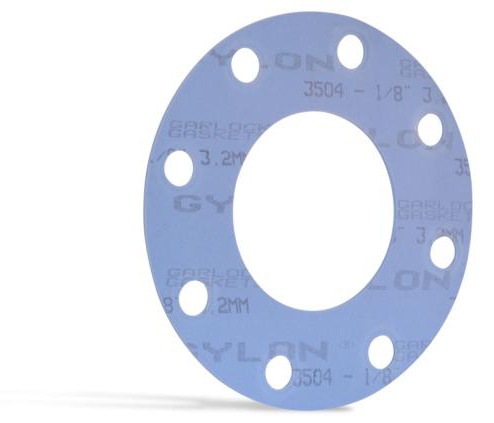
The GYLON Style 3504 gasket is made of PTFE with aluminosilicate microspheres. It is designed for use in moderate concentrations of acids, caustics, hydrocarbons, refrigerants, and more.
It provides a tight seal, improved performance over conventional PTFE, reduced product loss and emissions, reduced creep relaxtion, excellent bolt torque retention, it doesn't burn, will not support bacterial growth, plus many more benefits.
INDUSTRY
Food Processing – Fried Snack Foods
CUSTOMER
A major diversified food & beverage manufacturer, with facilities located in all regions across the globe.
BACKGROUND
The customer had persistent problems when sealing hot oil applications on its bulk snack food fryers across several production sites. Build-up of polymerised vegetable oil on the flanges caused unsightly mess, maintenance complications, financial implications, and posed a significant fire risk.
CHALLENGES FACED
As well as ensuring that the sealing material was compliant to FDA and EN1935 standards, the challenge was to ensure that the gaskets would perform well under the difficult conditions presented by the high oil temperatures. Additionally, because the production line was also subject to regular and aggressive cleaning cycles, the gasket material was required to be compatible with other aggressive chemicals across a broad pH range.
-
March 12, 2019
Freudenberg-NOK Sealing Technologies has begun supplying innovative, lightweight radial shaft seals to a major Detroit-based vehicle manufacturer for installation on the V6 and V8 engines powering its newest pickup trucks and sport utility vehicles (SUVs). Enter the Freudenberg BlueSeal.
The BlueSeal, part of Freudenberg’s award-winning Low Emission Sealing Solution (LESS) portfolio of engine, transmission
-
February 28, 2019
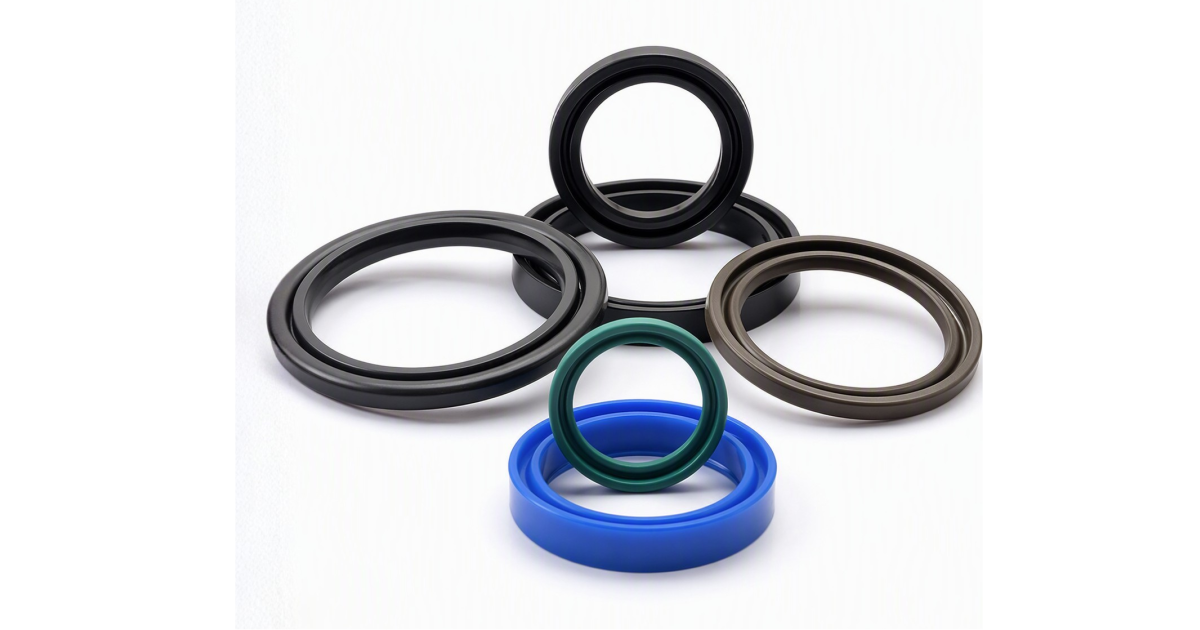
Being commodity items, U-Cups are readily available in a number of materials and can be found on-the-shelf from multiple distributors and manufacturers in many standard sizes.
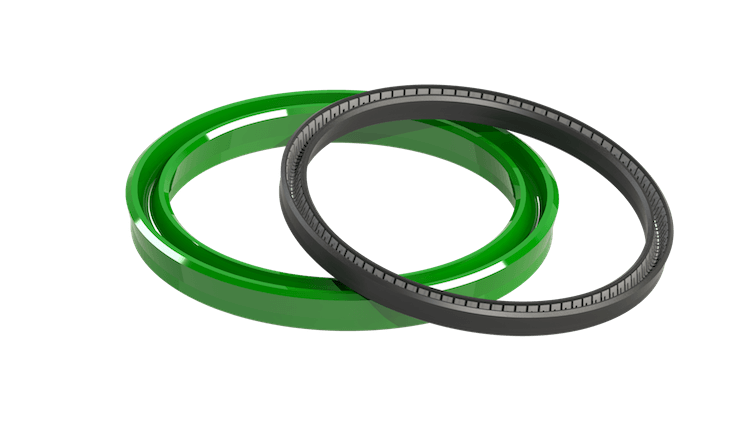
Named for the shape of their cross-section, a U-Cup’s design will be pressure energized increasing sealing effectiveness when compared to a standard O-Ring.
This means as pressure increases, the sealing lips are continually forced into the mating hardware surface, ensuring good contact at all times.
The simple and easily moldable design is an effective sealing solution to many systems in both hydraulic and pneumatic applications. Modifications in lip thickness and inclusion of an O-Ring Energizer can tailor sealing loads and wear life to specific situations.
A key advantage to an elastomeric U-Cup is the relatively small and simple hardware space needed. Because of their flexible compounds, most U-Cups can be installed in a solid gland configuration.
A basic ID or OD groove is all you need for proper seal retention. Plus, no special tools or considerations need to be taken for correct installation.
U-Cups are available in many of the same compounds as standard O-Rings such as Nitrile, Fluorocarbon, and EPDM, but polyurethanes may be the most common material.
Urethane provides a good combination of elasticity/pliability and toughness. Therefore, it exhibits good sealing characteristics as well as, durability and wear resistance.
These desirable qualities make U-Cups an optimal solution for many sealing systems across multiple industries and they can be found in countless standard products. But Eclipse is approached many times a year with customers pushing the limits of standard U-Cups and in need of better solutions.
The Client's Issue
Eclipse was approached by a leading pneumatic cylinder manufacturing seeking a sealing solution for a unique application.
While U-Cups typically provide optimal sealing performance in pneumatic cylinders, this application presented a difficult challenge.
The air cylinder was to be used as an actuator for a latch on a large industrial oven. While pressures, speeds, and cycle times were nothing out of the ordinary, the temperature at which it had to operate at was — a continuous 500°F.
-
February 26, 2019
Poultry Processing: KLOZURE® ISO-GARD®
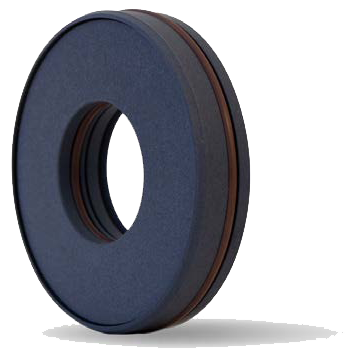
ISO-GARD bearing isolators offer exceptional bearing protection for pumps, motors, and bearing supported industrial equipment under the harshest conditions.
ISO-GARD products are constructed using a filled PTFE material which provides excellent chemical resistance.
INDUSTRY
Food - Poultry Processing
CUSTOMER
A diversified food processing company, with facilities located
throughout the US.BACKGROUND
The customer had persistent problems with sealing the bearings in their non-metallic feather picker housings. Using standard lip seals, and with a monthly maintenance program, they still encountered frequent failures. With 72 assemblies (each with two sealing locations) this had a detrimental effect on manufacturing efficiency, and placed a significant burden on the maintenance teams.
CHALLENGES FACED
Poultry feathers were getting under the lip seals and into the bearing housing, causing frequent and unexpected failures. Daily wash-downs also used a chemical cleaning solution that could also damage the bearings if not sealed correctly. Additionally, there was limited space available for any modification of sealing element.
Meat processing environments are highly regulated by the FDA, so any manufacturing changes must be carefully controlled. Therefore the customer required close support to ensure that any changes could be implemented with full confidence.
-
February 19, 2019
A patented lip design and the patented combination of PTFE sealing lip and sliding bearing in the lip seal element provide the new dry running seal "SeccoLip" from EagleBurgmann with particularly high flexibility. These technical features help the lip seal compensate directly and safely radial deflections of the shafts in agitators, mixers and reactors.
The sliding bearing tracks
-
February 05, 2019
Compression Packing
How this application fits as a versatile solution.
Stem packing is a familiar product. The most common type is braided compression packing. Braided packing is used in a wide range of applications. Depending on the service, construction materials can be as diverse as plants or animal derivatives, mineral fibers or synthetic plastics and even metal. The process of cutting rings from rope packing, inserting them into a stuffing box and torquing them to the right density is common, but it is not always the best choice.
Another widely used manufacturing method is die-molding. It is the process of wrapping a material around a mandrel, placing it in a die and preforming it to make a seal. Using these and other manufacturing technologies, packing is found to work in applications as different as aerospace, heavy trucking and power generation. A review of some unusual applications demonstrates the versatility of compression packing as a sealing solution.
The Origin of Packing
Compression packing is an ancient technology dating back more than 5,000 years. Boats and ships used a rudder as a steering mechanism. The rudder shaft penetrates the hull of the vessel below the water line, so water can leak into the bilge. Ancient sailors, using the top technology of the day, would take pieces of clothing, sail cloth and rope, cover it with animal fat or wax and stuff it into the gap around the shaft. Eventually, a box was secured around the shaft and a gland, which could be tightened to compress the packing material, was created to improve sealing and longevity. The terms compression packing, stuffing box and gland come from these early sailors.
Compression Packing
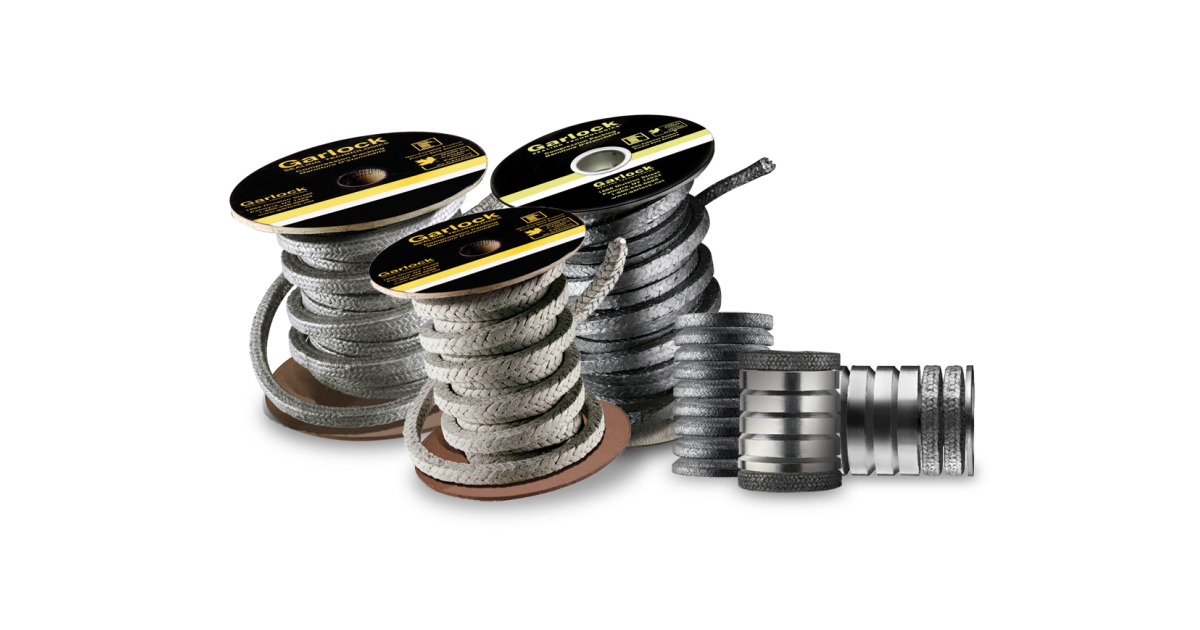
Over time, many improvements in packing construction and materials were made. Packing today can be made of flax, Kevlar, polytetrafluoroethylene (PTFE), graphite or metal. It typically has a square cross-section and is sold in precut rings or in large coils, as shown in Image 1. Synthetic aramid fibers are abrasionresistant and can handle higher temperatures and shaft speeds. PTFE has excellent lubricity and chemical resistance. Graphite coupled with mica or an aramid fiber can stave off the heat generated by a rotating shaft and provide long life in challenging applications.
Die-Formed Packing
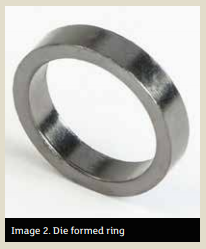
Die-formed compression packings are excellent in terms of sealing performance and reliability and offer a wide range of long-term, low-emission and low maintenance products. See Image 2.
Not only are die formed rings easier and quicker to install, but the pre-compression increases the density of each ring and reduces the gland loads necessary to seat and compress multiple rings in the stuffing box. The result is lower friction on the shaft or the spindle, with improved sealing performance and a longer life.
Factor in STAMPS
As mentioned in an article previously published by the Fluid Sealing Association, (Sealing Sense, Pumps & Systems, March 2005), there are several key factors to consider when choosing the right packing. They include:
- size or stuffing box bore
- temperature inside the stuffing box application: whether it’s a pump, valve, mixer, refiner, process, characteristics such as pH level and chemical compatibility
- motion: rotary, helical or reciprocal
- pressure inside the stuffing box
- surface speed expressed in feet per minute or meters per second
Keeping this in mind, here are some applications to consider when you are going way beyond the typical stuffing box: