Elastomers
-
January 31, 2020
Food, Beverage, and Pharmaceutical Regulations
Stringent government regulations mandate that food, beverage, and pharmaceutical manufacturers keep foreign material out of ingredients to ensure food and drug safety for consumers. Preventing foreign material from entering the processing
-
November 14, 2019
Article re-posted with permission from Parker Hannifin Sealing & Shielding Team.
Original content can be found on Parker’s Website and was written by Fred Fisher, Technical
-
October 29, 2019
Better and faster access to the seals you need to keep your production running.
King of Prussia, PA. October 29, 2019 /News and Updates/ -- Gallagher Fluid Seals (GFS) is excited to announce the launch of its e-commerce store, providing a brand new experience to shop for seals.
“It’s been a complete team effort,” says Chris Gallagher, CEO. “Our team has worked diligently over the past several months to prepare and deliver a state-of-the art e-commerce store
-
October 01, 2019
Jay Berwanger, Heisman Winner.
To football aficionados, Jay Berwanger is well-known as the winner of the first Heisman Trophy and the first player chosen during the National Football League’s first draft. Less well-known is that he achieved his athletic successes at the University of Chicago, a school now more closely associated with Nobel prizes than big-time football. Berwanger, a halfback, played for the University of Chicago Maroons at a time when Chicago was a member of the Big
-
September 05, 2019
Tensile Strength | Ultimate Elongation | Modulus of Elasticity
Rubber Compound Data sheets usually display a number of physical properties as recorded from standard test methods. Among the most common are three measured on the Tensometer:
- Tensile Strength (at break)
- Ultimate Elongation
- Modulus of Elasticity
The Test
-
August 06, 2019
Rubber seals are used in numerous industries to prevent the unwanted leakage of liquids and gases in various components such as pumps, valves, pipe fittings, and vacuum seals, to name only a few. However, all seals are not created equally. Rubber seal design consists of several elements to ensure that the seal delivers optimal performance in the given environment.
One of the most common types of industrial rubber seals, the O-ring, relies on mechanical compressive deformation to act as a barrier
-
June 13, 2019
Article re-posted with permission from Parker Hannifin Sealing & Shielding Team.
Original content can be found on Parker’s Website and was written by Dorothy Kern, applications engineering manager for the Parker
-
May 14, 2019
Seals are one of the most important components in many medical devices. While small in cost, seals for medical devices have a profound affect on the function of said device and the outcome of a medical procedure.
Engineered sealing solutions have advanced to meet the new medical device designs due both to new materials and to new processes for producing these seals. An understanding of the fundamentals of seal design, the tools available to assist in the manufacturing process and pitfalls to avoid will help in achieving a successful seal and medical device outcome.
Classifying the three basic seal designs
When approaching a new seal design, It is important to classify the seal based on its intended function. All seals fall into one of three distinct groups. While certain applications may combine more than one group, there is always one that is dominant. The three basic seal designs are:
Static -- seal applications where there is no movement.
Reciprocating -- seal applications where there is linear motion.
Rotary -- seal applications where there is rotation.
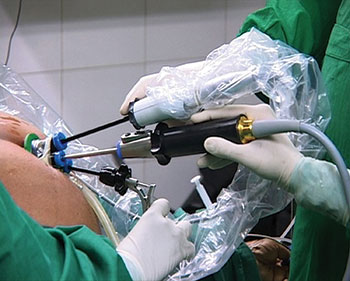
Static seal applications are the most common and include those that prevent fluids and drugs from escaping into or out of a medical device. The seal design can range from basic O-rings to complex shapes. Static seals can be found in the broadest range of medical devices from pumps and blood separators to oxygen concentrators.New advances in trocar designs incorporating specialized seals allow multiple instruments to be inserted in the single trocar. A reciprocating seal application with linear motion would include endoscopes that require trocar seals. These trocar seals are complex in design and allow the surgeon to insert and manipulate instruments to accomplish the medical procedure. These procedures range from relatively simple hernia repairs to the most difficult cardiac procedures. All of these minimally invasive surgeries employ endoscopes with seals that rely on seal stretch, durability and ability to retain shape during lengthy and arduous procedures. This particular seal application combines both reciprocating and rotary motion with the main function being linear motion.
A rotary seal application most commonly includes O-rings used to seal rotating shafts with the turning shaft passing through the inside dimension of the O-ring. Systems utilizing motors such as various types of scanning systems require rotary seals but there are many other non-motorized applications that also require rotary seals. The most important consideration in designing a rotary seal is the frictional heat buildup, with stretch, squeeze and application temperature limits also important.
Function of a particular seal design
What is the function of the seal? It is important to identify specifically if the design must seal a fluid and be impermeable to a particular fluid. Or will the seal transmit a fluid or gas, transmit energy, absorb energy and/or provide structural support of other components in device assembly. All of these factors and combinations need to be thoroughly examined and understood to arrive at successful seal design.
A seal's operating environment
In what environment will a seal operate? Water, chemicals and solvents can cause shrinkage and deformation of a seal. It is important therefore to identify the short and long term effects of all environmental factors including oxygen, ozone, sunlight and alternating effects of wet/dry situations. Equally important are the effects of constant pressure or changing pressure cycle and dynamic stress causing potential seal deformation.
There are temperature limits in which a seal will function properly. Depending on the seal material and design, a rotary shaft seal generally would be limited to an operating temperature range between -30° F and +225°F. To further generalize, the ideal operating temperature for most seals is at room temperature.
Expected seal life - How long must the seal perform correctly?
-
April 18, 2019
The popularity of multi-flavor drink dispensers, those touch screen wonders that offer dozens of beverage and flavor options to consumers, has grown during the past decade. Manufacturers are installing these complex machines in venues and locations throughout the world.
Elastomers and flavor transfer
But what’s great for an individual customer – a cherry-ginger-lime cream soda, for example – can play havoc with the elastomer seals inside the machine. Add in hygienic
-
February 12, 2019
Replacing Aging Water Infrastructure With NSF Compliant Materials
There are over 155,000 public water systems in the United States and more than 286 million Americans who rely on community water systems daily. Since most of the infrastructure was built between the early 1900's and 1960 using outdated technology/products and capabilities, nearly everything is approaching the natural end of it's lifespan.
Some estimates put the repairs and replacement of the